The last time I saw Mark, he was sitting across a courtroom.
There was nothing dramatic about the moment.
No shouting.
No final insult.
No speech designed to make me regret leaving.
He looked older.
Perhaps I did too.
But the difference was that I no longer felt responsible for what happened to him next.
The court process had established what the evidence showed: properties had been moved through people who did not understand the transactions, documents had been falsified, liabilities had been concealed, and identities had been used as instruments in a financial scheme.
The attempted transfer of my house had failed.
The offshore account connected to the plan had been frozen.
The new company had never acquired the assets Mark intended to place inside it.
The properties tied to the fourteen names were being reviewed individually.
And the people whose names had been used finally had records of the truth.
There was no single moment when everything was repaired.
Rachel still had years of financial damage to address.
Linda's business was gone.
Vanessa was still trying to recover money she had believed she was investing in a future.
Emma was rebuilding trust with me one ordinary decision at a time.
I was rebuilding my sense of safety.
But the machinery had stopped.
That mattered.
The day I received the final paperwork concerning my house, I placed it in a folder and wrote one word on the tab.
MINE.
I almost laughed when I looked at it.
It sounded childish.
But it wasn't.
For years, ownership had felt like something Mark could redefine with a signature.
Now it was settled.
The house was mine.
The deed was mine.
The mortgage history was mine.
The decisions about the property were mine.
No hidden company.
No nominee.
No power of attorney.
No forged document waiting in a drawer.
Mine.
I changed the locks again anyway.
Not because I believed Mark would come back.
Because I wanted the act of turning the key to belong entirely to me.
Emma helped me repaint the small room near the back of the house.
She chose a soft color I would never have picked.
I let her.
We worked with the windows open.
Music played from her phone.
At one point, she got paint on her cheek.
I laughed.
She laughed too.
It was an ordinary afternoon.
That was the victory I hadn't expected.
Not money.
Not revenge.
Ordinary life.
Rachel eventually started a small bookkeeping service from home.
She told me she wanted to understand financial records so thoroughly that nobody could ever make her feel ignorant again.
Linda found consulting work with a company that valued her experience.
Vanessa sold the property she had once expected to share with Mark and used part of the recovered funds to start over somewhere else.
None of them returned to the lives they had before him.
But neither did they remain trapped in what he had done.
The fourteen-name list was eventually closed.
Some cases continued separately.
Some people recovered property.
Some recovered money.
Some received only legal recognition that what had happened to them was not their fault.
It wasn't a perfect ending.
Real life rarely provides those.
But there was accountability.
And there was truth.
Those two things mattered.
Emma and I became closer slowly.
Not through one emotional conversation.
Through dozens of small ones.
She called when she needed advice instead of disappearing.
She told me when she was struggling.
She stopped letting fear dictate every decision.
And I stopped trying to protect her by keeping everything from her.
We learned that honesty did not always prevent pain.
But secrecy could turn pain into something much worse.
One evening, she asked me about the recording again.
“Do you ever wish you hadn't heard it?”
I thought about Mark's voice.
If she signs, we can move the property.
She will.
Because she always wants to help.
I shook my head.
“No.”
“Even though it hurt?”
“Especially because it hurt.”
She looked confused.
I explained.
“If I hadn't heard it, part of me might always have wondered whether I misunderstood him.”
She nodded.
“Now you know.”
“Yes.”
She was quiet.
Then she said, “I think I needed to know too.”
We sat together in the backyard.
The hydrangeas had grown taller.
I had nearly forgotten planting them.
They had become part of the landscape without asking permission.
That seemed appropriate.
Some things heal quietly.
Months later, Helen returned the last box of documents that had been gathered during the investigation.
I opened it once.
Then closed it.
I didn't need to keep reading.
I knew what was inside.
Evidence.
Records.
Names.
Numbers.
Copies of signatures.
The old power of attorney.
The photographs.
The property transfers.
The documents connected to the offshore account.
The evidence that had once seemed like pieces of a puzzle too large to understand.
I put the box on a high shelf in the closet.
Then I walked away.
I didn't destroy it.
Someone might need it again.
But I didn't need to live beside it.
That distinction became important.
For a long time, I thought moving forward meant forgetting.
It doesn't.
Moving forward means remembering without allowing the memory to control the present.
There were still days when a piece of mail made my heart race.
Days when someone asked me to sign something and I read every line twice.
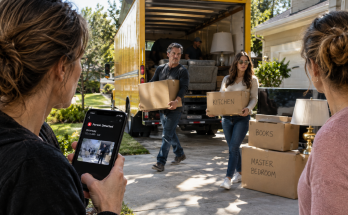
Days when I remembered the moving truck and felt that old cold sensation in my stomach.
But those moments became less frequent.
And when they came, I knew what to do.
Stop.
Read.
Ask questions.
Trust my own judgment.
The habits that had once been used against me became habits that protected me.
I also stopped blaming myself for being trusting.
Trust was not the crime.
The betrayal was.
Being kind did not make me foolish.
Wanting to help did not make me weak.
Believing someone I loved did not make me responsible for the choices he made.
Those were lessons I had to repeat until I believed them.
One Saturday morning, Emma arrived with coffee.
She walked into the kitchen without knocking.
“You know,” she said, “I think this is the first time I've ever come here and felt completely calm.”
I smiled.
“That sounds good.”
“It is.”
She set the coffee down.
“Do you remember when we thought we'd lose this place?”
“Yes.”
“I can't believe how close it came.”
Neither could I.
I looked around the kitchen.
The blue chair was still in the corner.
The curtains were still the ones I had chosen.
The hydrangeas were visible through the window.
Nothing looked extraordinary.
That was the point.
The home had survived.
So had I.
The final legal notices arrived several weeks later.
Mark's ability to control the affected properties had been dismantled.
The companies he had used were being dissolved or placed under separate legal review.
The financial claims were proceeding through the appropriate channels.
There would be consequences for what he had done.
I read the notice once.
Then I folded it and put it away.
I didn't feel triumph.
I felt tired.
Then relieved.
Then strangely empty.
I realized I had spent so long preparing for the next disaster that I hadn't prepared for the possibility of peace.
Peace felt unfamiliar.
At first, I didn't trust it.
Then I began to enjoy it.
I started walking in the mornings.
I planted more flowers.
I replaced a broken light fixture I'd ignored for years.
I painted the front door.
Small things.
Mine to choose.
Mine to change.
Mine to leave alone.
One evening, I stood outside after sunset.
The street was quiet.
The house behind me was dark except for the kitchen light.
Emma had left an hour earlier.
For a moment, I thought about the woman who had once stood at that same window watching a moving truck arrive.
She had been confused.
Frightened.
Desperate to understand why the life she knew seemed to be changing without her permission.
I wanted to tell her something.
I wanted to reach backward through time and put a hand on her shoulder.
You are not crazy.
You are not stupid.
Keep asking questions.
Trust what you see.
Don't let anyone make you doubt your own name.
But I couldn't reach her.
So I did the next best thing.
I became her.
Not the frightened version.
The woman who finally understood that protecting herself was not selfish.
The woman who could look at a document and say no.
The woman who could hear a threat involving her daughter and refuse to be manipulated.
The woman who could forgive her daughter without excusing what happened.
The woman who could hear the truth about her marriage and survive it.
I went inside.
Before bed, I checked the front door.
Locked.
The windows.
Secure.
The folder with the deed sat in the cabinet.
Safe.
I turned off the kitchen light.
Then I stopped.
I looked once more at the room.
For years, Mark had convinced me that my home was something he could use.
An asset.
Collateral.
A line on a spreadsheet.
A number in a transfer.
But he had been wrong.
A house is not just a property.
It is the place where ordinary life keeps happening.
It is where people drink coffee in the morning.
Where arguments end.
Where apologies begin.
Where children grow up.
Where photographs fade.
Where flowers bloom because someone remembered to plant them.
And after everything Mark had tried to take from me, that was what remained.
Not the money.
Not the companies.
Not the accounts.
Not the papers.
My life.
My daughter.
My name.
My home.
And this time, no one else was going to decide what they were worth.
The End
Read more original stories on Feel Every Story.
I Thought the Hardest Part of Leaving My Marriage Was the Divorce Until a Moving Truck Appeared Outside the Home Nobody Knew About
Part 20 of 20