PART 3
At 12:09 p.m., my mother received the call while being fitted into her champagne gown at Bellamy. She listened for six seconds, told the assistant,
“Ten minutes. Tell no one.”
Then she left the estate with her dress half-unfastened. The ceremony was less than an hour away.
Hollis saw her car leave from the suite window.
“Your mother just left.”
“I know,” I said.
There was nothing else to say.
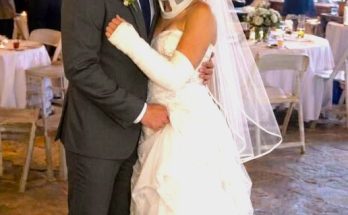
At one o’clock, I walked down the aisle in my grandmother’s 1962 wedding gown. My side of the chapel was half empty. Nathan’s side was full. My grandmother stood in the aisle.
The officiant asked,
“Who gives this woman?”
My grandmother answered,
“Her grandmother.”
She placed my hand in Nathan’s and sat in the chair meant for my mother.
Nathan read his vows from a small leather card. Halfway through, he stopped, looked at me, and added one line.
“You do not need anyone’s permission to be loved. You never did.”
I did not cry. I said my vows clearly. I signed the register as Lorie LeChance Beaumont with my grandfather’s old pen. Meline signed as witness. Hollis signed as the second witness. There was no line for the mother of the bride.
At the reception, Hollis gave the toast my mother had been meant to give.
“I’ve known Lorie for seven years. Last night, I watched her do something most people never do. She did not weep for what was broken. She built the record that would hold the truth.”
Later, she handed me an envelope under the table. Inside was the claim approval letter. Mansfield Keats had approved the payout: $24,700.
But Brooke did not understand the most important part.
Subrogation.
When an insurance company pays for damage caused by someone else, the company can pursue that person to recover the money. They do not care about family dinners, apologies, or excuses. They care about restitution, legal fees, liens, and interest.
Brooke thought cutting my dress was a one-night humiliation.
She did not know a corporate insurer was about to come for her condo.
The payout hit my account that Monday. By December 1, a lien had been filed against Brooke’s Providence condo. She called once.
“Call them off, Lorie. You don’t have to do this.”
I forwarded the voicemail to Everett.
The 11-second livestream of her arrest escaped online. A gossip account picked it up. Sponsors dropped her. Her followers disappeared by the thousands. Her attorney offered $15,000 and a public apology.
Juliet asked if we wanted to settle.
“We won’t,” I replied.
Brooke eventually accepted a plea deal: restitution, probation, community service, and a no-contact order. The civil judgment remained. The lien remained. She would likely have to sell the condo.
My mother’s consequences came through the family trust. The trustees reviewed her emails and removed her from the annual distribution list, ending an $84,000 yearly payout. Brooke’s share was frozen in a restricted subtrust. She would never directly receive LeChance money again.
My mother left me one voicemail.
“I hope you sleep.”
That was all.
I saved it in the case folder and wrote one sentence in my notebook:
“She had thirty years to ask me if I slept.”
I did not call her back.
Months later, people still ask if I regret it. They want me to say I wish I had been softer. That a dress is just fabric. That family is forever.
But a wedding dress is not just fabric. It is the one garment a woman chooses for the day she stands before everyone and says, this is who I am now.
Brooke did not cut my dress.
She cut that sentence.
And my mother did not minimize it.
She authored it.
There is a word I use at work for what saved me.
Documentation.
You document because memory changes. You document because families rewrite stories every holiday. You document because the person who dismisses your pain at midnight will later claim she was the only adult in the room.
My grandmother still calls every Sunday. Nathan and I are talking about having a baby. If she is a girl, her middle name will be Meline.
One day, I will show her the preserved veil, still cut, still labeled, still true. I will tell her that her great-grandmother drove two hours in the dark because I needed a dress, a spine, and an answer that did not involve crying.
And I will tell her the sentence I carried from that night forward:
“I do not scream. I document.”
That was the sentence then.
It is still the sentence now.
The binder is closed. The box is labeled. The voicemail is saved.
The file is complete.