“He says if you don’t come downstairs in the next ten minutes, he’s going to release documents proving that Caldwell Linens & Laundry was never legally yours to begin with.”
For several seconds, nobody in the ballroom moved.
I stood beneath the crystal chandeliers, staring at Robert Sterling as though he’d suddenly begun speaking a foreign language.
My company.
The business Arthur and I had built with borrowed money, sleepless nights, and hands so worn from work that the skin sometimes cracked and bled.
The company that had put our son through college.
The company that employed more than two hundred people.
The company that had carried me through the darkest years after Arthur died.
And some man downstairs was claiming it had never belonged to me.
David was the first to speak.
“Robert, don’t let him upstairs.”
The general manager nodded.
“Security has already been notified.”
I turned toward my son.
“David, what’s happening?”
He took my hand.
“Mom, I need you to stay calm.”
I almost laughed.
“Your father used to say that whenever something terrible happened.”
David managed a sad smile.
“I know.”
“And you know what I always told him?”
“What?”
“That telling a woman to stay calm is the fastest way to make her nervous.”
A few people nearby chuckled.
But David’s expression remained serious.
“Mom, Daniel Pierce has been trying to get access to our company’s financial records for months.”
I stared at him.
“Why didn’t you tell me?”
“Because I thought I had handled it.”
He looked away.
“And because I didn’t realize how far he was willing to go.”
I felt a sharp sting.
Not from the threat downstairs.
From the realization that my own son had been keeping information from me.
Just like Arthur.
I looked at him carefully.
“David, I love you more than anything in this world. But if there’s one thing I’ve learned tonight, it’s that the men in this family need to stop deciding what I can handle.”
His face softened.
“Mom—”
“No. Listen to me.”
I placed my hand over his.
“Your father kept a terrible secret because he thought he was protecting me. And now you’ve been doing the same thing.”
David lowered his eyes.
“I know.”
“I may be seventy-three years old, sweetheart, but I’m still the woman who kept those machines running when we had six dollars in the checking account.”
He nodded.
“I know you are.”
“Then tell me everything.”
He took a deep breath.
And finally, he did.
“Six months ago, Daniel approached our board with an investment proposal.”
I frowned.
“I remember. He called himself a corporate restructuring consultant.”
“Yes. He represented an investment group called Northbridge Capital Partners.”
I recognized the name immediately.
Daniel had arrived at our headquarters wearing an expensive navy suit and carrying a presentation filled with polished charts.
He spoke about modernization.
Expansion.
Operational efficiency.
He suggested we sell a controlling interest in Caldwell Linens & Laundry to his investment group.
He promised the company would become the largest commercial textile service provider in the state.
I remembered looking across the conference table at him.
“Mr. Pierce,” I had said, “what happens to our employees if your investors decide they’re too expensive?”
He smiled.
“Mrs. Caldwell, we’re talking about growth, not layoffs.”
I wasn’t impressed.
“That’s not what I asked.”
He had changed the subject.
That was the moment I decided I didn’t trust him.
I rejected the proposal.
And thought nothing more of it.
Until now.
David continued.
“After you declined, he contacted two minority shareholders and offered to buy their interests.”
My heart tightened.
“Did they sell?”
“No. But one of them forwarded his proposal to our attorney.”
“What did it say?”
David looked uncomfortable.
“He was offering significantly more than their shares were worth.”
I stared.
“Why?”
“Because he wasn’t just interested in the company.”
David opened his father’s briefcase.
“He was interested in the land.”
I frowned.
“What land?”
“Our original laundry facility and the surrounding commercial properties.”
I blinked.
We had purchased the original building in 1979.
Then, over the years, we’d acquired neighboring warehouses and parking areas.
The land wasn’t glamorous.
It sat near the old industrial district, alongside railroad tracks and a disused freight depot.
For years, developers had shown little interest in it.
But three months earlier, the county had announced a major redevelopment project.
A new medical distribution center.
Road improvements.
Commercial expansion.
Our property sat right in the middle of the proposed development corridor.
I suddenly understood.
“He wants the real estate.”
David nodded.
“It’s worth considerably more than it was five years ago.”
“How much?”
He hesitated.
“An independent preliminary valuation came back at approximately fourteen million dollars for the combined properties.”
I stared at him.
Fourteen million.
For the ground beneath the buildings where Arthur and I had once carried wet laundry in plastic baskets.
I slowly sat down.
“And Daniel knew this?”
“He knew before the redevelopment announcement became public.”
I looked toward the ballroom doors.
“So he tried to buy our company before we understood what we owned.”
“Exactly.”
My hands began to tremble.
“Then when I refused, he decided to threaten us.”
David nodded.
“And he’s using Dad’s old business records to do it.”
Across the table, Walter Vance suddenly cleared his throat.
“There may be something you don’t know.”
Everyone turned.
Walter was staring at the brown briefcase.
His face looked ten years older than it had an hour earlier.
I studied him.
“What?”
He glanced at Brenda.
Then back at me.
“Franklin Pierce had a gambling problem.”
David frowned.
“We know he was involved in the fraudulent hospital payments.”
Walter shook his head.
“It was worse than that.”
He took a breath.
“Franklin owed money to several private lenders. When Arthur discovered the fraud, Franklin was desperate. He couldn’t repay everything immediately.”
I felt my chest tighten.
“What did he do?”
Walter looked down.
“He tried to negotiate for a piece of your business.”
I stared.
“What?”
“He told Arthur that if he was going to help settle the financial problem, he deserved an ownership interest.”
I felt anger rising.
“He stole from us and then wanted part of the company?”
Walter nodded miserably.
“Arthur refused.”
“Of course he did.”
“But Franklin drafted an agreement anyway.”
David stepped forward.
“What kind of agreement?”
“A proposed transfer of ownership. He claimed he’d provided early financial support to the company and was entitled to twenty-five percent.”
I stared at Walter.
“That man never invested one dollar in our business.”
“I know.”
David opened another folder.
“Did Dad sign anything?”
Walter shook his head.
“Not that I ever saw.”
He hesitated.
“But Franklin kept a copy of the unsigned agreement.”
My stomach tightened.
“And Daniel found it.”
Walter nodded.
“That would be my guess.”
David looked at me.
“Mom, that’s probably what he’s threatening to release. A document that makes it look as though Dad agreed to give Franklin a share of the company.”
I took a slow breath.
“Then we prove it’s false.”
David’s expression was grave.
“We can. But if he releases altered documents publicly, it could cause problems with lenders, clients, and future contracts while we establish the truth.”
I understood immediately.
A business doesn’t have to be guilty to suffer from an accusation.
Sometimes all it takes is a rumor.
A frightened bank.
A nervous customer.
An investor suddenly questioning whether the company’s ownership is secure.
And hundreds of innocent employees can pay the price.
I looked toward Brenda.
She was sitting silently, her face buried in her hands.
Then a thought occurred to me.
“Brenda.”
She looked up.
“Did Daniel tell you he was Franklin Pierce’s son?”
Her face crumpled.
“Not at first.”
“When did you find out?”
“After I had already transferred most of our savings.”
Walter made a wounded sound.
Brenda looked at him.
“I’m sorry.”
He shook his head.
She turned back to me.
“He told me he was managing a private investment opportunity. He showed me statements. Contracts. Projected returns.”
“Did you ever meet anyone else from his company?”
“No.”
“Did you verify that the investments existed?”
She began crying again.
“I thought he was trustworthy.”
I stared at her.
“Why?”
She looked down.
“Because he knew things about our family.”
A cold feeling crept over me.
“What things?”
She swallowed.
“He knew about Walter’s construction business. He knew about the financial trouble in 1987. He knew about the old settlement.”
David leaned forward.
“What did he say?”
Brenda’s voice shook.
“He told me his father had been treated unfairly by Arthur. He said your husband had taken advantage of Franklin when he was desperate.”
I felt my jaw tighten.
“That isn’t true.”
“I know that now.”
“Did you believe him?”
She looked away.
I already knew the answer.
Of course she had believed him.
Because believing Arthur was dishonest meant she wouldn’t have to confront what she and Walter had done.
Sometimes people embrace a lie simply because it makes their own mistakes easier to live with.
Brenda wiped her eyes.
“Daniel told me that if I invested enough money, I could recover everything Walter and I lost during the old settlement.”
I stared at her.
“Brenda, your husband repaid money he stole.”
She flinched.
“I know.”
“That wasn’t a financial loss. That was restitution.”
Her shoulders sagged.
“I know that now.”
Walter turned toward her.
“You invested our retirement money because you wanted to recover what we paid back forty years ago?”
She burst into tears.
“I wanted to prove we hadn’t been ruined by the Caldwells!”
Walter stared at her.
Then slowly sat down.
For a long moment, he said nothing.
Finally, he whispered, “We ruined ourselves, Brenda.”
Those four words seemed to drain the remaining strength from her body.
She covered her face.
And for the first time that evening, she didn’t argue.
I looked at David.
“We need to speak with Daniel.”
He immediately shook his head.
“No.”
“David.”
“Mom, he’s threatening you.”
“And I have spent seventy-three years learning that threats don’t disappear simply because you pretend not to hear them.”
He looked frustrated.
“He could be dangerous.”
“Then we don’t meet him alone.”
I turned toward Robert.
“Where is he?”
“Downstairs in the executive lounge. Security is monitoring him.”
“Good.”
I looked at David.
“Call our attorney.”
“Already done.”
“Who?”
“Margaret Ellis. She’s on her way.”
I nodded.
Margaret had represented our company for twenty-two years.
She was sharp, careful, and utterly unimpressed by expensive suits.
I trusted her.
“Then we’ll meet him when she arrives.”
David sighed.
“Mom—”
“And until then,” I continued, “we’re going to finish this reunion properly.”
He stared.
“What?”
I stood.
“Robert, would you please ask the kitchen to serve dessert?”
The general manager blinked.
“Of course, Mrs. Caldwell.”
I looked around the ballroom.
My classmates were sitting in stunned silence.
Some were whispering.
Others were watching Brenda and Walter with expressions ranging from pity to disbelief.
And I suddenly felt deeply sad.
We were seventy-three years old.
Some of us were widowed.
Some walked with canes.
Some had traveled hundreds of miles for the chance to see old friends one more time.
There were empty chairs at several tables where classmates who had passed away should have been sitting.
And instead of celebrating the lives we’d lived, we were allowing one woman’s cruelty and one man’s greed to consume the evening.
I moved toward the small stage.
Then I picked up the microphone.
The room fell silent.
“Good evening, everyone.”
My voice sounded steadier than I felt.
“I know this is not exactly the reunion any of us expected.”
A few people laughed nervously.
“I came here tonight because I wanted to see the people I grew up with. Some of you were dear friends. Some of you were classmates I barely knew. And some of you made my teenage years rather difficult.”
A quiet ripple of laughter moved through the room.
I smiled.
“But we’re not seventeen anymore.”
I glanced toward Brenda.
“We have all made mistakes. Some much greater than others.”
Nobody moved.
“And while those mistakes deserve to be addressed, I refuse to allow them to erase the good memories this evening was supposed to create.”
I looked toward the table where Carol sat.
“Carol Whitmore, I remember you lending me your history notes when my mother was in the hospital.”
Carol pressed a hand to her mouth.
“And George Hastings, I remember you pushing my mother’s car out of the snow one winter, even though you barely knew me.”
George lowered his head.
I smiled.
“Some of you probably don’t remember those moments. But I do.”
I took a slow breath.
“Kindness has a way of staying with people.”
Then I looked around the room.
“And so does cruelty.”
The words settled gently over the ballroom.
I wasn’t trying to shame anyone.
I was simply telling the truth.
“We cannot change what happened fifty-five years ago. But we can decide what kind of people we want to be tonight.”
I paused.
“So I suggest we eat our dessert, dance if our knees still allow it, and enjoy the fact that we’re here.”
For a moment, nobody moved.
Then Carol stood.
She began clapping.
George joined her.
Then Walter.
Then nearly everyone in the ballroom rose to their feet.
Even the hotel staff near the doors were applauding.
I smiled through my tears.
And for the first time that evening, I felt the seventeen-year-old girl inside me begin to relax.
I returned the microphone to its stand.
As I stepped down from the stage, someone called my name.
“Martha?”
I turned.
Standing near the front table was a man with thinning white hair and a slightly stooped posture.
For a moment, I didn’t recognize him.
Then he smiled.
And suddenly I was back in the Oakridge High gymnasium in 1970.
“Tommy?”
Tommy Mercer nodded.
“Hello, Martha.”
I stared.
He had been the quiet boy who took me to junior prom.
The boy who laughed when Brenda mocked my dress.
The boy I had once hoped might defend me.
For fifty-five years, I hadn’t spoken to him.
He stepped closer.
“Could I have a minute?”
I hesitated.
Then nodded.
“Of course.”
He looked down at his hands.
“I heard what you said about the dress.”
My chest tightened.
Tommy swallowed.
“I’ve wanted to apologize to you for a very long time.”
I said nothing.
He looked up.
“When Brenda made that joke at the prom, I laughed because everyone else was laughing.”
“I remember.”
“I know you do.”
His eyes filled.
“I was a coward, Martha.”
I felt something shift inside me.
He continued.
“You looked at me that night, waiting for me to say something. Anything. And I didn’t.”
I remembered the music.
The laughter.
The humiliating walk home.
The cold night air against my bare arms.
“I was seventeen,” he whispered. “But that’s no excuse. I knew it was wrong.”
I looked at him for a long time.
Then I said, “Thank you, Tommy.”
He blinked.
“For what?”
“For finally saying it.”
His face crumpled.
“I don’t expect you to forgive me.”
I considered that.
Then I smiled gently.
“Tommy, I’ve spent fifty-five years remembering that night. I think it’s time I stopped carrying it around.”
He wiped his eyes.
“Does that mean you forgive me?”
“Yes.”
He let out a shaky breath.
Then smiled.
“Would you consider giving an old fool one more dance?”
I laughed.
It surprised both of us.
“One dance?”
“Just one.”
I looked down at my comfortable black shoes.
Then toward the empty dance floor.
“Only if you promise not to step on my feet.”
He grinned.
“No guarantees.”
And just like that, something beautiful happened.
The band began playing a slow song.
Tommy offered his hand.
I accepted.
We walked onto the dance floor.
And fifty-five years after leaving a school dance in tears, I danced with the same boy who had once been too frightened to defend me.
Only now he was an old man.
And I was an old woman.
And neither of us cared what anyone thought.
For three wonderful minutes, the scandal disappeared.
The lawyers.
The documents.
The threats.
All of it.
There was only music.
And the strange, beautiful feeling of finally making peace with the past.
When the song ended, Tommy kissed my hand.
“Your mother was right,” he whispered.
I stared.
“How do you know what my mother said?”
He smiled sadly.
“Because I saw her a week after the prom.”
My heart stopped.
“What?”
“She came into the hardware store where I worked part-time.”
I stared at him.
“She asked me whether I knew how hard you’d worked on that dress.”
I felt tears building.
Tommy continued.
“She didn’t yell. She didn’t insult me. She just looked me in the eye and said, ‘One day, young man, you’ll understand what you laughed at.’”
I covered my mouth.
I had never known.
Tommy swallowed.
“She was right.”
I looked toward the ceiling.
“Oh, Mama,” I whispered.
Tommy squeezed my hand.
Then stepped away.
And I thought the evening had finally given me something I would treasure forever.
But just as I returned to my table, David approached.
His expression had changed.
He looked troubled.
“Mom.”
I recognized the tone immediately.
“What happened?”
“Margaret is downstairs.”
“And Daniel?”
“He’s still here.”
I nodded.
“Then let’s go.”
David hesitated.
“There’s something else.”
My stomach tightened.
“What?”
He held out his phone.
On the screen was a photograph of a document.
A document with Arthur’s signature at the bottom.
I leaned closer.
The title read:
IRREVOCABLE TRANSFER OF FOUNDING EQUITY INTEREST.
My blood ran cold.
I looked at David.
“What is this?”
“Daniel sent it to Margaret ten minutes ago.”
I studied the signature.
It looked exactly like Arthur’s.
The same slant.
The same careful curve in the capital A.
The same way he crossed the second letter in Caldwell.
And beneath the signature was a date.
October 23, 1987.
I stared.
“That was the day after Arthur confronted Franklin.”
David nodded.
According to the document, Arthur had transferred a twenty-five percent ownership interest in Caldwell Linens & Laundry to Franklin Pierce.
My hands began shaking.
“Your father never told me anything about this.”
“I know.”
“Could it be real?”
David hesitated.
“Margaret says it has several inconsistencies, but she needs to examine the original before giving an opinion.”
I felt a wave of anger.
Not at Arthur.
At Daniel.
At the thought that someone would use my husband’s memory as a weapon.
I handed the phone back.
“Take me downstairs.”
David nodded.
We walked toward the ballroom doors.
But as we passed Brenda’s table, she suddenly grabbed my wrist.
“Martha.”
I stopped.
Her face was pale.
Her eyes were swollen from crying.
“Please don’t go down there.”
I looked at her.
“Why?”
She swallowed.
“Because Daniel isn’t here to negotiate.”
I frowned.
“What do you mean?”
She glanced toward Walter.
Then lowered her voice.
“He called me this morning. He told me that if I didn’t cooperate, he’d make sure Walter and I lost everything.”
I stared at her.
“What did he want you to do?”
She began trembling.
“He wanted me to humiliate you tonight.”
For several seconds, I couldn’t speak.
“What?”
“He knew you’d be at the reunion. He knew you were paying for part of it.”
My stomach twisted.
“He told me to make you angry. To embarrass you in front of everyone. To push you until you lost your temper.”
I stared at her.
The apron.
The insults.
The accusation about our family finances.
Suddenly, the evening looked different.
“Why?”
Brenda’s eyes filled.
“Because he wanted someone to record it.”
I felt a terrible chill.
David stepped closer.
“Record what?”
“A video. He wanted a video of Martha becoming angry, threatening people, and appearing confused about the company’s finances.”
I stared at her.
“He said it could be used to convince investors and business partners that she wasn’t capable of making sound decisions anymore.”
David’s expression hardened.
“He wanted to undermine Mom’s credibility.”
Brenda nodded miserably.
“I didn’t understand how serious it was until tonight.”
I looked at her.
“You accepted money to do that?”
She shook her head.
“He promised to return our retirement savings if I helped.”
Walter looked as though he might collapse.
“Brenda,” he whispered.
She sobbed.
“I thought I could fix everything.”
I slowly removed her hand from my wrist.
Then I looked her directly in the eyes.
“You could have told me.”
She lowered her head.
“I know.”
“You could have called me this morning.”
“I know.”
“You could have stopped before humiliating me in front of everyone.”
She began crying harder.
“I know.”
I felt an unexpected sadness.
Because the woman who had spent her life trying to appear superior was now admitting that she had allowed herself to be manipulated by someone who understood her weaknesses perfectly.
Her pride.
Her fear of public embarrassment.
Her desperate need to maintain an image of success.
Daniel Pierce hadn’t invented Brenda’s cruelty.
He had simply found a way to use it.
I looked toward David.
“Let’s go.”
He nodded.
We stepped into the corridor.
Robert was waiting near the elevators.
And beside him stood Margaret Ellis.
She was sixty-one, with short silver hair, sharp blue eyes, and the expression of a woman who had already run out of patience.
“Martha,” she said, giving me a quick hug.
“Margaret.”
She looked me over.
“Are you all right?”
“I’ve had better reunions.”
She smiled briefly.
Then her expression became serious.
“We have a problem.”
I sighed.
“I’ve gathered that.”
“No,” she said. “A different problem.”
My stomach tightened.
She held up a document.
“I had our office pull the original corporate records from the state archives.”
“And?”
“The document Daniel sent appears to reference an actual filing from 1987.”
I stared.
“You mean Arthur really gave Franklin a quarter of our company?”
Margaret shook her head.
“Not necessarily. The filing references a proposed equity transfer, but the state’s historical records don’t establish whether the transfer was completed.”
I felt a small wave of relief.
“Then he has nothing.”
“Not quite.”
She lowered her voice.
“The filing contains a signature that appears to be Arthur’s. And it was submitted with a corporate resolution.”
I frowned.
“What resolution?”
Margaret took a breath.
“One supposedly approving the transfer.”
I stared at her.
“Arthur and I were the only owners.”
“I know.”
“Then who approved it?”
Margaret looked directly at me.
“According to the filing, you did.”
The corridor seemed to spin.
I grabbed the railing.
“What?”
She handed me the page.
There, beneath Arthur’s signature, was another.
Martha Higgins Caldwell.
My maiden name.
My married name.
My handwriting.
Except I had never seen the document before.
I stared at the signature.
Then at Margaret.
“I didn’t sign this.”
“I believe you.”
“I would remember giving away twenty-five percent of our business!”
“I know.”
David stepped forward.
“Margaret, what are our options?”
She looked grim.
“We’ll preserve the documents, challenge their authenticity, and obtain the archived originals for forensic examination. We also need to identify who submitted the filing.”
I looked at the date.
October 23, 1987.
And suddenly something occurred to me.
“Margaret.”
“Yes?”
“Where was I that day?”
She frowned.
“I don’t know.”
I looked at David.
“Sweetheart, do you remember October 1987?”
He shook his head.
“I was nine.”
I closed my eyes.
Trying to remember.
The unpaid hospital invoices.
The broken washing machine.
The endless late nights.
Then, suddenly, a memory surfaced.
A hospital corridor.
My mother lying in a narrow bed.
A doctor explaining that she’d suffered a severe heart attack.
I opened my eyes.
“Oh, my God.”
David grabbed my arm.
“Mom?”
I stared at the document.
“October twenty-third.”
Margaret leaned closer.
“What about it?”
“That was the day my mother was admitted to St. Anne’s Hospital.”
David’s eyes widened.
“I remember Grandma being sick.”
I nodded.
“I spent the entire day with her. Arthur came to the hospital that evening and stayed until visiting hours ended.”
Margaret’s expression sharpened.
“Can you document that?”
I swallowed.
“My mother’s medical records may still exist in archived form. And Arthur kept a little appointment diary.”
David suddenly looked up.
“Dad’s diaries.”
I turned.
“What?”
He took a breath.
“Mom, the storage unit contained several boxes of old appointment books.”
My heart began racing.
“Where are they?”
“At our house.”
Margaret looked thoughtful.
“If there’s an entry supporting your whereabouts, that could help us investigate the signature.”
I nodded slowly.
Then I looked at the forged-looking document again.
And something else caught my attention.
The signature wasn’t just close to mine.
It was remarkably close.
Almost identical to the way I signed checks in the 1980s.
I felt a cold sensation run down my back.
“Margaret,” I whispered, “someone had access to my original signature.”
She nodded.
“That’s possible.”
I looked toward the ballroom.
Toward Brenda.
Toward the woman who had known me since childhood.
And suddenly, I remembered something.
In 1987, Brenda had chaired a charity fundraiser for Oakridge High.
She had sent me a handwritten invitation.
I had mailed a twenty-five-dollar donation.
And signed the check.
I looked at Margaret.
“I think I know where someone might have obtained my signature.”
She studied me.
“Where?”
I told her.
Her expression changed.
Then she turned to Robert.
“Mr. Sterling, please have security preserve all available footage of tonight’s event, including the lobby and executive lounge.”
Robert nodded.
“Certainly.”
Margaret looked back at me.
“And Martha, from this moment forward, don’t speak to Daniel Pierce without me present.”
I nodded.
For once, I was perfectly happy to follow instructions.
We entered the elevator.
David stood on my right.
Margaret on my left.
Robert remained upstairs to supervise the reunion.
As the elevator descended, I watched the illuminated floor numbers change.
Nine.
Eight.
Seven.
Each number felt like another step into a past I thought I’d escaped.
When the doors finally opened, Daniel Pierce was waiting near the executive lounge.
He stood beside a tall window overlooking the hotel’s illuminated gardens.
He wore the same polished smile I remembered from our meeting six months earlier.
“Martha Caldwell,” he said warmly.
I stopped.
“Mr. Pierce.”
He glanced at David.
Then Margaret.
His smile tightened slightly.
“I was hoping we could discuss this privately.”
Margaret stepped forward.
“I’m Mrs. Caldwell’s attorney. Anything you wish to discuss can be said in my presence.”
Daniel gave a small laugh.
“Of course.”
He gestured toward a conference table.
“Please, sit.”
I remained standing.
“I’m quite comfortable here.”
For the first time, his expression flickered.
Then he placed a thick envelope on the table.
“I believe you know why I’m here.”
I nodded.
“You’re claiming my husband gave your father part of our company.”
“Not claiming,” Daniel replied smoothly. “Documenting.”
Margaret folded her arms.
“Then you’ll have no objection to our examining the original documents.”
Daniel’s smile sharpened.
“You’re welcome to challenge them. But litigation could take years.”
He looked at me.
“Years of uncertainty. Years of legal fees. Years of customers wondering whether your company can survive.”
I stared at him.
“You sound very confident.”
“I’ve done my research.”
“So have we.”
His smile faded.
I stepped closer.
“Daniel, your father helped steal eighty-six thousand dollars from our company.”
His jaw tightened.
“My father was forced into a settlement by a man who knew how to manipulate the legal system.”
“Your father signed a sworn confession.”
Daniel leaned forward.
“Confessions can be coerced.”
Margaret spoke calmly.
“Mr. Pierce, if you have a legitimate ownership claim, you’ll have an opportunity to present evidence through the appropriate legal process.”
He ignored her.
Instead, he looked directly at me.
“Mrs. Caldwell, I’m offering you a simple solution.”
I waited.
“Sell me the original industrial properties and transfer a controlling interest in Caldwell Linens & Laundry to my investment group.”
David took a sharp breath.
Daniel continued.
“In exchange, I’ll withdraw the ownership claim and ensure these documents never become public.”
Margaret’s expression hardened.
“Are you conditioning the suppression of allegedly material documents on a business transfer?”
Daniel smiled.
“I’m proposing a settlement.”
She took out a notebook.
“Then I suggest you be very careful with your wording.”
For the first time, Daniel looked irritated.
He turned back toward me.
“Martha, you’re seventy-three years old. You’ve built something impressive. Why spend your remaining years fighting?”
I felt a familiar anger rise.
Not because he mentioned my age.
Because he assumed my age made me weak.
I looked at him.
“Mr. Pierce, do you know what my husband used to say about people who are too eager to make a deal?”
Daniel said nothing.
I smiled.
“He said if someone insists you have to decide immediately, it’s usually because they don’t want you to think.”
His jaw tightened.
I continued.
“So here’s my answer.”
I took a breath.
“No.”
He blinked.
“Excuse me?”
“No, I won’t sell you the company. No, I won’t transfer our properties. And no, I won’t allow you to frighten me into signing something I don’t understand.”
His smile vanished.
“You’re making a mistake.”
“Possibly.”
I glanced at Margaret.
“But it will be my mistake to make.”
Daniel’s expression darkened.
“You have no idea what you’re risking.”
I looked directly into his eyes.
“I’ve risked everything before.”
He leaned closer.
“Then you should understand what happens when people lose.”
I didn’t move.
“Is that a threat?”
He straightened.
“It’s reality.”
Margaret closed her notebook.
“This meeting is over.”
Daniel laughed.
“You haven’t even seen the most important document.”
He reached into his briefcase.
Then removed a sealed plastic sleeve.
Inside was an old photograph.
I could see Arthur standing beside Franklin Pierce.
They were in an office.
A desk sat between them.
And on that desk was a signed contract.
Daniel slid the photograph toward me.
“This was taken the day my father became a partner in your company.”
I stared.
Something about it seemed wrong.
Arthur looked younger than he had in 1987.
And the office furniture didn’t match anything I remembered from our old building.
But before I could speak, Daniel placed another item on the table.
A small cassette tape.
My breath caught.
I hadn’t seen one like it in years.
“What is that?”
Daniel smiled.
“A recording.”
Margaret immediately spoke.
“A recording of what?”
“My father and Arthur Caldwell discussing the ownership transfer.”
I felt my pulse quicken.
Daniel placed a small portable cassette player beside the tape.
He pressed play.
Static crackled.
Then I heard a man’s voice.
Franklin Pierce.
“Arthur, we need to make this official.”
A pause.
Then another voice.
A voice I knew better than my own.
Arthur’s.
“I understand.”
My knees weakened.
I gripped the table.
Franklin spoke again.
“Twenty-five percent. That’s what we agreed.”
A long silence.
Then Arthur said:
“All right. I’ll sign it.”
I felt the room tilt.
Daniel stopped the recording.
Then looked at me.
“Still think my father had no ownership interest?”
For several seconds, I couldn’t breathe.
I had heard Arthur’s voice.
There was no mistaking it.
The gentle rasp.
The measured cadence.
The way he said “all right” when he’d finally made up his mind about something.
David looked horrified.
Margaret remained expressionless.
I stared at the cassette.
Then something occurred to me.
“Play it again.”
Daniel frowned.
“What?”
“The recording. Play it again.”
He hesitated.
Then pressed the button.
Franklin’s voice.
Arthur’s reply.
Twenty-five percent.
All right.
I’ll sign it.
I closed my eyes.
Listening.
Remembering.
And suddenly I noticed something.
Arthur’s voice sounded tired.
But there was something else.
A phrase.
A particular way he spoke.
I opened my eyes.
“Where was this recorded?”
Daniel smiled.
“My father’s office.”
“When?”
“October 1987.”
I looked at him carefully.
“Are you certain?”
His smile tightened.
“Absolutely.”
I nodded slowly.
Then I looked toward Margaret.
“Ask him to preserve the original tape.”
Daniel frowned.
“Why?”
I smiled.
“Because I know something about that recording that you apparently don’t.”
His expression changed.
I pointed toward the cassette.
“Arthur never said ‘I’ll sign it’ when he was agreeing to an important contract.”
Daniel blinked.
“What?”
“He always said, ‘Let me take it home and show Martha.’”
David looked at me.
I continued.
“And there’s another problem.”
Daniel folded his arms.
“What problem?”
I leaned closer.
“In October 1987, Arthur had pneumonia. He was sick for nearly three weeks. His voice was so hoarse he could barely speak.”
I looked at the cassette.
“But the man on that recording sounds perfectly healthy.”
Daniel’s expression flickered.
Then Margaret stepped forward.
“Mr. Pierce, we’ll need an opportunity to examine the full recording, its provenance, and any edits.”
His jaw tightened.
“It’s authentic.”
“Then an independent examination should not concern you.”
He stared at her.
And for the first time, I saw genuine uncertainty in his eyes.
But I wasn’t finished.
I looked at him.
“Daniel, your father wasn’t a partner in our business.”
He said nothing.
“And if Arthur agreed to sign anything, I suspect that recording may concern the repayment agreement.”
His expression hardened.
“You can’t prove that.”
“Not tonight.”
I straightened.
“But I’m perfectly willing to find out.”
Daniel began gathering his papers.
“Then I’ll see you in court.”
Margaret nodded.
“That may be necessary.”
He snapped his briefcase shut.
Then paused.
“You know, Mrs. Caldwell, my father died believing Arthur had stolen his future.”
I looked at him.
“Your father helped steal ours.”
His face twisted.
“You have no idea what my family suffered.”
I studied him.
“Then perhaps you should understand why I won’t allow you to do the same thing to mine.”
He stared at me for a long moment.
Then turned toward the elevator.
But just before he reached it, my phone buzzed.
A message from an unfamiliar number.
I glanced down.
There was a photograph attached.
A photograph of Arthur sitting in his hospital bed in 2015.
I froze.
I remembered taking that picture myself.
Arthur was smiling faintly, wearing the old blue cardigan I had knitted for him.
The message beneath the photograph read:
YOUR HUSBAND KNEW THE TRUTH ABOUT DANIEL PIERCE. ASK YOUR SON WHAT HAPPENED AT THE HOSPITAL IN 2015.
I felt ice settle in my chest.
I turned toward David.
He was standing beside Margaret.
His face was pale.
“David,” I whispered.
He looked at me.
“What?”
I held up the phone.
“What happened at your father’s hospital in 2015?”
He glanced at the screen.
And something changed in his expression.
Not confusion.
Recognition.
His eyes widened.
Then he looked toward Daniel.
“Mom,” he said quietly, “there’s something I haven’t told you.”
My heart began pounding.
“David.”
He swallowed.
“Before Dad died, someone came to see him.”
I stared.
“Who?”
David’s voice was barely audible.
“Daniel Pierce.”
I looked toward the elevator.
Daniel had stopped walking.
He was staring at us.
David continued.
“Dad asked me not to tell you because he didn’t want you frightened.”
I felt tears burning behind my eyes.
“Tell me what happened.”
David looked at Daniel.
Then back at me.
“Daniel brought those ownership documents to Dad’s hospital room.”
My stomach dropped.
“And?”
David took a shaky breath.
“Dad told him the signatures were false.”
I gripped the phone.
“Then why didn’t he report it?”
David’s eyes filled.
“He was going to.”
He swallowed.
“But Daniel threatened something much worse than taking the company.”
I stared at him.
“What?”
David looked directly into my eyes.
“He threatened to reveal a secret about me.”
The words seemed to hang in the air.
“About you?”
David nodded slowly.
“And Dad believed that if you learned it, you’d never look at me the same way again.”
I felt the world shift beneath my feet.
“My son,” I whispered, “what secret?”
David lowered his head.
And when he finally answered, his voice broke.
“Mom, in 2015, I made a decision that almost destroyed the company. Dad found out. He helped me fix it. And Daniel has been using it against me ever since.”
I stared at him.
All the years.
All the trust.
All the times I had believed our company was safe in his hands.
“David,” I said slowly, “what did you do?”
He looked up.
Tears ran down his face.
Then he spoke six words I never expected to hear.
“Mom, I signed away our headquarters.”
I couldn’t move.
Daniel smiled faintly beside the elevator.
And suddenly, I understood that the old documents, the reunion, Brenda’s humiliation, and the threats about Arthur’s estate were only pieces of something much larger.
Someone had been planning to take my family business for years.
And my son had just admitted that he might have handed them the key.
“Mom, I signed away our headquarters.”
For a moment, I thought I had misunderstood my son.
The words were so impossible that my mind refused to accept them.
Our headquarters.
The old brick building on Willow Street.
The place where Arthur and I had worked through Christmas mornings, missed birthday dinners, and survived years when failure seemed only one unpaid invoice away.
The building where our son had taken his first steps between two laundry carts.
The building where Arthur had kissed me on the forehead every morning before starting the industrial dryers.
David was telling me he had signed it away.
I looked at him.
“Explain.”
My voice was so quiet that he barely heard me.
“Mom—”
“David. Explain what you just said.”
He swallowed hard.
Behind him, Daniel Pierce stood near the elevator, watching us with an expression that made my skin crawl.
He wasn’t smiling openly anymore.
But I could see satisfaction in his eyes.
He believed he’d won.
David opened his father’s old briefcase.
“In 2015, the company was expanding into hospital sterilization services. We needed more equipment, larger facilities, and additional working capital.”
I remembered.
Arthur had already been dealing with health problems, and David had taken over many of the operational decisions.
We were considering an expansion that would have doubled our hospital business.
“The banks were hesitant,” David continued. “Our existing loans were substantial, and they wanted more collateral.”
I nodded slowly.
“So you looked for private financing.”
“Yes.”
“From whom?”
David’s eyes shifted toward Daniel.
My stomach tightened.
“No.”
David lowered his head.
“Daniel approached me through an investment company. I didn’t know who his father was.”
Daniel gave a small shrug.
“My company provided a legitimate financing opportunity.”
Margaret Ellis immediately turned toward him.
“Mr. Pierce, you’ve been advised that this conversation concerns disputed legal matters. I suggest you stop making representations until we’ve reviewed the documents.”
He folded his arms.
“I’m simply clarifying the facts.”
I ignored him.
“David, keep talking.”
My son took a trembling breath.
“He offered a three-million-dollar revolving credit facility. He said we could use it to purchase new machines and complete the expansion.”
I frowned.
“Three million dollars?”
“Yes.”
“And what did you give him in exchange?”
David looked at me.
“Security over the headquarters property.”
I felt my heart sink.
“You pledged the building as collateral.”
He nodded.
“I thought the agreement was a standard commercial loan.”
I closed my eyes.
Arthur and I had spent thirty-six years paying off debts so we could finally own that property outright.
We had celebrated the day the last mortgage payment cleared.
Arthur had brought home a bottle of sparkling cider.
We drank it in paper cups while sitting on overturned laundry baskets.
He’d looked around the warehouse and said, “Martha, whatever happens now, at least this place is ours.”
And now David was telling me he’d put it at risk.
I opened my eyes.
“Did you tell your father?”
“Not before I signed.”
“Did you tell me?”
He shook his head.
“No.”
“Why?”
His face crumpled.
“Because I wanted to prove I could run the company without asking for help.”
Those words hurt more than I expected.
Not because he wanted independence.
But because he had confused independence with secrecy.
I looked at him for a long moment.
“David, there is no shame in asking for advice.”
“I know.”
“There is no shame in admitting you don’t understand a contract.”
“I know, Mom.”
“But there is enormous danger in pretending you understand something when you don’t.”
He lowered his eyes.
“I learned that the hard way.”
Margaret stepped closer.
“What happened after the loan was executed?”
David removed another folder.
“The first draw was only four hundred thousand dollars. We used it to pay for equipment deposits. But within six weeks, the lender issued a notice claiming we had breached certain reporting requirements.”
I frowned.
“Reporting requirements?”
“Daniel’s company demanded access to financial statements, customer contracts, and a revised valuation of the headquarters.”
Margaret’s expression sharpened.
“And you refused?”
“At first.”
David swallowed.
“Then they threatened to accelerate the loan and enforce the property security.”
I felt sick.
“Over four hundred thousand dollars?”
“Yes.”
Daniel finally spoke.
“The contract allowed remedies in the event of default.”
Margaret turned toward him.
“Whether those remedies were properly triggered is precisely what we’re examining.”
I looked at David.
“What did Arthur do?”
My son’s eyes filled with tears.
“He found out when the lender sent a notice to our headquarters.”
I could imagine that moment.
Arthur sitting in his office.
Reading the document.
Realizing our son had placed the most important property we owned at risk.
“Was he angry?”
David nodded.
“Furious.”
I looked away.
Arthur rarely raised his voice.
But when he did, it was usually because someone had been careless with another person’s livelihood.
“He asked me whether I’d read the entire agreement,” David whispered.
I felt a sad smile.
“That sounds like him.”
“He told me something I’ve never forgotten.”
“What?”
David wiped his face.
“He said, ‘A good businessman doesn’t protect his pride. He protects the people depending on him.’”
I closed my eyes.
For a moment, I could hear Arthur saying it.
Then David continued.
“Dad called Margaret’s firm. We discovered the lender’s documents had inconsistencies. Some notices referred to terms that weren’t in the executed agreement.”
Margaret nodded.
“I’ve reviewed part of that old file. Arthur challenged the claimed default.”
I looked at her.
“Did he win?”
“Not exactly. The parties entered a settlement.”
David lowered his head.
“Dad arranged to repay the amount actually advanced, plus agreed interest and fees. The lender signed a release of the security interest.”
I stared.
“Then the building wasn’t lost?”
David shook his head.
“No, Mom.”
My knees nearly buckled with relief.
He quickly caught my arm.
“But I signed the original agreement without telling you. I nearly gave Daniel the means to take the headquarters.”
I looked at him.
“You said you signed it away.”
His voice broke.
“That’s how Dad described what I’d risked. For ten years, that’s how I’ve remembered it.”
I pressed a hand to my chest.
“David, please don’t ever use those words again unless you actually mean a completed transfer.”
He gave a shaky laugh through his tears.
“Yes, ma’am.”
But Daniel interrupted.
“Not so fast.”
We turned.
He was holding a document.
“The security release your husband obtained wasn’t the end of the story.”
Margaret’s expression hardened.
“Explain.”
Daniel walked toward the conference table.
He placed the paper down.
“This is a supplemental assignment executed after the original loan agreement.”
David frowned.
“I’ve never seen that.”
Daniel smiled.
“I’m not surprised.”
The document contained Arthur’s name.
And a signature.
It purported to assign certain property rights to a company associated with Daniel.
I felt my heart begin pounding again.
Daniel looked at me.
“Your husband understood the consequences of your son’s decisions. He agreed to resolve the matter by transferring those rights.”
I studied the signature.
The familiar handwriting.
The carefully formed letters.
The slightly uneven final stroke.
Something about it troubled me.
But I couldn’t immediately explain why.
Margaret examined the document.
“Do you have the original?”
Daniel nodded.
“Of course.”
“Then we’ll require it for forensic examination.”
He smiled.
“You can spend years examining it. Meanwhile, my attorneys can pursue a claim that clouds the title and complicates any future property transaction.”
I looked at him.
“You seem very fond of making threats.”
“I’m fond of enforcing agreements.”
I stared at him for a moment.
Then asked a question that surprised everyone.
“Daniel, did you love your father?”
He blinked.
“What?”
“Franklin. Did you love him?”
His expression tightened.
“Of course.”
“Then why are you using his mistakes as an excuse to repeat them?”
His face hardened.
“My father was cheated.”
“No,” I replied. “Your father helped steal from my husband and me.”
“He was pressured into signing a confession!”
“Then challenge the confession with evidence.”
Daniel’s jaw clenched.
I continued.
“But don’t stand here pretending that threatening an elderly woman, manipulating a financially desperate classmate, and pressuring my son are acts of justice.”
He looked away.
I took one step closer.
“Whatever happened between our fathers nearly forty years ago, you had a choice about what kind of man you would become.”
His expression darkened.
“You don’t know anything about me.”
“I know you tried to frighten my family into surrendering our business.”
He leaned forward.
“You’ll regret refusing my offer.”
Margaret immediately stepped between us.
“Mr. Pierce, this meeting is concluded. All further communications should go through counsel.”
Daniel stared at her.
Then at me.
And finally, at David.
“You’re making a very expensive mistake.”
He picked up his briefcase.
Then walked toward the elevator.
But before he entered, I called after him.
“Daniel.”
He turned.
I looked directly into his eyes.
“You came here believing that because I’m seventy-three, I’d be easy to frighten.”
He said nothing.
“You forgot something.”
His eyes narrowed.
“I built my business before you were old enough to understand what money was.”
I paused.
“And I didn’t survive forty-seven years in this industry by signing contracts with people who threaten me.”
The elevator doors opened.
Daniel’s smile disappeared.
He stepped inside without another word.
And for the first time all evening, I felt the balance of power begin to shift.
But the real turning point came twelve minutes later.
Margaret had requested that Daniel’s documents be preserved and had started making calls to her office.
David was sitting beside me when her phone rang.
She glanced at the screen.
Then stood.
“Excuse me.”
She walked a few steps away.
I watched her expression change as she listened.
First concentration.
Then surprise.
Then something that looked almost like satisfaction.
When she ended the call, she returned to the table.
“Martha, I think we may have found something important.”
My heart quickened.
“What?”
“Our property attorney located the 2015 settlement file.”
David immediately stood.
“And?”
Margaret opened her tablet.
“The release of Daniel’s lender’s security interest was recorded with the county. The property records show that Caldwell Linens & Laundry retained title to the headquarters.”
I felt a wave of relief.
“But what about the supplemental assignment?” I asked.
“There’s no corresponding recorded transfer in the chain of title. That doesn’t automatically settle every legal question, but it means Daniel’s claim is far from established.”
David exhaled.
Then Margaret continued.
“And there’s more.”
She turned the tablet toward us.
“A document attached to the 2015 settlement specifically disclaims any continuing ownership interest held by Daniel’s investment company.”
I leaned forward.
“Signed by whom?”
Margaret’s smile grew slightly.
“Daniel Pierce.”
David stared.
“Daniel signed away any claim?”
“His company expressly released the security interest and acknowledged that it retained no ownership rights arising from that financing.”
For a moment, neither of us spoke.
Then David whispered, “Dad really did fix it.”
I closed my eyes.
Arthur.
My quiet, stubborn husband.
Even when he was sick, he’d made sure our family’s future was protected.
But I remembered the other document.
The alleged transfer of twenty-five percent to Franklin Pierce in 1987.
“What about the old ownership claim?”
Margaret’s expression became serious again.
“We still need to investigate that separately. But there is another document in Arthur’s file that may help.”
She turned the screen.
It was a letter dated December 18, 1987.
Addressed to Franklin Pierce.
The letter acknowledged the settlement of the fraudulent invoice matter and confirmed that Arthur and I remained the sole owners of the business.
Below the typed paragraph were three signatures.
Arthur Caldwell.
Franklin Pierce.
Walter Vance.
I stared at the page.
“Franklin signed this?”
Margaret nodded.
“According to the file, yes. We still need to authenticate the records, but it directly contradicts Daniel’s claim that Franklin held an undisclosed twenty-five percent interest.”
David slowly sat down.
For the first time that evening, he looked as though he could breathe.
But I wasn’t ready to celebrate.
“Margaret, is Daniel going to stop?”
She shook her head.
“I wouldn’t assume that.”
“Then what happens next?”
“We preserve the evidence, examine the disputed signatures and recording, investigate the investment transactions involving Brenda, and prepare to defend the company if he files a claim.”
I nodded.
“And the threats?”
“We document every one.”
I looked toward the elevator.
“Good.”
Then I turned to David.
“Now it’s my turn to make a decision.”
He looked worried.
“Mom?”
“Tomorrow morning, you’re going to gather every corporate contract executed since you became president.”
His face tightened.
“All of them?”
“All of them.”
I continued.
“Every financing agreement. Every property document. Every outside investment proposal.”
David nodded slowly.
“And we’ll have independent counsel review the company’s major obligations and approval procedures.”
He swallowed.
“Are you firing me?”
I looked at my son.
The boy who had once fallen asleep in a laundry basket because he refused to leave his father at work.
The young man who had spent summers loading trucks.
The adult who had helped expand our business into three counties.
I loved him.
But love didn’t mean pretending his mistakes hadn’t mattered.
“No, David,” I said gently. “I’m not firing you.”
His eyes filled.
“But we’re changing how decisions are made.”
He nodded.
“No major financing or property transaction will proceed without proper review and board authorization.”
“I understand.”
“And no more secrets.”
His voice broke.
“No more secrets.”
I reached for his hand.
“Your father and I built this company together. We made mistakes, too. Plenty of them.”
He looked up.
“But we never believed asking for help made us weak.”
David squeezed my hand.
“I’m sorry, Mom.”
I smiled sadly.
“I know.”
Then I pulled him into my arms.
He held me tightly.
And for a moment, he was nine years old again.
My little boy.
The one who had cried when his father cut his finger on a broken machine.
The one who believed his parents could fix anything.
I wished Arthur could have been there.
But in a way, perhaps he was.
Through his careful records.
Through the lessons he’d left our son.
Through the stubborn honesty that had kept our family together.
When we finally separated, Margaret glanced at her watch.
“There’s one more matter we should address tonight.”
I sighed.
“Please tell me it’s dessert.”
She smiled.
“I’m afraid not.”
She placed Brenda’s attempted reimbursement request on the table.
“The hotel hasn’t released the funds. But the request contains information we should preserve.”
I stared at the form.
Eighteen thousand seven hundred dollars.
Brenda had tried to obtain money that wasn’t owed to her.
She had admitted she intended to replace it eventually.
And Daniel had apparently manipulated her into doing it.
I looked at Margaret.
“Do you think she was working with him?”
“Based on what we’ve heard, she participated in his plan to undermine your credibility. But we need to distinguish what she knowingly did from what Daniel may have concealed.”
I nodded.
“Then we investigate.”
Margaret looked relieved.
“And Martha?”
“Yes?”
“Please don’t promise her anything tonight.”
I understood.
For all the pain Brenda had caused, part of me wanted to help.
Not because she deserved to escape consequences.
But because I knew what it felt like to be desperate.
To look at a stack of bills and wonder whether there would be enough money for the next month.
Still, helping someone didn’t mean excusing them.
“I won’t,” I said.
Then I stood.
“Now I’d like to return to my reunion.”
David gave a tired smile.
“After all this?”
“Especially after all this.”
We returned to the ballroom shortly before eleven.
The music had resumed.
Some classmates were dancing.
Others were sitting around tables, sharing old photographs and memories.
The atmosphere had changed.
People were quieter.
More thoughtful.
Perhaps the evening had reminded all of us that time was shorter than we wanted to admit.
As I entered, Carol hurried toward me.
“Martha!”
She hugged me.
“Are you all right?”
“I will be.”
She looked toward Brenda’s table.
“She’s still here.”
I followed her gaze.
Brenda sat beside Walter.
Neither was speaking.
For once, there was no audience around them.
No laughter.
No circle of admirers.
Just two elderly people sitting beneath a chandelier, confronting the wreckage of decisions they’d made over many years.
I felt something unexpected.
Not satisfaction.
Not triumph.
Pity.
Carol touched my arm.
“You don’t owe her anything, Martha.”
“I know.”
“Then don’t let her hurt you again.”
I looked at my old classmate.
“She won’t.”
And I meant it.
Because Brenda could only make me feel small if I continued believing her opinion mattered more than my own.
It didn’t.
Not anymore.
I walked toward her table.
Walter noticed me first.
He slowly stood.
“Martha.”
“Walter.”
He looked exhausted.
“I don’t know how to apologize for what happened in 1987.”
I studied him.
“Then start by telling the truth when Margaret asks for your statement.”
He nodded.
“I will.”
I looked at Brenda.
She hadn’t raised her head.
“Brenda.”
She slowly looked up.
Her eyes were red.
Her makeup had streaked down her cheeks.
Without the carefully arranged smile, she looked like an ordinary frightened woman.
“Martha,” she whispered.
I pulled out a chair.
Then sat across from her.
For several seconds, neither of us spoke.
Finally, I asked, “Why did you hate me so much?”
She flinched.
“I didn’t hate you.”
I looked at her.
“Brenda, you mocked me for being poor. You humiliated me at school. You did it again at our reunion. And when your husband helped steal from my business, you tried to help hide the truth.”
Tears filled her eyes.
“I know.”
“Then why?”
She stared at her hands.
For a long time, I thought she wouldn’t answer.
Then she whispered, “Because you always seemed happy.”
I blinked.
“What?”
She looked up.
“When we were girls, your mother would wait for you outside school. Sometimes she’d bring you a sandwich wrapped in wax paper. You’d sit together on the steps and laugh.”
I remembered.
My mother couldn’t always afford to buy lunch at the school cafeteria.
Sometimes she’d bring leftovers and meet me after her morning shift.
I had always worried people would think we were poor.
Which, of course, we were.
Brenda continued.
“My mother never did anything like that.”
I said nothing.
“She bought me beautiful dresses. Expensive shoes. Anything I wanted.”
Her voice cracked.
“But she never had time to sit with me.”
I looked at her carefully.
“My father cared about appearances. My mother cared about what people thought. Every meal, every party, every holiday was about looking successful.”
She wiped her eyes.
“And then there was you.”
“Me?”
“You wore old clothes. Your family didn’t have money. But your mother looked at you as if you were the most important person in the world.”
I felt tears building.
Brenda looked down.
“I hated that.”
For a moment, the ballroom seemed very far away.
I thought of my mother sitting beside me on the porch after the prom.
Her arm around my shoulders.
Her voice telling me never to confuse cruelty with truth.
Brenda whispered, “I thought if I could make everyone laugh at you, maybe I wouldn’t feel so miserable.”
I stared at her.
She began crying.
“I know how terrible that sounds.”
“Yes,” I said quietly. “It does.”
She nodded.
“I’ve been terrible to you.”
I didn’t argue.
For the first time, Brenda was saying something I had waited more than half a century to hear.
And strangely, hearing it didn’t feel like victory.
It felt like closing a door that had been standing open for far too long.
She looked up.
“Can you forgive me?”
I took a long breath.
“Brenda, I can let go of what you did to me when we were young.”
Her eyes filled with hope.
“But that doesn’t erase what happened in 1987. And it doesn’t erase what you tried to do tonight.”
She lowered her head.
“I understand.”
“You need to cooperate with the investigation. Tell the truth about Daniel. Tell Walter everything about your finances. And accept whatever consequences follow.”
She nodded slowly.
“I will.”
I studied her.
“And one more thing.”
She looked up.
“Stop treating hardworking people as though their jobs make them less valuable than you.”
Her face crumpled.
I continued.
“The woman who refilled your water tonight may be putting herself through college. The man who carried your plates may be supporting his grandchildren. You don’t know their stories.”
Tears spilled down her cheeks.
“I know.”
“No, Brenda. I don’t think you do.”
I stood.
“But it’s not too late to learn.”
Then I turned to leave.
“Martha?”
I stopped.
She looked at me.
“Why did you help serve dinner after what I said?”
I thought about the question.
Then smiled faintly.
“Because the staff needed help.”
She stared.
“That’s all?”
“That’s all.”
I glanced toward the apron hanging over the service cart.
“Brenda, you thought wearing an apron would humiliate me.”
She lowered her eyes.
“But I have worn an apron for most of my life. In kitchens. In laundries. In warehouses. Sometimes covered in bleach. Sometimes covered in grease.”
I paused.
“And not once did it make me less of a person.”
She began crying again.
I looked at her one final time.
“The only thing that made anyone look small tonight was the way they treated somebody else.”
Then I walked away.
And this time, I didn’t look back.
The weeks that followed were difficult.
There were attorneys.
Financial records.
Interviews.
Document examinations.
The kind of paperwork that filled entire conference tables.
Margaret and her team found substantial evidence that Daniel’s ownership claims were inconsistent with the company’s historical records.
The 2015 security release was confirmed through the county’s recorded documents.
The alleged 1987 ownership transfer was challenged.
The signatures required expert examination.
And the cassette recording, once reviewed in full, contained additional conversation that Daniel had not played for us at the hotel.
Arthur’s voice could be heard saying:
“I’ll sign it once the repayment terms are corrected and the money is returned.”
The recording did not establish an agreement to transfer ownership.
In fact, its surrounding conversation concerned the settlement of the fraudulent hospital payments.
The excerpt Daniel had played that night had removed the words that explained what Arthur was agreeing to sign.
When I learned that, I sat alone in my office for nearly an hour.
I wasn’t surprised that Daniel had tried to mislead us.
What surprised me was how close he’d come to making me doubt the man I’d known for forty-one years of marriage.
Our lawyers pursued the appropriate legal remedies.
Financial investigators also began examining the transfers Brenda had made to Daniel’s investment operation.
Several of the supposed investments had no supporting records showing that the promised assets had ever been purchased.
Walter cooperated fully.
So did Brenda.
Her attempted reimbursement request had been stopped before any money was paid.
But the consequences were serious.
She resigned from the alumni committee.
The committee’s records were independently reviewed.
And she provided investigators with messages showing how Daniel had pressured her to humiliate me at the reunion.
Months later, authorities announced an investigation into Daniel’s investment activities and the disputed documents.
I won’t pretend the matter was instantly resolved.
Legal proceedings take time.
Financial losses don’t simply disappear because someone finally admits the truth.
And Brenda and Walter still faced the painful task of rebuilding their financial lives.
But one thing became clear.
Daniel had not acquired our headquarters.
He did not control Caldwell Linens & Laundry.
And the company’s employees continued arriving for work each morning, just as they had for nearly five decades.
David and I made changes, too.
We strengthened our financial controls.
Required independent review of major agreements.
And created a formal succession plan so our company would never again depend on one person keeping secrets.
One afternoon, David came into my office carrying two cups of coffee.
He placed one on my desk.
Then sat across from me.
“Mom, I’ve been thinking.”
I smiled.
“That usually means trouble.”
He laughed.
“Not this time.”
He looked around the office.
At the photographs of Arthur.
At the old framed business license.
At the picture of our first delivery van.
“I think Dad would be proud of how you’ve handled everything.”
I looked down at my coffee.
“I wish he were here.”
“Me too.”
For a moment, neither of us spoke.
Then David reached into his jacket.
“I found something else in Dad’s storage boxes.”
I looked up.
He handed me a small, flat package wrapped in yellowed tissue paper.
My heart tightened.
“What is it?”
He smiled.
“Open it.”
I carefully unfolded the paper.
And suddenly, I couldn’t breathe.
Inside was a square of blue-check cotton.
Faded.
Soft.
Carefully preserved.
I recognized it immediately.
It was fabric from my junior prom dress.
My mother’s dress.
The one Brenda had called a tablecloth.
My hands began trembling.
“David,” I whispered, “where did you find this?”
He smiled gently.
“In Dad’s memory box.”
I stared at the fabric.
There was a small handwritten note pinned to one corner.
Arthur’s handwriting.
I unfolded it.
Martha wore this the night I first saw her photograph in Tommy Mercer’s yearbook. I thought she was the prettiest girl I’d ever seen.
Tears filled my eyes.
Arthur and I had met several years after high school.
He had once told me that a friend showed him a photograph of me at the prom.
I remembered laughing when he said he’d thought I looked beautiful.
I hadn’t believed him.
Now I had his words.
Written down.
Saved for decades.
I continued reading.
She told me the dress embarrassed her because her mother made it from leftover fabric. But all I could see was a woman who had
already learned how to make something beautiful from almost nothing.
My vision blurred.
I married her because she had a heart stronger than any hardship life could throw at us.
I pressed the note to my chest.
David moved beside me.
“Mom?”
I couldn’t answer.
He wrapped his arms around my shoulders.
And I cried.
Not because I was sad.
But because, after all those years, Arthur had given me one more gift.
He had preserved a piece of the very thing I’d spent my teenage years wishing I could forget.
And in doing so, he’d reminded me that the worst memory of my youth had never been the whole story.
A few weeks later, I made a decision.
I called our company’s human resources director and asked her to prepare a proposal.
A scholarship fund.
Not for the children of executives.
Not for people with impressive family names.
For the children and grandchildren of our hourly employees.
The people who worked in the laundries, loaded delivery trucks, repaired equipment, and kept our business running.
We named it the Evelyn Higgins Education Fund.
After my mother.
The woman who had taught me that fabric still had value long after other people decided it was useless.
At the first scholarship ceremony, I stood in front of a room filled with employees and their families.
Several young people were waiting nervously to hear their names.
I looked at them.
And suddenly saw myself at seventeen.
Wearing a homemade dress.
Wondering whether I would ever be enough.
I stepped toward the microphone.
“My mother never finished high school,” I began.
The room grew quiet.
“She was one of the smartest women I ever knew. But life didn’t give her many opportunities.”
I smiled through my tears.
“She worked hard. She raised me alone after my father died. And she taught me something that has guided my entire life.”
I held up the small square of blue-check cotton.
“Some people look at a piece of fabric and see what it used to be.”
I paused.
“My mother looked at it and saw what it could become.”
A few people smiled.
“She believed the same thing about people.”
I looked toward the scholarship recipients.
“Your circumstances don’t define your worth. Your family’s income doesn’t determine your potential. And the opinions of people who look down on you do not get to decide your future.”
My voice trembled.
“Never let anyone convince you that honest work makes you less deserving of respect.”
The room erupted in applause.
I looked toward David.
He was standing beside a photograph of Arthur.
His eyes were wet.
For the first time in years, I felt truly at peace.
But there was one final moment I hadn’t expected.
It happened almost a year after the reunion.
I was at home on a quiet Sunday afternoon when a small package arrived.
No return address.
Inside was a handwritten letter.
And a photograph.
The photograph showed the Fairmont Plaza ballroom.
A single table.
White linens.
Crystal water glasses.
And an elderly woman standing beside a service cart, wearing a gray dress and a black apron.
Me.
Someone had captured the moment before Robert Sterling entered carrying the leather portfolio.
I stared at the picture.
Then unfolded the letter.
Dear Martha,
I’ve looked at this photograph more times than I can count.
I recognized the handwriting immediately.
Brenda.
For years, I thought the most important thing in life was making sure nobody ever saw me as ordinary.
I needed the nicest clothes. The biggest house. The best reputation.
And when I saw someone who seemed comfortable without those things, I resented them.
I sat down.
That night, when I handed you the apron, I thought I was reminding everyone of who you used to be.
Instead, you reminded everyone of who you had become.
My throat tightened.
I continued.
I lost my position on the reunion committee. Walter and I lost most of our savings. Our marriage has been difficult, and I don’t know what our future will look like.
I am not writing because I expect you to fix any of that.
I am writing because I owe you something I should have given you when we were seventeen.
I stopped.
Then read the next line.
I’m sorry about your prom dress.
Tears filled my eyes.
Your mother made something beautiful. I knew it then. I was jealous because nobody had ever loved me enough to spend three weekends making something just for me.
I covered my mouth.
I’m sorry I laughed.
I’m sorry I made Tommy laugh.
I’m sorry I made you walk home believing you were worth less than the rest of us.
The tears fell freely now.
And I’m sorry that fifty-five years later, I was still trying to make you feel the same way.
I stared at the letter for a long time.
Then continued.
I recently started volunteering at a community clothing center. I help sort donations and repair damaged garments.
Last week, a young girl brought in a dress with a broken zipper. She said she couldn’t afford another one for her school dance.
I sat with her for almost two hours and fixed it.
When she tried it on, she smiled at herself in the mirror.
And for the first time, I understood something your mother knew all along.
I pressed the paper against my chest.
The worth of a dress has very little to do with what it costs.
And the worth of a person has nothing to do with what they own.
I closed my eyes.
Then read the final lines.
I don’t expect us to become friends. I know I’ve caused too much hurt for that.
But I hope someday, when you remember our high school years, you won’t think only of the girl who made you cry.
I hope you’ll remember the woman your mother raised.
Because you became someone extraordinary, Martha.
And I’m sorry it took me fifty-five years to see it.
Brenda.
I sat with that letter for a long time.
Outside, the afternoon sunlight was moving across the garden.
The house was quiet.
Arthur’s photograph sat on the mantel.
And beside my chair was the small square of blue-check cotton he had saved.
I looked at the photograph Brenda had sent.
The elderly woman in the apron.
Her silver hair.
Her comfortable shoes.
Her hands wrapped around a coffee pot.
And I realized something extraordinary.
If someone had shown that picture to seventeen-year-old me, she might have cried.
She might have thought it proved Brenda had been right.
That she would always belong in the back.
Always serving.
Always wearing something ordinary.
But at seventy-four, I saw something entirely different.
I saw a woman who had worked hard.
Who had loved deeply.
Who had buried her husband and still found the courage to continue.
Who had built a business from almost nothing.
Who had raised a son, survived betrayal, and refused to let bitterness become her entire identity.
I saw a woman who knew her own worth.
And I loved her.
I loved that woman in the apron.
For the first time in my life, I wished I could go back to that terrible prom night.
Not to confront Brenda.
Not to embarrass Tommy.
Not to show everyone how successful I’d become.
I wanted to go back for one simple reason.
I wanted to find the seventeen-year-old girl sitting on the porch in her blue-check dress.
The girl who believed she wasn’t good enough.
The girl who thought everyone else’s laughter must mean there was something wrong with her.
I wanted to sit beside her.
Wrap my arm around her shoulders.
And tell her the truth.
That her mother was right.
That the dress was beautiful.
That she would one day marry a man who adored her.
That she would build something wonderful with her own hands.
That she would raise a good son who made mistakes but had the courage to face them.
That she would survive heartbreak, fear, and loss.
And that one day, fifty-five years after the worst dance of her teenage life, she would stand in a ballroom wearing an apron while the woman who once humiliated her finally discovered the difference between status and dignity.
Then I would tell her something even more important.
That she didn’t have to wait fifty-five years to become worthy.
She already was.
I carefully folded Brenda’s letter and placed it inside Arthur’s memory box.
Not because the past had suddenly become perfect.
It hadn’t.
The hurt had been real.
The betrayal had been real.
And forgiveness didn’t undo the consequences.
But I no longer needed Brenda’s apology to prove what I was worth.
I had known it all along.
Somewhere beneath the old shame.
Beneath the memories.
Beneath the years of trying to accomplish enough that nobody could ever laugh at me again.
My mother had planted that truth in me when I was a child.
And it had survived everything.
That evening, David came over for dinner with his wife and their two teenage daughters.
After we ate, my youngest granddaughter, Sophie, noticed the piece of blue-check fabric on my side table.
“Grandma, what’s that?”
I smiled.
“A piece of an old dress.”
She picked it up carefully.
“It’s pretty.”
My heart tightened.
“Do you think so?”
She nodded.
“I like the pattern.”
I looked at her.
Then at the little piece of fabric.
“Your great-grandmother made it.”
Sophie smiled.
“Was she good at sewing?”
I laughed softly.
“She was wonderful.”
“Did she make lots of clothes?”
“Yes.”
Sophie ran her fingers over the cotton.
“Do you think you could teach me?”
For a moment, I couldn’t answer.
I thought of my mother sitting at our kitchen table.
The little sewing machine humming beneath the dim yellow light.
Her tired hands guiding mine.
The quiet patience with which she taught me how to make something useful from what we already had.
Then I looked at my granddaughter.
And smiled through my tears.
“I would love to.”
The following Saturday, Sophie came over carrying a bag of fabric and a notebook.
We sat together at the same old kitchen table Arthur and I had purchased shortly after we married.
I showed her how to thread a needle.
How to measure a seam.
How to fix a crooked stitch.
She made mistakes.
So did I.
We laughed.
We started over.
And at one point, when she became frustrated because a seam wouldn’t lie flat, she looked up at me.
“Grandma, I’m not very good at this.”
I stopped sewing.
Then gently placed my hand over hers.
And repeated the words my mother had spoken to me more than half a century earlier.
“Sweetheart, don’t ever confuse someone else’s judgment—or one difficult moment—with the truth about who you are.”
She smiled.
Then tried again.
And as the afternoon sunlight fell across the kitchen table, I felt my mother’s presence more strongly than I had in years.
Not as a ghost.
Not as a memory that made me sad.
But as a lesson still being passed from one generation to the next.
A lesson stitched into the fabric of our family.
Later that evening, after Sophie went home, I walked into my bedroom and opened the cedar chest at the foot of my bed.
Inside were old photographs, anniversary cards, and a few pieces of clothing I couldn’t bear to throw away.
I placed the blue-check fabric beside Arthur’s letter.
Then I found something I had forgotten.
An old photograph.
Taken in our kitchen in 1970.
My mother stood beside me.
I was wearing the prom dress.
She had one hand on my shoulder.
I was smiling.
A real smile.
The kind of smile that comes before the world convinces you to be ashamed.
I stared at that photograph.
And then I finally understood.
Brenda hadn’t ruined that dress.
She had ruined a few hours of one evening.
The dress had still been beautiful.
My mother’s love had still been real.
And the girl wearing it had still been worthy.
Nothing Brenda said could ever have changed those things.
I placed the photograph on my nightstand.
Beside Arthur’s.
Then I turned off the light.
And for the first time in fifty-five years, I remembered my junior prom without feeling ashamed.
I remembered my mother’s hands.
Her smile.
The little blue-check dress.
And the love that had gone into every stitch.
Because the greatest revenge I ever had wasn’t becoming wealthy.
It wasn’t watching Brenda lose her reputation.
It wasn’t discovering that the woman who humiliated me had spent her life chasing things that never made her happy.
It was something much quieter.
I had become a woman who no longer needed revenge.
A woman who could wear an apron in a ballroom full of people who once laughed at her.
A woman who could serve coffee without feeling beneath anyone.
A woman who could forgive without pretending the past didn’t matter.
A woman who finally understood what her mother had been trying to teach her all those years ago.
A person’s worth isn’t determined by the clothes they wear, the money they have, or the opinions of people who look down on them.
It is revealed in how they work, how they love, and how they treat people who have nothing to offer them in return.
At seventeen, I thought Brenda had won because everyone laughed at my homemade dress.
At seventy-three, I finally realized something.
The girl in the homemade dress had never been the loser.
She had simply been surrounded by people who didn’t yet understand what was truly valuable.
And if my mother could have seen me that night at the Fairmont Plaza, standing proudly in my gray dress and borrowed apron, I know exactly what she would have said.
The same words she whispered when I first tried on that blue-check dress.
“Oh, Martha. You look absolutely beautiful.”
And this time, I would have believed her.
THE END.
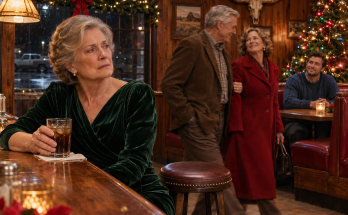

2 Comments on “FINAL PART : At my 55th class reunion, the woman who had humiliated me for four years handed me an apron and said, “Be a dear”