For nine summers, my parents left me at a decaying farmhouse so my younger brother could enjoy luxury vacations without the embarrassment of having me in family photographs.
They never realized that the aunt they considered a failure was quietly teaching me construction, money, and freedom.
By the time they skipped my college graduation for another trip celebrating him, I had already bought property, changed my number, and vanished.
And when they finally found me four years later, desperate for enough money to rescue their spoiled son and prevent foreclosure, they discovered the daughter they discarded had become the only person capable of saving them—and the one person who no longer owed them anything.
Part 1: Nine discarded summers secretly built the life my family feared.
The first time my mother abandoned me for the summer, she handed me a trash bag full of clothes and told me not to cry on the driveway.
I was ten years old.
My younger brother, Ethan, stood beside our family’s silver SUV wearing new sunglasses and a grin so smug it looked rehearsed. In the back seat, I could see three bright suitcases, a beach tote, and the neck pillow my mother used on flights. My suitcase was not among them.
“Your aunt Vivian has agreed to take you,” Mom said, smoothing her linen blouse. “Try not to make her regret it.”
Dad did not hug me. He checked his watch.
Ethan leaned close enough for only me to hear.
“Maybe this year we can finally get one decent family picture.”
Then they drove away.
For nine summers, they repeated the ritual.
Every June, they delivered me to Aunt Vivian’s neglected farmhouse in northern Wisconsin, then flew Ethan to resorts in Florida, California, Mexico, France, and the Caribbean. They said I was moody. Difficult. Too sensitive. They said Ethan deserved peace after surviving another school year with an “unstable” sister.
But the truth was simpler.
He did not want me in the photographs.
My parents thought Vivian’s property was a punishment. The porch sagged. The barn roof leaked. The nearest grocery store was twenty miles away. Cell service vanished whenever rain moved over the pines.
What they did not know was that Vivian had spent thirty years as a commercial contractor before buying distressed properties and rebuilding them for profit. She owned more land than my father ever guessed. She lived plainly because she wanted to, not because she had failed.
On my second morning, she handed me work gloves.
“If they mean to leave you behind,” she said, “we’ll teach you how to move forward without them.”
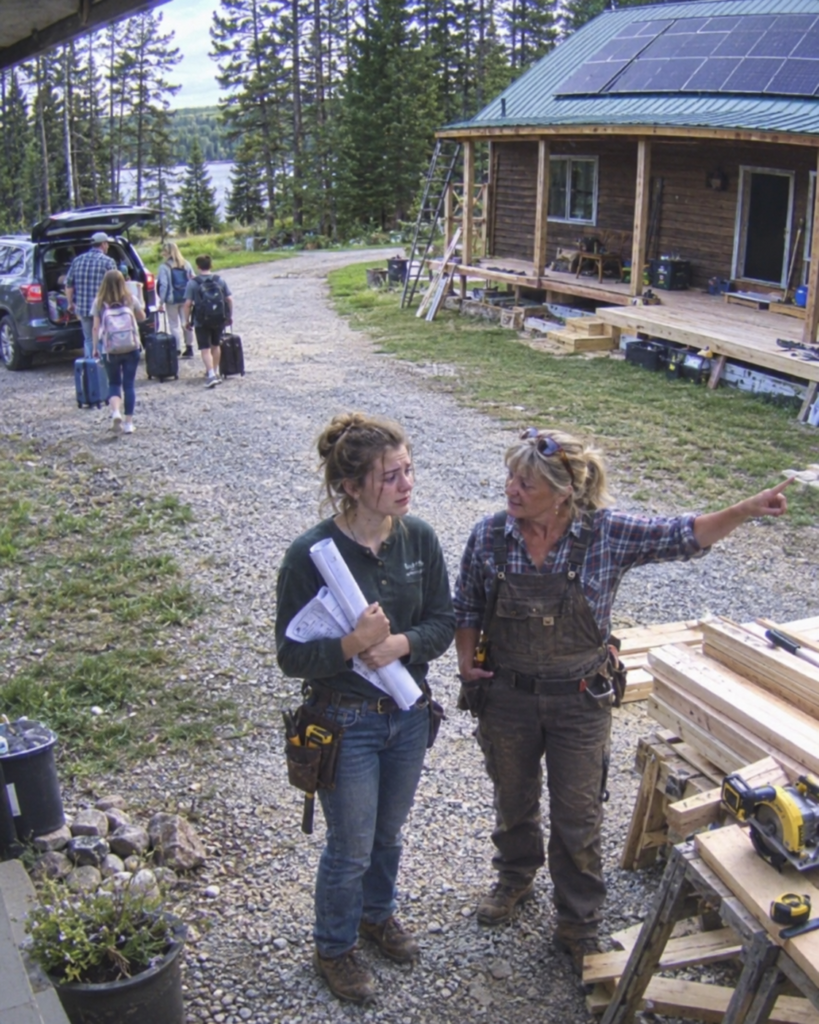
She taught me to measure twice, cut once, read a property deed, negotiate with suppliers, repair drywall, install cabinets, track expenses, and recognize when someone was using shame to control me.
By fourteen, I could frame a wall.
By sixteen, I could read a closing statement.
By eighteen, I had a private bank account, excellent credit, and enough savings for a down payment.
My parents saw none of it.
During the school year, I became quiet enough to disappear in their house. I earned high grades, worked weekends, and stopped asking why Ethan received cars, tutors, and applause while I received reminders to be grateful.
At twenty-one, I bought a damaged duplex in Michigan using money I had earned renovating cabins with Vivian. I restored it at night and on weekends. Rent from the downstairs unit covered the mortgage. A year later, I bought another property.
Then my parents skipped my college graduation because Ethan had barely passed his freshman year and needed, according to my mother, “a confidence-building trip” through Italy.
That was the day I left.
I changed my phone number, closed every account connected to them, moved across state lines, and built a life they could not enter.
Four years passed before they found me.
When they walked into the headquarters of my design-and-construction company, my mother was crying, my father was demanding respect, and Ethan was wearing a designer jacket while asking me for two hundred thousand dollars.
They believed blood would make me surrender.
They were wrong.
The girl they had abandoned every summer no longer lived inside me.
Vivian had helped me build someone stronger.
And that woman was ready to collect every consequence they had spent nineteen years creating.
Part 2: My brother’s perfect vacations required my yearly disappearance from home.
Before the summers began, I believed there was a secret combination of obedience, achievement, and silence that might make my parents love me equally.
I cleaned without being asked. I brought home straight A’s. When Ethan forgot homework, I reminded him. When he broke things, I accepted blame because the punishment was shorter than the argument.
None of it changed anything.
Ethan was three years younger, but our home revolved around him.
His soccer games became family events. My debate tournaments were inconvenient.
His allergies required special meals. My migraines were “attention-seeking.”
When he earned a C, Dad bought him steak because he had “worked through adversity.” When I won a statewide writing contest, Mom complained that my certificate disrupted the refrigerator’s color scheme.
The first summer exile began after Ethan criticized a photograph.
We were standing outside a rented beach house on Lake Michigan in matching white shirts. I had braces, windblown hair, and a sunburn across my nose. Ethan studied the camera screen and said I made the picture look cheap.
Mom laughed.
Dad told me not to sulk.
Two weeks later, they announced that I would spend the following summer with Aunt Vivian because I “needed structure.”
Vivian was my father’s older sister and the family embarrassment. She wore steel-toed boots, drove a battered pickup, and stopped attending holiday dinners after Dad mocked her for never marrying. My mother described her as strange, lonely, and poor.
All three descriptions were false.
After the silver SUV disappeared between the trees, Vivian looked at my trash bag and wet face.
“You can cry,” she said. “Just don’t confuse crying with surrender.”
That first summer was hard. We repaired fences, cleared brush, sanded floors, and cooked simple meals. My hands blistered. Mosquitoes found every inch of skin. At night, the farmhouse creaked through the darkness.
But Vivian never called me difficult.
She explained tasks instead of shouting. She listened. She let me make mistakes, then showed me how to correct them. When I restored an old oak table, she paid me forty dollars and made me record it in a ledger.
“Money is stored choice,” she said. “Protect enough of it, and people lose the power to trap you.”
Meanwhile, Ethan mailed postcards.
One showed him beside a Miami hotel pool.
Wish you were here, he wrote, then crossed out “you” and added, Not really.
Another showed our parents and Ethan beneath palm trees in coordinated blue. Mom later framed it above the fireplace. When I asked why there were no pictures from my summer, she said nobody wanted to see mud and work clothes.
Each August, they returned with souvenirs for themselves and an airport keychain for me.
Each September, they told relatives I had chosen Vivian because I loved the outdoors.
By the third year, I stopped correcting them.
By the fourth, I packed before they asked.
By the fifth, I understood that their cruelty was organized. It had dates, reservations, matching outfits, and confirmation emails.
The proof arrived accidentally.
Mom had printed an email and placed it inside Vivian’s instruction folder. While searching for a receipt, I found it.
Keep Claire busy, the message said. Ethan deserves a few weeks each year where he can experience a peaceful family. She makes everything heavy, and we refuse to let her ruin another vacation.
I read it three times, folded it, and handed it to Vivian.
She placed it in a locked cabinet.
“Keep records,” she said. “People who rewrite history fear paperwork.”
That evening, something inside me went quiet.
I stopped trying to become lovable.
I started becoming free.