By the time I turned seventy-five, the center no longer felt like something I owned.
It belonged to everyone who walked through its doors.
The board made decisions.
The staff ran programs.
Volunteers brought new ideas.
Former students returned as teachers.
Children who had once needed tutoring now helped younger children.
That was the cycle Carlos had imagined.
I had finally learned to step out of the center's way.
I still visited.
I still taught one afternoon a week.
But I no longer stayed until dark.
I no longer checked every drawer.
I no longer answered every email.
Sometimes I walked past a problem and let someone else solve it.
It was surprisingly satisfying.
One afternoon, Andrew called.
“Can you come over tonight?”
“Why?”
“We need to talk.”
The phrase made me nervous.
“What happened?”
“Nothing bad.”
I laughed.
“Everyone says that before saying something serious.”
He laughed.
“Come anyway.”
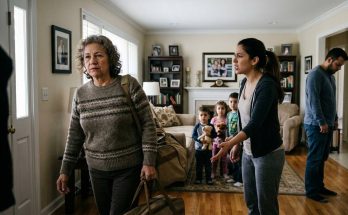
I arrived after dinner.
Mariana was waiting.
Lily was upstairs.
Sophia and Matthew were with a neighbor.
Andrew sat across from me.
“We've made a decision.”
I looked between them.
“What kind?”
Mariana took a breath.
“We're moving.”
My heart dropped.
“Where?”
“Another state.”
I stared at them.
“Why?”
Andrew explained.
He had accepted a position with a company several hours away.
It was a better opportunity for him.
Mariana had found work there too.
The children would transfer schools.
They had spent months considering it.
I listened.
I did not interrupt.
When they finished, I asked one question.
“Do you want to go?”
Andrew looked at Mariana.
“Yes.”
“Then go.”
He looked surprised.
“That simple?”
“No.”
I smiled.
“Nothing important is simple.”
Mariana reached for my hand.
“We were afraid you'd be hurt.”
“I am.”
Andrew's eyes lowered.
“But that doesn't mean you shouldn't go.”
He nodded.
I had spent years fearing abandonment.
Now my own family was choosing distance.
And I discovered that distance was not abandonment.
Sometimes love meant allowing people to build lives that did not revolve around you.
That was difficult.
But it was also beautiful.
The children took the news harder.
Lily cried.
Sophia complained.
Matthew pretended he didn't care.
I told them the truth.
“You are not losing your family.”
“But you'll be far away.”
“Yes.”
“Who will we see?”
“Each other.”
“How?”
“Planes. Phones. Video calls. Holidays.”
Lily looked at me.
“What if you get sick?”
“I'll tell you.”
“What if I miss you?”
“I'll miss you too.”
“Then why are we going?”
I smiled.
“Because growing up means sometimes you go somewhere new.”
She didn't like the answer.
Neither did I.
But it was honest.
The weeks before the move were emotional.
The family spent as much time together as possible.
We had dinners.
Walks.
A final summer picnic at the center.
Lily gave me a bracelet she had made.
The beads were uneven.
I wore it immediately.
“Don't lose it,” she said.
“I won't.”
“You promise?”
I smiled.
“I promise.”
Andrew helped me organize photographs.
Mariana cleaned out an old storage cabinet.
The children made drawings.
Everything felt temporary.
That was the strange thing about saying goodbye.
Nothing had changed yet.
But every ordinary moment suddenly seemed precious.
One evening, Andrew stayed after everyone else left.
“I don't want you to think we're leaving because we don't need you.”
I smiled.
“I know.”
“We need you.”
“I know.”
“But we don't want needing you to be the reason we stay.”
I looked at him.
“That is exactly what I wanted.”
He nodded.
“I learned that from you.”
I touched his hand.
“No.”
He smiled.
“You learned it because you finally listened.”
We laughed.
The move happened in early autumn.
The morning they left, I stood outside their house.
Boxes filled the driveway.
Lily hugged me so tightly I could barely breathe.
“I don't want to go.”
“I know.”
“You're coming to visit.”
“Yes.”
“When?”
“Soon.”
“How soon?”
“Soon enough.”
She frowned.
“You always say that.”
“I know.”
Andrew loaded the final box.
Mariana came to me.
“I don't know if I ever properly thanked you.”
“You did.”
“No.”
She shook her head.
“I mean for leaving.”
I stared at her.
She continued.
“If you had stayed, I might never have changed.”
I smiled.
“Maybe.”
“You gave me the chance to become someone better.”
“I didn't do that.”
“Yes, you did.”
I hugged her.
“Take care of yourself.”
“You too.”
Andrew hugged me last.
For a moment, he was a little boy again.
Then he pulled away.
“I love you.”
“I love you.”
The car disappeared down the street.
I stood there until it was gone.
Then I went home.
The house was quiet.
Too quiet.
For several days, I felt the absence everywhere.
I checked my phone constantly.
Messages arrived.
Pictures.
Videos.
Lily's first day at her new school.
Sophia's new art project.
Matthew's soccer game.
Mariana's new office.
Andrew's commute.
Their life continued.
Mine did too.
I returned to the center.
The children there did not know I was sad.
They only knew I had stories.
One afternoon, a little boy asked why I wore the bracelet Lily had made.
“Because someone I love gave it to me.”
“Where is she?”
“Far away.”
“Are you sad?”
“Sometimes.”
“Then why are you smiling?”
I thought about that.
“Because loving someone means being happy when their life grows.”
He nodded as though that made perfect sense.
Children sometimes understand what adults spend decades learning.
The holidays were difficult.
The first Thanksgiving without them felt wrong.
I made too much food.
Old habits.
Then I laughed.
I packed half of it into containers and gave it to neighbors.
That evening, we video-called.
Everyone talked at once.
Lily showed me her room.
Sophia showed me a painting.
Matthew complained about the food.
Andrew looked tired.
Mariana laughed.
For a few minutes, they were in my living room again.
When the call ended, I sat quietly.
I missed them.
But I was not abandoned.
That distinction mattered.
The center's board had been preparing something for months.
I did not know.
At the annual meeting, the chairperson stood.
“We've created a permanent fund.”
I looked confused.
“For the center?”
“Yes.”
She handed me a folder.
Inside was a legal plan ensuring the property could remain dedicated to community use long after I was gone.
I read the documents.
My eyes filled.
“This is unnecessary.”
“No,” she said.
“It is necessary.”
I looked around the room.
Everyone had contributed.
Teachers.
Former students.
Community members.
Donors.
Even the developer who had once tried to change the property.
The center no longer depended on my personal fortune.
It had become sustainable.
That was Carlos's dream.
Not that I would carry it forever.
That it would survive me.
That night, I stood beside his photograph.
“I think we're done.”
The next morning, I updated my own estate plan.
The property would remain protected.
My personal assets would be divided fairly.
I left meaningful gifts to my grandchildren.
But the center did not belong to my family.
It belonged to the community.
That decision brought peace.
I did not want my grandchildren fighting over what I had built.
I wanted them to understand why it existed.
A month later, Andrew called.
“We're coming for Christmas.”
I smiled.
“I know.”
“How?”
“Lily told me.”
He laughed.
“She wasn't supposed to.”
“She has never been good at secrets.”
“I think she's excited.”
“So am I.”
When they arrived, the house filled instantly.
Shoes by the door.
Coats on chairs.
Voices in the kitchen.
Laughter.
I stood in the middle of it all.
Years earlier, I would have felt responsible for making everything perfect.
Now I simply enjoyed it.
Andrew cooked.
Mariana washed dishes.
Matthew set the table.
Sophia helped Lily decorate cookies.
I sat with my tea.
Nobody asked me to get up.
Nobody expected me to solve anything.
And I realized that this was the final change.
My family had not learned how to live without me.
They had learned how to live with me.
There was a difference.
Later that night, Andrew sat beside me.
“Are you happy?”
I looked around the room.
“Yes.”
“Do you miss us when we're gone?”
“Yes.”
“Does that hurt?”
“Yes.”
He smiled.
“Good.”
I laughed.
“Why good?”
“Because it means we're loved.”
I looked at him.
He was right.
Love did not require constant proximity.
It required honesty.
Trust.
Room to grow.
And the courage to let people go without believing you had lost them.
Click here to continue reading: PART 12: Years Later, I Stood in the Center I Had Built and Finally Understood Why Leaving Had Been the Kindest Thing I Could Do
The Morning I Realized My Family Had Stopped Seeing Me as a Mother and Started Seeing Me as Something They Could Use
Part 11 of 12