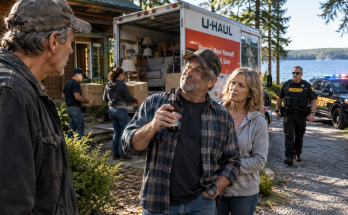
For several weeks after the cabin incident, I tried to return to ordinary life.
That turned out to be harder than I expected.
Every envelope from the county made my stomach tighten. Every unfamiliar number on my phone made me wonder whether it was an investigator, a bank, or another person calling about documents I had supposedly signed. Even opening the mailbox became an exercise in caution.
The cabin was still mine, but ownership no longer felt as simple as it once had.
Sarah kept telling me that the legal position was strong. The deed had been challenged. The loan had been frozen. The proposed sale had collapsed. The supposed appointment of Derek as successor trustee was being disputed.
But she also reminded me that proving something was fraudulent and proving exactly who had committed the fraud were two different things.
That distinction mattered.
The investigators had to determine who had created the documents, who had submitted them, who had arranged the notary certification, and who knew the medical letter was impossible because the physician whose name appeared on it had been dead for eighteen months.
I understood why the process was slow.
Still, waiting was difficult.
Claire was waiting too.
Her separation from Derek had become permanent almost immediately after the cabin incident. She moved into a small apartment across town and took very little with her.
One evening she brought over two boxes from the house.
"I don't know what you want me to do with these," she said.
I opened the first box.
It contained old photographs.
The second held some of Eleanor's handwritten recipes.
I sat down at the kitchen table.
Claire remained standing.
"Are you keeping them?"
"I think so."
She nodded.
"I didn't want Derek touching them."
That sentence told me more about how far things had deteriorated between them than any legal document could have.
I put the recipes aside.
"How are you doing?"
She gave a tired smile.
"Depends on the hour."
"Fair answer."
She pulled out a chair.
"I keep replaying everything."
"You don't have to."
"I know."
"But you do."
"Yes."
She rubbed her palms over her jeans.
"I keep thinking about that folder he gave me."
"What about it?"
"I remember asking him why Sarah's name was on the email."
"What did he say?"
"That she was helping you update the trust and didn't want to involve me until everything was finalized."
I stared at her.
"He made it sound reasonable."
"At the time."
"That's what scares me."
She looked toward the window.
"None of it sounded impossible. That's how he got me."
I didn't disagree.
Derek had not presented Claire with an outrageous story.
He had given her pieces that fit things she already believed.
I was getting older.
Estate planning was normal.
The cabin was valuable.
She was the beneficiary.
Her husband worked in real estate.
Sarah really was our attorney.
Every individual detail sounded plausible.
Put together, they became a trap.
A few days later, Sarah called.
"Arthur, I need you to come to my office."
"What happened?"
"We found something."
I drove there that afternoon.
Sarah had three bankers' boxes on the conference table.
She looked tired.
"These are records obtained through the investigation."
I sat down.
"What am I looking at?"
"Hayes Summit's internal communications."
She opened the first box.
"The investigators subpoenaed the company's email server and financial records."
I felt my shoulders tense.
"Did they find the person who created the documents?"
"Not conclusively."
"Then what did they find?"
Sarah slid a printed email across the table.
It had been sent from an account belonging to Derek's chief financial officer.
The subject line read: Sterling Trust Collateral.
I read the message.
The writer was asking Derek whether the title issue had been resolved and whether the lender needed an updated trustee certification.
The date was three weeks before the U-Haul appeared at the cabin.
I looked at Sarah.
"He had people working on this before I knew anything."
"Yes."
"How many?"
"We don't know yet."
She opened another folder.
There were spreadsheets.
Loan projections.
Development budgets.
A list of creditors.
Several lines were highlighted.
The cabin appeared under a category labeled Pending Collateral.
I read it twice.
"Pending collateral."
Sarah nodded.
"That's how they referred to it internally."
I felt something tighten in my chest.
Not because I was surprised.
Because seeing the words made the whole thing feel colder.
To Derek's employees, the cabin wasn't a place.
It was collateral.
A number.
A future source of cash.
"How long had they been planning this?"
"That is still unclear."
She pointed to the dates.
"The earliest reference we have is about six weeks before the U-Haul."
I leaned back.
"Six weeks."
"Yes."
"So this wasn't something Derek decided after a bad week."
"No."
The room went quiet.
I thought about every conversation I'd had with him during those six weeks.
He had asked about the cabin twice.
He had casually mentioned property values.
He had asked whether I planned to keep the land "forever."
At the time, I thought he was making conversation.
Now I understood those questions differently.
He had been measuring the distance between what I owned and what he believed he could take.
Sarah opened another document.
"This is where it gets interesting."
It was an internal memo.
The author had written that the trust's existing structure made the property difficult to monetize without my cooperation.
The memo recommended identifying a successor trustee mechanism that could be activated if I became incapacitated.
I stared at the phrase.
"If I became incapacitated."
"Exactly."
"This was before the medical certification existed?"
"Yes."
I looked up.
"Then someone was thinking about incapacitation before anyone supposedly discovered I was incapacitated."
Sarah nodded.
"That is one of the strongest pieces of evidence we have."
I read the memo again.
The language was careful.
Professional.
Cold.
There was no accusation.
No dramatic statement.
Just a financial recommendation.
If Arthur Sterling becomes unable to act, identify a successor authority capable of transferring the property.
My name was there.
The cabin was there.
The trust was there.
And the strategy was there.
What had looked like a family betrayal now had the structure of a business plan.
That realization changed something in me.
Until then, I had still been trying to understand Derek emotionally.
Why would he do this?
How could he look at me and lie?
How could he tell Claire that he was protecting her?
How could Thomas and Barbara believe him?
But business documents didn't care about emotion.
They showed what people intended to accomplish.
And Derek's company had been planning around my property weeks before I ever knew there was a problem.
"Does Claire know?"
Sarah shook her head.
"Not yet."
I nodded.
"She should."
"I agree."
That evening I called her.
She came over after work.
I placed the memo on the table.
She read it silently.
Then she read it again.
Her face changed.
"He wrote this?"
"We don't know who wrote it."
"But it came from his company."
"Yes."
She sat down.
"Six weeks."
"At least."
She stared at the page.
"He was already thinking about making you incapable."
"Apparently."
Her eyes filled.
"Then all those conversations weren't about estate planning."
"No."
"They were about whether you could stop him."
I nodded.
She covered her mouth.
"I feel sick."
"You didn't know."
"I should have."
"No."
She shook her head.
"I married him."
"You married the person he showed you."
She looked at me.
"Maybe I didn't pay enough attention."
"Claire, listen to me."
She did.
"Being deceived doesn't make you part of the deception."
She looked down at the document.
"But I signed something."
"Something you were misled about."
"I still signed it."
"Then learn from that part."
She nodded slowly.
"I will."
The investigation continued.
A forensic examiner compared my genuine signatures with the one on the trustee appointment.
The differences were obvious once someone knew where to look.
The slant was wrong.
The pressure pattern was wrong.
The spacing was wrong.
Even the way the final letter of my surname curled differed from my normal signature.
The examiner concluded that the signature was not mine.
That should have felt satisfying.
Instead, I found myself thinking about how easily the fraud could have survived if nobody had looked closely.
Then came the notary.
The notary whose stamp appeared on the appointment claimed she had never met me.
She had notarized documents for Hayes Summit employees before, but she had not notarized that one.
Someone had apparently used her commission information without authorization.
When investigators asked how the seal had appeared on the document, she became visibly upset.
"I keep my seal locked in my office," she said.
That detail opened another line of inquiry.
Who had access to her records?
Who had obtained a copy of her seal?
Who had prepared the documents?
Who had submitted them?
The trail kept branching.
One Friday afternoon, Sarah called again.
"They found the source of the medical letter."
My heart sank.
"Who?"
"An outside document preparation service."
"Was Derek's company involved?"
"Indirectly."
She paused.
"The request came through a consulting firm that Hayes Summit had used for several development transactions."
"Can they identify the person who ordered it?"
"Yes."
"Who?"
"An employee named Mark Ellison."
I didn't recognize the name.
"Who is he?"
"Former financial operations manager."
"Former?"
"He resigned three days after the cabin incident."
That was not a coincidence.
Investigators located him two states away.
He agreed to speak.
According to Sarah, Mark claimed Derek had instructed him to prepare a "trust administration package."
He said Derek told him the documents were routine and that Arthur had become unable to manage the property.
Mark claimed he never saw me.
Never spoke to a doctor.
Never contacted a notary.
He simply prepared the package from information Derek's office supplied.
But one detail mattered.
Mark remembered asking Derek why the medical certification came from William Barrett.
Derek allegedly told him, "It's an old family doctor. Nobody will question it."
I closed my eyes.
That sentence was enough to explain what kind of calculation Derek had been making.
Not whether the document was true.
Whether anyone would bother checking.
The investigation had finally reached the point where the lie was becoming too detailed to hide.
Derek still denied personally creating anything.
But he could no longer deny that his company had produced the documents.
He could no longer deny that his employees had been told I was incapacitated.
He could no longer deny that the cabin had been listed internally as collateral.
He could no longer deny that he expected the property to support a pending sale.
And he could not explain why his father had been instructed to move into the cabin before the title transaction closed.
One night, Claire called me.
"Dad."
"Yes?"
"I got a letter from his attorney."
"What does it say?"
"Derek claims the cabin was intended as part of my inheritance and that he was acting to preserve its value."
I almost laughed.
"Preserve its value."
"I know."
"Does he still deny fraud?"
"Yes."
"What does he say about the messages?"
"He says they're being interpreted unfairly."
"And the dead doctor?"
She went quiet.
"His attorney says Derek didn't personally verify the doctor's status."
I stared at the wall.
"That isn't a defense."
"I know."
She sighed.
"He's trying to make everything sound like an administrative mistake."
"That's because the truth sounds much worse."
She didn't answer.
Then she said, "There's something else."
"What?"
"Derek wants to meet with me."
I felt my shoulders stiffen.
"Do you want to?"
"No."
"Then don't."
"He says he wants to explain everything."
"You already know enough."
"I know."
"Claire, you don't owe him a private conversation."
She was quiet.
"I needed to hear you say that."
"Why?"
"Because part of me still wants the explanation."
I understood.
People often wanted explanations from the person who hurt them.
Not because the explanation would change the facts.
Because they hoped it might make the facts easier to carry.
"If you meet him," I said, "don't meet him alone."
"I won't."
"And don't let him turn the conversation into an argument about whether the property should have been sold."
"I won't."
"Good."
She paused.
"Dad?"
"Yes?"
"I'm glad you went to the cabin that morning."
So was I.
But I also knew how close the situation had come to becoming something irreversible.
The cabin had survived.
The trust had survived.
I had survived.
But the family we had before that Tuesday morning was gone.
And as the investigation moved toward its final stage, I began to understand that the most difficult part might not be proving what Derek had done.
It might be deciding what to do with the truth once everyone knew it.
Click here to continue reading: PART 6: Derek Finally Asked for a Private Meeting, but the Question He Wanted Claire to Answer Exposed the Last Piece of His Plan
The U-Haul Was Already Half Empty When I Reached the Cabin, and the Man on My Porch Spoke as Though My Wife’s Property Had Become His
Part 5 of 8