Clara arrived before sunrise, carrying two paper cups of coffee and a paperback novel with a bent corner. The street outside the house was still dark, and the air had that damp chill that settled over the neighborhood before the first buses began running.
“You're awake already,” she said when I opened the door.
“I didn't sleep much.”
“Neither did I.”
She handed me the coffee and stepped inside. She had dressed for a long day, wearing comfortable shoes and a sweater beneath her coat. Her bag contained a phone charger, a notebook, a packet of crackers, and the list of medications the hospital had asked me to bring.
I looked at her shoes.
“Those are the ones you wear when you're standing all day at school.”
“They're also the ones I wear when I'm sitting in a hospital chair for hours.”
“You don't know how long we'll be there.”
“Then it's good I wore comfortable shoes.”
She smiled, and I decided not to argue.
At the hospital, the lobby lights seemed brighter than they had during my earlier visits. A volunteer directed us toward admissions, where a clerk checked my identification and confirmed the payment arrangements. I signed the required forms while Clara sat beside me, turning the pages of her paperback without seeming to read them.
When the nurse called my name, Clara stood immediately.
“I'll be right here,” she said.
I wanted to tell her that she didn't need to stay the entire time. I wanted to insist that she go to school and carry on with her life. But I had already learned that she would interpret another attempt to send her away as a refusal of the help she had chosen to give.
“All right,” I said. “Thank you.”
She squeezed my hand once before I followed the nurse through the double doors.
The preparation took longer than I expected. Staff members checked my identity, reviewed the procedure, and asked the same questions in slightly different ways. I answered them as carefully as I could. The doctor came by to explain the plan again, and I signed the final consent form.
As the nurse adjusted the bed, I thought about the three thousand two hundred dollars that had brought me to this point. The money had seemed impossibly large when I sat in my car outside the billing office. Now it was only one detail among many: the hospital forms, the doctor's instructions, the sound of a cart moving along the corridor, the pressure of the blanket over my legs.
The procedure went well.
When I woke, my mouth was dry, and the room seemed to tilt slightly whenever I moved my head. A nurse checked my vital signs and told me the surgical team was satisfied with the result. I closed my eyes again, relieved to hear that the operation had gone as planned.
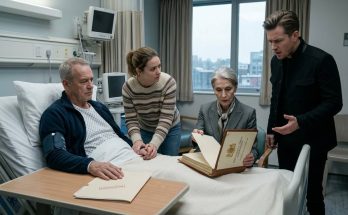
Later, when I was alert enough to look around, I saw Clara asleep in the chair beside the bed. Her head had tipped toward one shoulder, and her paperback lay open on her lap. The coffee cups were gone, but a small paper bag sat on the windowsill with crackers and a bottle of water inside.
I watched her for a while. She had spent the morning waiting, and she would likely spend much of the afternoon waiting again. She had given up her savings to help pay for the procedure, and now she was giving me her time without asking when she could leave.
I shifted slightly, and the movement woke her.
“Dad?”
“I'm all right.”
She sat up so quickly that the book slid onto the floor.
“Don't do that,” she said, picking it up. “You scared me.”
“I only moved.”
“You're allowed to move. Just give me a warning next time.”
I laughed, then winced because even that small movement hurt. Clara reached for the water and helped me take a sip.
“Did the doctor say everything went well?” she asked.
“He did.”
She let out a breath she seemed to have been holding since dawn. Then she settled back into the chair, her hands wrapped around the paper cup she had refilled from the water dispenser.
Eleanor did not come to the hospital. She had told me the previous evening that she had appointments she could not change. I had not argued with her. I was too tired to turn her absence into another dispute, and I did not want Clara to feel responsible for filling the space her mother had left.
Julian sent a message later that morning.
Did you work out the payment?
I read it on my phone, then looked at Clara, who was making a list of questions to ask the nurse before I was discharged.
I typed back: Yes.
His response came a minute later.
Good.
I set the phone facedown on the table. There was nothing more to say at that moment. I was alive, the procedure had gone well, and my daughter was sitting beside me. I would not spend the afternoon trying to extract a different response from a man who had already made his decision.
Thomas visited that afternoon. He arrived carrying his leather briefcase and a folder of documents. He did not stay long, because I was tired, but he told me the county had recorded the deed transferring the Bend property into the trust.
“The legal owner shown in the public record is now the trust,” he said. “The filing is complete.”
I looked at Clara. She had been listening politely, though she clearly had no idea why a lawyer would be discussing property in my hospital room.
“And Horizon?” I asked.
“They remain interested. They have asked for additional information, and we are working through the next steps. Nothing is final, but the interest is genuine.”
I nodded. The property had become a possibility rather than a promise. I wanted to keep it that way until the sale was complete.
Thomas placed the folder on the small table beside the window. An old leather folder lay beneath it, holding the postnuptial agreement and the supporting documents from five years earlier.
“We may need this again,” he said.
“I expect we will.”
Clara glanced from him to me. “Is there something I should know?”
“Nothing you need to worry about today,” I said. “You should concentrate on making sure I follow the doctor's instructions.”
She looked unconvinced, but she did not press me.
The following morning, Thomas returned to check on the recording and to tell me that Horizon wanted to continue negotiations. Clara had gone to the cafeteria to find something warm to eat, leaving her folded bus schedule on the bedside table beside a receipt from the pharmacy.
I had asked her how she planned to get around after selling her failing car. She had admitted that she was considering it because the repairs would cost more than she could reasonably afford. The bus route was inconvenient, and she would have to leave earlier to reach school on time, but she had worked out a schedule.
I had not realized she had already begun making those arrangements until I saw the paper lying beside my bed.
Thomas noticed it, too.
“She's making sacrifices,” he said quietly.
“Yes.”
“Do you still feel the same way about the trust?”
“I do.”
He nodded. “Then we should make sure the arrangement reflects your wishes and protects your own needs first.”
“I don't want to leave myself without enough money for medical care or retirement.”
“You won't. That's why the terms were written the way they were.”
I was grateful for his care. I did not want Clara to receive a fortune at the cost of my own security, nor did I want the trust to become a source of confusion. The arrangement was meant to provide for both of us in the ways we needed.
Clara returned with a bowl of soup and a piece of toast. She sat down and told me that the cafeteria coffee was worse than the coffee at school, which I found difficult to believe.
“That's a serious accusation,” I said.
“I'm prepared to defend it.”
We laughed, and for a few minutes the hospital room felt ordinary.
Then Thomas's phone rang.
He stepped toward the window to answer it. I could not hear the other person's words, but I watched his expression sharpen as he listened. He asked a few questions, thanked the caller, and ended the conversation.
“What is it?” I asked.
“Someone at Horizon's office has confirmed that the trust's ownership is showing in the county records. The transfer has attracted attention because developers are monitoring property changes around the interchange.”
I nodded slowly. “So Julian may hear about it.”
Thomas did not answer immediately. He knew Julian worked in finance and that his firm tracked commercial property activity in the corridor. If a colleague noticed the ownership change, the news could reach him quickly.
“It's possible,” Thomas said. “The record is public. We cannot control who sees it.”
I looked toward the door. Clara was studying the folded bus schedule, tracing a route with the tip of her finger. She still knew nothing about the trust, the preliminary offer, or the clause that had separated Eleanor from any future proceeds.
I wondered whether I should tell her before Julian found out. But I had promised myself that I would not rush the conversation. The procedure had only just been completed, and I needed time to recover before dealing with the family consequences of my decision.
That afternoon, Thomas left the old leather folder beside his chair. He said he would return the next day to review the final details with me. I watched him go, then leaned back against the pillows.
The hospital room was quiet. A nurse passed in the hallway, and somewhere nearby a monitor beeped steadily. Clara had fallen asleep again, her hands folded over the paperback on her lap.
I looked at the bus schedule on the bedside table.
The land might be worth millions. The trust might secure Clara's future. The old agreement might prevent Eleanor from claiming any part of the proceeds. But none of those facts changed what had happened before I knew the property could be valuable.
Julian had been asked for a relatively small amount of money to help his father obtain necessary medical care. He had refused. Clara had offered what she could, even though the cost to her would be substantial.
The difference between them was not their income. It was what each had been willing to do when there was nothing to gain.
I was still thinking about that when the door opened the next morning.
Julian came in first, holding his phone in one hand. Eleanor followed close behind him. Neither of them asked how I felt or whether the procedure had been successful.
Julian held the screen toward me.
“What have you done with the land?”
Click here to continue reading: PART 5: My Son Arrived With a Public Record on His Phone and Demanded to Know Why His Father Had Given Away a Fortune
The Hospital Estimate Was Only a Few Thousand Dollars Short, Yet One Phone Call Exposed a Distance Years in the Making
Part 4 of 8