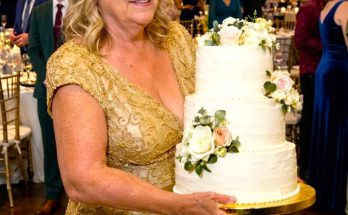
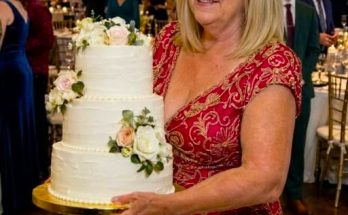
The baker kept one hand on the refrigerator door and looked at me as if I had walked into his shop carrying something dangerous. Behind him, through the narrow opening, I could see the white edge of a tiered cake decorated with ivory roses. My daughter’s wedding cake. The one I had paid for in full.
“I’m sorry, Mrs. Bennett,” he said, lowering his voice. “But I was specifically told not to release it to you.”
For a moment, I thought I had misunderstood him. The bell above the bakery door had just stopped jingling, and the smell of warm butter, vanilla, and toasted almonds still hung in the air. A delivery driver was stacking boxes near the counter. Somewhere in the back, a mixer hummed. Everything around me continued as usual, while I stood there holding my purse with both hands, unable to make sense of the sentence.
“Not release it to me?” I repeated. “I ordered the cake. I paid the deposit, and I paid the balance last week. My daughter’s wedding is tomorrow.”
The baker glanced toward the front window before looking back at me. His name was Peter, according to the small embroidered lettering on his apron. I had met him twice during the ordering process. Both times, he had been pleasant and professional, patiently discussing frosting, sugar flowers, and the number of servings we would need for the reception. He had even remembered that Emma wanted the roses arranged loosely rather than in perfect, identical circles.
“I know,” he said. “I have your order right here.”
He turned toward a clipboard beside the register and found the sheet bearing my name. I watched his finger move down the page, stopping at the handwritten notes near the bottom. His mouth tightened. Whatever he saw there seemed to make the situation more uncomfortable for him, not less.
“Then you can see that there’s been a mistake,” I said. “Perhaps someone called with a question about the delivery. Emma may have changed something. Let me speak to whoever gave you that instruction.”
Peter shook his head. “The person who contacted me was very clear. I was told the cake was not to be handed over to you under any circumstances.”
“Who contacted you?”
He hesitated long enough for me to understand that he knew the answer might hurt me.
“Your daughter.”
The words landed with a quiet, almost physical force. I stared at him, waiting for him to correct himself, to say he meant my daughter’s fiancé, or a wedding planner, or somebody who had been given the wrong telephone number. Emma had never spoken to me that way in her life. We had argued, of course. Mothers and daughters did not pass through thirty years together without disagreements. But she had never ordered a stranger to deny me something I had bought for her wedding.
“That doesn’t sound like Emma,” I said.
Peter’s expression softened. “I’m not trying to upset you, Mrs. Bennett. I’m just doing what I was asked to do.”
“May I see the message?”
He looked toward the back again. I noticed then that his hands were trembling slightly, though whether from nerves or the cold of the refrigerator, I couldn't tell.
“I have a copy of the instructions,” he said. “But I don't think it would help.”
“Peter, I have spent months helping my daughter prepare for tomorrow. If she has changed the arrangements, I deserve to know why. If someone is pretending to speak for her, we need to find that out before the wedding.”
He drew a breath, then reached beneath the counter for a folder. Inside were the original order form, a payment receipt, and a printed email. He laid the pages down without letting go of the last one.
I recognized Emma’s name in the sender field. Beneath it was a message requesting that the cake be held until further notice and that it not be released to me. The explanation was brief, almost businesslike. The sender claimed there were family circumstances I was not aware of and insisted that the bakery follow the instruction even if I arrived in person.
The email carried my daughter’s name, but something about its tone felt wrong. Emma could be direct when she wanted to be, and she had become increasingly protective of her wedding plans over the past few months. Still, she usually softened difficult things with an explanation, a joke, or at least a familiar phrase that reminded me she was talking to her mother.
This message had none of that. It sounded like a stranger borrowing her identity.
“When did you receive this?” I asked.
“Yesterday afternoon.”
“And you didn't call me?”
“I thought it was something the two of you had arranged. The message said you might come to collect the cake, but that I should not hand it over.”
I looked at the date on my receipt. The cake had been ordered under my name because I was covering the cost as a wedding gift. Emma and Ryan had chosen the design together, but I had insisted on paying. It was one expense I could comfortably take off their shoulders, and Emma had been so happy when I told her that I had nearly forgotten how exhausted I had felt after the final tasting.
Now the cake sat behind a locked refrigerator door, and the baker was treating me like an unwelcome visitor.
“Can you call the number the message came from?” I asked.
Peter slid the paper toward me. The number was unfamiliar. I copied it into my phone, but before I could press the call button, I heard a familiar voice behind me.
“Mom?”
I turned so quickly that my purse slipped against my hip.
Emma stood just inside the bakery entrance, wearing jeans, a loose cream sweater, and the white sneakers she had been using while running wedding errands. Her hair was pulled into a hurried knot, and a strand had fallen across her cheek. She looked tired, but not surprised to find me there.
That was the first thing I noticed. Not the worry in her face, not the way she held her phone tightly, but the fact that she seemed to have expected this moment.
“Emma,” I said. “Thank goodness. Peter says you told him not to give me your cake.”
Her eyes moved to the papers on the counter.
“I told him to hold it,” she replied.
“Why?”
She opened her mouth, closed it, and looked at the baker. “Could we talk outside?”
I waited for her to laugh at the absurdity of the situation. I waited for her to tell me that someone had used her name, that she would sort everything out, and that the three of us would be embarrassed by the whole misunderstanding later. Instead, she glanced toward the refrigerator, then back at me.
“Not here,” she said.
“Your wedding cake is in that refrigerator, and the man who made it thinks I can't be trusted with it. I believe here is exactly where we need to talk.”
Emma flinched at the sharpness in my voice. For a second, I regretted speaking so harshly. She had been under tremendous pressure. The guest list had changed twice, the florist had delivered the wrong shade of roses for the rehearsal arrangements, and Ryan's work schedule had made it difficult for them to handle everything together. I knew she was tired. I had spent the last six months reminding myself that a wedding was a joyful event even when the preparations made everyone irritable.
But exhaustion did not explain why my daughter had apparently ordered a baker to keep a paid cake away from me.
“Mom, please,” she whispered. “Just come outside with me.”
I followed her through the door, leaving Peter behind the counter with his folder and his unanswered questions. The afternoon air was damp and cool. A delivery van rumbled past the curb, and the smell of rain rose from the pavement. Emma walked toward the side of the building, where a narrow strip of shade separated the bakery from a neighboring shop.
She stopped beside the wall and turned to face me.
“Did you call someone about the cake?” I asked.
“No.”
“Then who sent that message?”
Emma pressed her lips together. Her phone vibrated in her hand, but she ignored it.
“I don't know exactly what was said to Peter,” she replied. “I told him not to release the cake until I came in person. I didn't tell him you weren't allowed to have it.”
“Those are very different instructions.”
“I know.”
“Then why didn't you tell me?”
She looked down at the pavement. I watched her thumb move repeatedly over the edge of her phone case, a nervous habit she had possessed since childhood. When she was little, she used to rub the seam of her school uniform whenever she was frightened of disappointing me. Seeing the same movement now made my anger falter, but it also frightened me. Whatever was happening, she had been carrying it alone long enough for fear to become familiar.
“Something happened,” she said at last. “Something Ryan and I thought we had under control.”
“What happened?”
“I can't explain all of it here.”
“Then explain the part that involves me.”
Her eyes filled, but she did not cry. Emma had inherited my stubbornness, though she had always been better at hiding it behind a calm expression.
“Mom, I need you to trust me for a little while longer.”
I almost laughed. Trust her? I had paid for the cake, rearranged my schedule to help with the reception, and spent weeks making sure that her wedding would be everything she wanted. I had never asked her to explain every private conversation she shared with Ryan. I had respected their need to make decisions as a couple. But she was standing in front of me, refusing to answer a simple question while asking me to accept that refusal as an act of trust.
“Emma, I love you,” I said carefully. “But trust doesn't mean pretending I don't see what's happening.”
She looked up sharply.
Before she could answer, her phone vibrated again. This time she glanced at the screen. I saw a name flash across it, followed by a short message. Her expression changed so abruptly that I stepped closer.
“Who is it?” I asked.
“Nobody.”
“Don't do that.”
She turned the phone facedown against her palm. The movement was quick and practiced, as though she had been hiding messages from me for much longer than the past twenty-four hours.
“Is this about Ryan?” I asked.
Her silence lasted only a second, but it was enough.
I thought of Ryan standing in our kitchen three evenings earlier, helping me carry bags of groceries from the car. He had been polite, affectionate even, and unusually quiet when I asked whether the wedding plans were going smoothly. He had said they were fine, then asked if I needed anything else before he left. At the time, I had assumed he was tired from work. Now the memory returned with a different weight.
“Does Ryan know what you're doing?” I asked.
“Yes.”
“Does he agree with it?”
Emma looked away.
I could feel the shape of a larger problem emerging, though I still had no idea what it was. The cake was only the visible part. Something had happened inside the family, and my daughter and her fiancé had decided that keeping me in the dark was easier than telling me the truth.
“I'm going back inside,” I said. “I'm going to ask Peter to hold the cake until you and Ryan can explain what's going on. But I will not stand there while anyone treats me as if I've done something wrong without telling me what it is.”
“Mom, wait.”
I stopped.
Emma took a shaky breath. For the first time since she had arrived, she looked genuinely afraid.
“If you go back in there and insist on taking the cake,” she said, “you might force something to happen before we're ready.”
I searched her face.
“What exactly would I be forcing?”
She looked toward the bakery window. Behind the glass, Peter was standing beside the counter, watching us without pretending otherwise.
Then Emma turned back to me and said, almost inaudibly, “You might find out why someone has been trying to keep our family apart.”
Click here to continue reading: PART 2: My Daughter Begged Me to Wait Until After the Wedding, but the Name on Her Phone Made Me Question Who Had Been Giving the Orders
The Baker Recognized My Name Before He Even Looked at the Wedding Cake, and His Next Words Changed Everything I Thought I Knew
Part 1 of 8