My apartment was on the fourth floor of an old building near Újlipótváros.
Small kitchen.
One bedroom.
A narrow balcony.
A living room barely large enough for a sofa and a table.
When Maya stepped inside, she looked around quietly.
There were dishes in the sink.
Laundry on a chair.
Empty takeaway containers near the trash.
Her mouth tightened.
I felt embarrassed.
“This is how you live now?” she asked.
I scratched the back of my neck.
“I was going to clean.”
“When? Next year?”
I almost smiled.
There she was.
A glimpse of Maya before sadness swallowed her whole.
“I’ll clean now.”
“You should have cleaned before bringing a sick person here.”
“Yes.”
She walked slowly to the bedroom.
I had changed the sheets twice.
Placed water bottles beside the bed.
Bought a thermometer, sanitizer, masks, soft tissues, plain crackers, ginger tea, and six kinds of soup because I did not know what she could eat.
She noticed everything.
But she said nothing.
That night, I slept on the sofa.
Or tried to.
Every sound from the bedroom made me sit up.
A cough.
A shift in the blanket.
A glass moving.
At 2:00 a.m., I heard her crying.
Softly.
Like she was trying not to exist.
I stood outside the bedroom door with my hand raised.
Then stopped.
Months ago, I would have entered without thinking.
Now I knocked.
“Maya?”
The crying stopped.
“I’m okay.”
“You don’t sound okay.”
A pause.
Then:
“I don’t want you to see me like this.”
My forehead rested against the door.
“I already have.”
The door opened slowly.
She stood there wrapped in the shawl, face wet with tears, looking smaller than I had ever seen her.
“I’m scared,” she whispered.
Three words.
So simple.
So devastating.
I stepped back, not forward.
“Can I hug you?”
She looked at me.
Then nodded.
Carefully, as if afraid she might break, I wrapped my arms around her.
For a second, she stayed stiff.
Then she collapsed against my chest.
Her sobs came hard.
Violent.
Months of fear, loneliness, hospitals, divorce, grief, and silence pouring out at once.
I held her and cried too.
Not loudly.
But enough for her to feel it.
“I’m sorry,” I whispered into her short hair. “I’m so sorry, Maya.”
She gripped my shirt.
“You left.”
“I know.”
“I needed you.”
“I know.”
“I didn’t know how to ask anymore.”
That broke me.
“I should have heard you before you had to ask.”
We stood there in the dark hallway of my small apartment until her sobs slowed.
Then I helped her back to bed, sat on the floor beside her, and stayed until she fell asleep.
In the morning, nothing was magically fixed.
Life does not work that way.
Cancer did not disappear because I felt remorse.
Our divorce did not dissolve because we cried in a hallway.
But something shifted.
A door opened.
Not to the past.
To the truth.
The next weeks became a routine.
Hospital appointments.
Blood tests.
Medication schedules.
Bland food.
Fever checks.
Insurance calls.
Donor registry paperwork.
I learned the names of her medicines.
I learned which foods made her nauseous.
I learned that she liked her tea weak after chemo and strong on better days.
I learned how to sit quietly without filling silence with useless optimism.
That was harder than I expected.
At first, I kept saying things like, “You’ll be fine.”
Maya hated that.
One afternoon, after a brutal treatment session, she turned her face away and said, “Don’t promise what you can’t control.”
So I stopped.
Instead, I said, “I’m here.”
That, at least, was true.
My coworkers noticed I changed.
I stopped going for drinks.
I left work on time.
I refused weekend assignments.
My manager asked if everything was all right.
I almost lied.
Then I said, “Someone important is sick.”
He nodded.
For the first time in years, work did not feel like a hiding place.
It felt like something I had once used to abandon my life.
Maya and I talked more in those weeks than we had in the last year of marriage.
Not all conversations were gentle.
Some were knives.
One evening, she asked, “When did you stop looking at me?”
I looked up from washing dishes.
“What?”
She sat at the table, wrapped in a blanket, her face pale but alert.
“Before the divorce. When did you stop seeing me?”
I turned off the water.
“I don’t know.”
“That’s not an answer.”
“I know.”
I dried my hands slowly.
“I think after the second miscarriage, I didn’t know how to be around your grief. I felt useless. Then I started feeling angry that I felt useless. Then I avoided you because your sadness reminded me of my failure.”
She stared at me.
“You thought my grief was about you?”
The shame was immediate.
“I think I made it about me because that was easier than facing yours.”
Her eyes shone.
“I lost them too, Arjun.”
“I know.”
“No. You don’t.”
I sat down across from her.
“You’re right. I don’t.”
She looked toward the window.
“I felt like my body had betrayed both of us. And every time I looked at you, I thought you were disappointed in me.”
“I wasn’t.”
“You acted like you were.”
That silenced me.
Intentions were useless against impact.
I reached across the table, but stopped halfway.
She saw.
After a moment, she placed her hand in mine.
Not forgiveness.
But permission.
“I was disappointed in life,” I said. “In myself. In how helpless I felt. But I let you carry the blame because I didn’t know what to do with my own pain.”
Maya closed her eyes.
“You should have told me.”
“I know.”
“I should have told you too.”
“No,” I said. “Don’t make this equal just to be kind.”
She opened her eyes.
“I’m not being kind. I did hide things. The diagnosis. The bruises. The fear. I thought if I became quiet enough, maybe I wouldn’t be too much for anyone.”
My throat tightened.
“You were never too much.”
“I was for you.”
The words were soft.
Not cruel.
True.
I bowed my head.
“Yes,” I whispered. “At that time, I acted like you were.”
Maya cried silently.
This time, I did not rush to fix it.
I simply held her hand.
A month later, my mother found out.
Not from me.
From Rohit.
He visited one evening with food and saw Maya sleeping in the bedroom through the half-open door.
His eyes widened.
I dragged him into the corridor and explained everything.
He cursed me for ten full minutes.
Then he hugged me.
Then he called me an idiot again.
Two days later, my mother arrived from Szeged with two bags of food, prayer beads, and eyes swollen from crying.
Maya was sitting on the sofa when she entered.
For a second, both women stared at each other.
Then my mother dropped the bags and rushed to her.
“Maya.”
Maya began to cry before my mother even touched her.
“I’m sorry,” Maya whispered. “I didn’t tell you.”
My mother held her face.
“You foolish girl. You think love ends because paperwork says so?”
Then she looked at me.
Her expression hardened.
“And you.”
I lowered my head.
“Yes, Amma.”
She pointed toward the kitchen.
“Make tea.”
That was her punishment.
And her mercy.
For the next week, my mother stayed.
She cooked.
Cleaned.
Scolded doctors politely but firmly.
Scolded me less politely.
And sat beside Maya for hours, telling her stories from home, as if words themselves could stitch strength back into her.
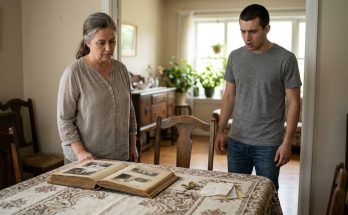
One night, I found Maya and my mother looking through old wedding photos.
I stopped at the doorway.
Maya was smiling.
A tired smile.
But real.
My mother noticed me first.
“Come here,” she said.
I obeyed.
She pointed at a photo of our wedding day.
Maya in red and gold, looking shy and radiant.
Me beside her, grinning like a fool.
“You both looked so happy,” my mother said.
Maya’s smile faded slightly.
“We were.”
The room went quiet.
Then my mother closed the album.
“Then remember happiness is not proof that pain will never come. It is proof that you once knew how to hold it together.”
Maya looked at her.
“So what if we forgot?”
My mother touched her cheek.
“Then learn again. Slowly.”
Neither of us answered.
But those words stayed with me.
Slowly.
Everything was slowly now.
Slow recovery.
Slow trust.
Slow conversations.
Slow forgiveness.
Slow fear.
The search for a bone marrow donor became urgent after Maya’s third cycle.
Her doctors tested relatives first, but there were no close matches.
I got tested too, though chances were low.
Not a match.
I had expected that.
Still, when the result came, I sat in the hospital bathroom and punched the wall hard enough to bruise my knuckles.
I wanted to give her something my body could not give.
Maybe that was how she had felt after the miscarriages.
The thought humbled me.
Weeks passed.
No match.
Maya tried to stay calm, but I saw the terror returning.
One morning, she asked me to take her to Margaret Island.
It was cold, but sunny.
She wore a mask, a thick coat, and the blue scarf my mother had knitted.
We walked slowly beside the Danube.
After ten minutes, she grew tired, so we sat on a bench.
The river moved quietly under the pale sky.
“I used to imagine bringing our child here,” she said.
My chest tightened.
“So did I.”
She looked at me.
“Do you still think about them?”
The miscarriages.
The children who had never become children outside our dreams.
“Every day,” I said.
Her eyes filled.
“I thought you forgot.”
“No.”
“You never talked about them.”
“I thought talking would hurt you.”
“It hurt more that you didn’t.”
I nodded.
“I know that now.”
She turned back to the river.
“I named them in my head.”
I looked at her.
“What names?”
Her lips trembled.
“Asha and Nilan.”
Hope.
Moon.
I repeated them silently.
Asha.
Nilan.