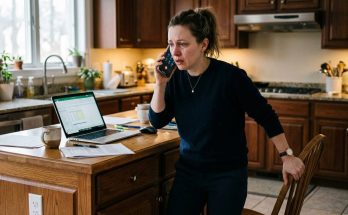
“The moment he said it, everything seemed to tilt.”
“We’re not married—you don’t own me.”
Caleb leaned back on his stool, as if he had just made a clever point instead of humiliating me in front of everyone.
The waitress stood frozen beside him, still holding the check. His phone number was already written across the receipt—bold, intentional. He had done it right in front of me.
Smiling.
Daring me to react.
So I did.
Quietly, I asked,
“Then why are you living like you’re in a relationship with me?”
He laughed.
Not awkwardly. Not nervously.
Just casually—like I was the one being unreasonable.
“You’re making this a big deal,” he said, taking a sip of bourbon. “I just gave her my number.”
“That’s it?”
“Yeah,” he shrugged. “We live together, we’re dating—but you don’t get to act like my wife.”
The words didn’t shock me.
They just confirmed what I had been avoiding for years.
For three years, I had built a life with him.
Shared rent. Managed the house. Remembered his family’s important dates. Stayed beside him during hospital visits. Covered expenses when he couldn’t.
I supported everything.
Except the one thing that mattered—respect.
I looked at him for a second… then nodded.
“You’re right,” I said.
He smirked.
He thought he had won.
He always mistook calm for surrender.
I picked up my purse, said goodbye to his friends, and walked out.
He didn’t follow.
Didn’t call.
Didn’t even notice I was gone.
That was when something inside me went quiet.
Not broken.
Not angry.
Just… clear.
I drove home through the cold rain, gripping the wheel.
By the time I parked, I wasn’t crying anymore.
I was thinking.
Planning.
Midnight found me standing in the living room, surrounded by boxes.
His words replayed in my head.
“We’re not married. You don’t own me.”
I sealed the first box.
“You’re right,” I whispered.
“I don’t.”
By dawn, half the apartment was empty.
My clothes.
My books.
The photos.
Gone.
Only one empty nail remained on the wall—where a memory used to hang.
I left my key on the counter.
Next to a short note:
“You’re right. I don’t.”
Then I walked away.
Before he came back.
Before he could see what his “freedom” actually cost.
By noon, he had called thirty-one times.
I didn’t answer.
“Sadie, pick up.”
“Where are you?”
“What is this?”
“Did you really move out?”
By afternoon, the anger faded.
Panic replaced it.
“Please… call me back.”
I stayed silent.
My cousin Nora watched it all, then said one sentence that settled everything:
“He’s not shocked he hurt you. He’s shocked you left.”
And that was the truth.
I didn’t leave because of one moment.
I left because that moment revealed everything.
Later, when he showed up at the door, exhausted and desperate, he said: