APPLICATION WITHDRAWN AT REQUEST OF APPLICANT.
Clara went pale.
“I didn’t withdraw.”
Priya glanced at her.
“You’re certain?”
“Completely.”
There was another message sent from Clara’s account.
A polite withdrawal.
It looked authentic.
It even used one of Clara’s habitual sign-offs.
Warmly,
Clara
But the timestamp bothered Ethan.
“Were you in Zurich?”
Clara looked at him.
“What?”
“The message was sent March seventeenth at 2:13 p.m.”
“So?”
“You texted me from Zurich that week.”
Clara searched her phone.
Old photos appeared.
Snow.
A hotel balcony.
A museum.
She nodded slowly.
“We were traveling.”
“Could you have sent it?”
“I suppose.”
She kept staring at the screen.
“But I wouldn’t have.”
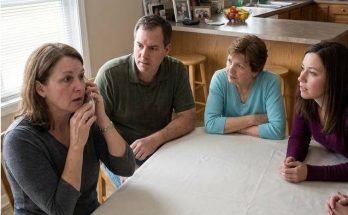
Priya asked, “Who had access to your account?”
Clara swallowed.
“Dominic knew the password.”
Again, no explosion.
No dramatic declaration.
Just a fact settling into place.
The mystery was no longer only about Dominic’s business dealings.
It was also about the quiet ways Clara’s choices had been redirected until she stopped trusting herself.
Priya photographed the emails.
Before leaving, she said, “I want to be clear.
This may have nothing to do with the federal case.”
Clara nodded.
“I understand.”
“But it matters to you.”
“Yes.”
“That’s enough reason to learn the truth.”
After she left, Clara returned to the gallery sketches.
She spread them across the dining table.
“I thought I imagined this being possible.”
Ethan pulled out a chair.
“You didn’t.”
“I let somebody convince me I was bad at numbers.”
“You are bad at numbers.”
She glared at him.
“So am I,” he said.
“We employ accountanTS.”
Clara laughed.
I watched her fingertips move over the floor plan.
A strange realization came to me.
For months, perhaps years, I had imagined rescuing my daughter would mean helping her leave something.
But maybe rescue was the wrong idea entirely.
Maybe what she needed was not help escaping a life.
Maybe she needed witnesses while she reclaimed one.
That evening, we ordered Thai food and sat on the living-room floor because Clara said the dining table was “occupied by her future.”
Ethan remained after dinner.
At nine, Olivia arrived with baby Sophie.
Clara cried the moment she saw her niece.
Not with sadness.
With tenderness so immediate that everyone pretended not to notice.
Olivia placed the baby carefully in her arms.
Sophie stared up at Clara with the solemn suspicion of someone encountering a new government official.
“Oh,” Clara whispered.
The sound changed the room.
I sat beside her.
“You were smaller than she is.”
“Impossible.”
“You were five pounds eleven ounces.”
“She has your forehead,” Ethan said.
“No child deserves that.”
For the next hour, we spoke about ordinary things.
Diapers.
Paint colors.
Whether Ethan should be legally prohibited from selecting furniture.
Clara asked Olivia questions about pregnancy she had apparently been afraid to ask anyone else.
I watched the four of them and understood something painfully simple.
Families do not always break because love disappears.
Sometimes they break because everyone begins performing a version of themselves they think the others require.
The strong mother.
The successful son.
The happy daughter.
The agreeable wife.
The capable husband.
The person who needs nothing.
It becomes exhausting.
And eventually, silence feels easier than honesty.
When they left, Clara and I stood at the front door.
“I missed them,” she said.
“They missed you.”
“I didn’t realize how far away I’d gotten.”
I touched the doorframe.
“You came back.”
She looked at me.
“Not all the way.”
“No.”
“But maybe enough to start.”
The next morning brought the second clue.
A letter.
Actual paper.
Cream stationery.
My name handwritten on the front.
The return address belonged to a nursing home in Charlottesville.
Inside was a message from someone I had not spoken to in fifteen years.
Margaret Vale.
I read the name twice.
Clara noticed.
“Who is she?”
“Someone who knew your father.”
Her expression changed.
“How?”
“Robert worked with her.”
“Dad was a history professor.”
“Before that.”
Clara frowned.
I realized, with embarrassment, that there were stories about her father I had never told her.
Not because they were secret.
Because time had convinced me there would always be another opportunity.
“Your father spent three years working for the state attorney general’s office before he went into teaching.”
“What?”
Ethan, who had just entered carrying coffee, froze.
“Dad was a lawyer?”
“Briefly.”
“You never told us.”
“I thought you knew.”
Both children stared at me.
Apparently, they did not.
“Why did he quit?” Clara asked.
“He hated litigation.”
Ethan nodded approvingly.
“Excellent man.”
“He wanted to teach.
Your grandfather thought he was throwing away his career.
Robert disagreed.”
Clara smiled.
“So Dad disappointed his parents too.”
“Spectacularly.”
That pleased her more than it should have.
I unfolded Margaret’s letter.
Victoria,
I hope you will forgive the intrusion.
Robert asked me many years ago to keep something until Clara was old enough to understand why he had done it.
I should have contacted you sooner, but after Robert died, the right moment never seemed obvious.
Recently, I saw Clara’s name connected to the Mercer Trust while sorting old foundation files donated to the university archive.
I believe the time has come.
If Clara wishes, I would like to give her something her father left with me.
With affection,
Margaret
Nobody spoke.
Clara sat down slowly.
“What did Dad leave?”
“I don’t know.”
Ethan pointed at the letter.
“Did Margaret send me the fake text?”
“No idea.”
“Did she send the portfolio?”
“I don’t know.”
Clara looked toward the dining room, where the gallery drawings still covered the table.
Then back at the letter.
“Mercer.”
I nodded.
There was the connection.
Not Dominic.
Not the warrant.
Not the federal investigation.
Robert.
My husband, dead eleven years.
Clara’s father.
And somehow, a community arts trust she had applied to without knowing he had ever been connected to it.
We drove to Charlottesville on Monday.
Not because there was urgency.
Because Clara asked to go.
Ethan came too.
For the first thirty miles, nobody said much.
Then Ethan found an old playlist on his phone containing songs Dad used to play during road trips.
James Taylor filled the car.
Clara leaned her head against the window.
“This feels illegal.”
“What?”
“Going somewhere with both of you without Mom controlling the route.”
“I am controlling the route.”
“Google is controlling the route.”
“I selected Google.”
Ethan laughed.
Halfway there, we stopped at a roadside diner.
Clara ordered pancakes.
Ethan ordered pie because he claimed noon was “socially constructed.”
I ordered coffee.
At a booth beneath a framed photograph of the Blue Ridge Mountains, Clara asked me, “Were you and Dad ever unhappy?”
“Yes.”
Both children stared.
Apparently, I had spent too long making the past tidy.
“How unhappy?” Ethan asked.
“Normal unhappy.”
“That means nothing.”
“We argued about money early in our marriage.
He wanted to leave legal practice when I was pregnant with you.”
Ethan blinked.
“And you supported him?”
“Eventually.”
“What did you say first?”
“I believe the phrase ‘wildly irresponsible’ appeared.”
Clara smiled.
“What changed your mind?”
“Your father said he would rather disappoint everyone once than disappoint himself every morning.”
Neither child spoke for a moment.
Then Clara looked at her plate.
“I wish I remembered more things he said.”
“So do I.”
Margaret Vale turned out to be eighty-four years old, sharp-eyed, silver-haired, and entirely unimpressed by my judicial title.
“You got old,” she told me.
“So did you.”
“Yes, but I planned for it.”
She hugged me.
Then she looked at Clara.
For a long moment, she said nothing.
“Oh,” Margaret whispered.
“You have Robert’s expression.”
Clara smiled nervously.
“Which one?”
“The one he made when he was pretending not to be afraid.”
We followed Margaret into a bright sitting room overlooking a garden.
Tea arrived.
Ethan immediately found the biscuit tin.
Margaret watched him.
“You must be Ethan.”
“How did you know?”
“You have Robert’s appetite.”
“Finally, useful inheritance.”
Margaret laughed.
Then she reached beside her chair and lifted a narrow wooden case.
“I’ve kept this too long.”
She handed it to Clara.
Inside lay a brass key.
Nothing else.
Clara stared.
“A key?”
“Yes.”
“To what?”
Margaret looked at me.
Then back at my daughter.
“To a studio.”
Clara’s breath caught.
“What studio?”
“Your father’s.”
The room went still.
“My father didn’t have a studio.”
“Yes,” Margaret said gently.
“He did.”
She folded her hands.
“Robert painted.”
Clara looked at me.
I could not hide my shock.
“No,” I said.
Margaret smiled sadly.
“Yes, Victoria.”
I remembered brushes in the garage.
Old shirts stained with color.
Weekends Robert claimed he was helping restore classrooms at the university.
I had never questioned any of it because I trusted him.
And suddenly, for the first time in eleven years, I wondered whether trust and knowing were ever truly the same thing.
Margaret continued.
“He wasn’t hiding it because he was ashamed.
He was waiting.”
“For what?” Clara asked.
“For you.”
Clara’s eyes widened.
“When you were little, you drew constantly.
Robert believed you had a kind of attention he recognized.”
Margaret tapped the brass key.
“He rented a room in an old mill building outside town.
He painted there for nearly fifteen years.
Before he died, he asked me to keep the lease and the contents preserved through a small trust.”
“Mercer,” I said.
Margaret nodded.
“The Mercer Community Arts Trust.”
Clara covered her mouth.
“The grant.”
“Yes.”
“You knew I applied?”
“Not at first.”
“Did you send my portfolio?”
Margaret shook her head.
“No.”
“The note signed M?”
“No.”
“Did you text Ethan?”
“No.”
Another thread remained.
Margaret leaned forward.
“Your father helped establish Mercer.
Quietly.
He did not want his name on it.
The trust funded neighborhood art programs, school workshops, small studios.
He said artists should not need wealthy families to have a beginning.”
Clara’s eyes shone.
“He made something like what I wanted.”
“Yes.”
“Why didn’t he tell me?”
“Because you were eighteen when he became ill.”
Clara looked down.
“He thought he had time.”
The sentence passed through all of us.
He thought he had time.
How many families were built on that assumption?
Time to explain.
Time to apologize.
Time to ask.
Time to listen.
Time to tell children who their parents had been before parenthood made them seem permanent.
Margaret stood.
“The studio still exisTS.”
Clara closed her hand around the key.
“Can we see it?”
Margaret smiled.
“I was hoping you would ask.”
The old mill stood twenty minutes outside Charlottesville beside a narrow river.
The building had been restored in sections, but the northern wing remained simple: brick walls, tall windows, wooden floors.
Margaret led us upstairs.
At the end of a corridor was a blue door.
Faded paint.
No sign.
Clara inserted the key.
It stuck once.
Then turned.
The door opened.
Dust moved in the late-afternoon light.
Canvases leaned against the walls.
Jars of brushes stood on shelves.
An old radio sat on a worktable.
And everywhere—paintings.
Landscapes.
City streeTS.
People sitting in cafes.
Children on beaches.
Robert had painted the life around him.
Not perfectly.
Not grandly.
Tenderly.
Clara walked to one canvas.
It showed our old kitchen.
Sunlight across the table.
A little girl sitting on the floor drawing.
Clara.
She touched the frame.
Behind her, Ethan stopped before another painting.
It showed a boy asleep in the back seat of a car with a red balloon tied to his wrist.
“Dad painted that?”
“I remember that day,” I said.
My voice failed halfway through.
I sat on an old stool.
For eleven years, I had believed grief had shown me every hidden room in my marriage.
I had been wrong.
There was an entire world here.
Not a betrayal.
Something stranger.
A private joy.
Something Robert had belonged to alone.
Clara crossed the studio slowly.
Then she stopped at a desk.
“Mom.”
There was an envelope beneath a paperweight.
On the front, in Robert’s handwriting, were four words.
For Clara, when ready.
She looked at me.
“I don’t know if I can.”
“You don’t have to.”
She held the envelope.
Then sat.
Ethan joined her.
I stayed a few feet away.
This was hers.
Clara opened it.
The letter was three pages long.
She read silently.
Halfway through, tears slipped down her face.
Not broken tears.
Quiet ones.
When she finished, she handed me the final page.
I hesitated.
“Are you sure?”
“Yes.”
Robert’s handwriting tilted slightly to the right.
My dear Clara,
If you are reading this, I was wrong about having more time.
You may be older now than I can imagine.
You may have stopped drawing.
You may have become an architect, a teacher, a sailor, a banker, or something none of us predicted.
Your mother will tell you to be excellent.
Your brother will tell you not to become boring.
Both pieces of advice are useful.
Mine is simpler.
Pay attention to the part of your life that feels like yours.
Other people will love you.
Some will need you.
Some will admire you.
Some will be disappointed by you.
None of those things can tell you who you are.
I hope you build something.
Not because it must succeed.
Because making room for something you love is one way of making room for yourself.
And if you ever lose your way, begin with one honest choice.
The rest usually comes later.
Love,
Dad
For a long time, none of us spoke.
Then Ethan said, “He absolutely stole my line about not being boring.”
Clara laughed through her tears.
I put my arm around her.
She leaned against me.
Outside, the river moved slowly beneath the evening light.
I thought that might be the discovery that changed everything.
I was wrong.
Because as Ethan explored the shelves, he found a ledger.
Not a secret account.
Not evidence of wrongdoing.
A simple record of Mercer granTS.
Names.
Dates.
ProjecTS.
He flipped toward the final pages.
Then stopped.
“Clara.”
She looked up.
“What?”
“There’s your application.”
She crossed the room.
The ledger entry was dated two years earlier.
Clara Ward Studio.
Approved.
Funding allocation: $180,000.
Clara stared.
“That can’t be right.”
Margaret stepped closer.
“The board approved it?”
“Yes.”
“But I received a withdrawal notice.”
Margaret adjusted her glasses.
“The trust would not have marked approved if the application had been withdrawn first.”
Clara turned the page.
A second notation had been added in different handwriting.
Funds redirected per applicant request.
Recipient:
Ward Family Cultural Initiative.
Clara’s face tightened.
“I never created that.”
Nobody spoke.
Then Ethan pointed to a line beneath it.
“Authorized by…”
The signature was difficult to read.
But the initials were perfectly clear.
M.L.
Clara looked at Margaret.
“Who is M.L.?”
Margaret had gone very still.
“There was only one person at Mercer with those initials.”
“Who?”
She looked at Clara with an expression I could not immediately name.
Regret, perhaps.
Or worry.
“Marianne Lyle.”
The name meant nothing to Ethan.
Nothing to me.
But Clara whispered it.
“I know that name.”
“From where?” I asked.
She turned toward me.
Her face had changed.
Not with fear.
With the uneasy recognition of a memory finally finding its place.
“Marianne Lyle was Dominic’s first wife.”
And suddenly, the question was no longer only who had taken Clara’s grant.
It was why the woman who had known Dominic before any of us had quietly placed herself between Clara and the life she had nearly built.


2 Comments on “FINAL PART: APPLICATION WITHDRAWN AT REQUEST OF APPLICANT.”