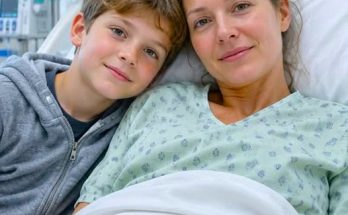
Rachel arrived forty minutes later.
She did not knock.
She pushed through the door wearing jeans, a navy sweater, and the expression she used when someone she loved was in trouble and she had already decided politeness was optional.
Behind her came Marcus Hale.
I had met him perhaps five times over the years. He was a friend of Rachel’s husband and handled civil litigation, though I had never cared enough about the specifics to remember what kind. He was in his early fifties, broad-shouldered, silver beginning at his temples, carrying a leather folder under one arm.
Rachel reached me first.
She hugged me carefully.
Then she looked at Caleb and began crying.
“Oh, Em.”
I grabbed her hand.
“Not yet.”
She understood immediately.
Rachel wiped her eyes.
Marcus closed the door.
“I’m sorry we’re meeting under these circumstances,” he said. “Rachel told me only that you may need help obtaining hospital records and protecting your medical authority.”
“I have a video.”
I handed him my phone.
Marcus watched the recording without speaking.
When it ended, he started it again.
Rachel stood behind him.
On the second viewing, she covered her mouth when Ryan said that twins changed everything.
Marcus stopped the recording on the frame showing the paper in Ryan’s hand.
“Do you have the original file?”
“This is what Diana sent me.”
“Diana?”
“The nurse who recorded it.”
“Has it been edited?”
“I don’t know.”
“Don’t alter it. Don’t crop it, forward it repeatedly, or add anything to it. We’ll preserve the original.”
Rachel stared at me.
“He said one baby was manageable.”
“I heard.”
“What the hell does that mean?”
“That,” Marcus said quietly, “is something we do not guess about.”
Rachel looked at him.
“You heard him.”
“I did. And if Emma wants the truth, we need more than an interpretation of twenty-seven seconds.”
His calm irritated me for approximately two seconds.
Then I realized it was exactly what I needed.
“What do we do?”
“First, we establish what authority Ryan had.”
I explained what Diana had told me.
Marcus took notes.
“Were there health-care proxy documents before admission?”
“I don’t remember signing anything specific.”
“Spouses can be involved under various circumstances, but the exact legal and hospital framework matters. We need the actual documents, not assumptions.”
“He signed something.”
“Then we find out what.”
Rachel pulled a chair beside me.
“Did Ryan ever talk to you about choosing between the babies?”
“No.”
“Money?”
“We talked about money all the time. Twins are expensive.”
“That’s not what I mean.”
I knew what she meant.
Had Ryan ever suggested that we should not raise both children?
“No.”
Then a memory surfaced.
Around twenty weeks, after an ultrasound, we had stopped for dinner. Ryan had barely touched his food.
He asked whether I knew how much infant daycare cost for two children.
I laughed.
“Too much.”
He showed me numbers on his phone.
I remember telling him we would figure it out.
He had said, “People always say that like figuring it out creates money.”
At the time I thought he was stressed.
Another evening he calculated how much larger our emergency fund would need to be.
Then came the discussions about my maternity leave.
The mortgage.
College.
Two car seats.
Two cribs.
Two of everything.
None of it had seemed sinister because responsible parents worried about money.
Now each memory carried another possible meaning.
Marcus asked, “Who handled the hospital pre-registration?”
“Ryan.”
“Insurance?”
“Ryan.”
“Any advance paperwork?”
“Probably Ryan.”
Rachel looked at me.
“Why was he doing everything?”
“Because I was pregnant with twins and exhausted.”
The answer sounded defensive.
Marcus did not react.
“Perfectly understandable. We’re establishing the paper trail.”
He asked whether Ryan knew my phone password.
“Yes.”
“Change it.”
I did.
“Email?”
“He knows some passwords.”
“Change the important ones when you safely can. Especially anything containing medical or financial information.”
My stomach tightened.
“You think he might delete things?”
“I think evidence is easiest to preserve before anyone realizes it matters.”
Rachel stood.
“I’ll help.”
Marcus then asked for Diana’s number.
I called her instead.
When she answered, I told her an attorney was with me and asked whether she would speak to him.
There was a long pause.
Then she agreed.
Marcus put the phone on speaker.
He did not interrogate her.
He asked precise, narrow questions.
Had she personally seen Ryan during the emergency?
Yes.
Had she personally seen him sign documents?
Yes.
Did she know what those documents were?
She believed they related to treatment decisions, but she wanted to confirm against the records rather than rely on memory.
Had she heard conversations involving medical options?
Parts of them.
Would she provide a written statement?
Another pause.
“Yes.”
Rachel squeezed my shoulder.
Marcus continued.
“Did you personally witness anything that makes you believe Mrs. Carter was intentionally given false information afterward?”
“I witnessed Mr. Carter control a great deal of the communication while she was unconscious and immediately after she woke.”
“That isn’t quite my question.”
“I know.”
“Did you hear him make a statement that suggested he intended his wife not to know the full circumstances?”
Diana was silent for several seconds.
“I heard him tell someone that there was no reason to burden her with details because the outcome couldn’t be changed.”
My throat closed.
Rachel whispered, “Jesus.”
Marcus held up a finger, asking her to remain quiet.
“Do you remember when?”
“The night after surgery.”
“Who was he speaking to?”
“I don’t know.”
“Doctor?”
“No. Phone.”
“Did you hear the other person?”
“No.”
Marcus thanked her and said someone might contact her formally.
Before hanging up, Diana asked to speak to me.
I took the phone.
“I’m sorry,” she said.
“For what?”
“That you’re finding out this way.”
I looked at Caleb.
“Tell me one thing.”
“If I can.”
“Was Noah’s death inevitable?”
Diana breathed slowly.
“I cannot answer that responsibly without the physicians and records.”
That was not reassurance.
After the call, Marcus stood.
“We request everything now.”
The process began faster than I expected and slower than I could tolerate.
Forms had to be signed.
Departments contacted.
Identity verified.
Marcus made it clear that I was revoking any authority Ryan might exercise over future decisions while I was capable of doing so.
A patient advocate came to the room.
Then a hospital administrator.
Their language became careful the moment Marcus introduced himself.
I watched people stop using casual words.
Nobody said mistake.
Nobody said wrongdoing.
They said review.
Documentation.
Authorization.
Clinical decision-making.
Consent.
Records.
The administrator confirmed there had already been an internal review associated with my emergency admission.
“Why?”
She would not discuss it until she had authorization to release more information.
“Was it because my baby died?”
“I’m not able to characterize the review at this point.”
“Was it because of my husband?”
“I understand why you’re asking.”
“That isn’t an answer.”
“No,” Marcus said, “but it tells us we need the review materials.”
The administrator looked at him.
“Those may be subject to restrictions.”
“Then provide everything that is not.”
She nodded.
I hated how civilized the conversation was.
My son was dead, and everyone spoke as though arranging a mortgage.
Rachel must have seen the anger in my face.
“Stay with us,” she murmured.
“I am.”
“You look like you want to tear the wall down.”
“I do.”
“That can wait.”
By late afternoon, we had confirmation that requests were being processed.
Marcus made me promise not to accuse Ryan of anything until we knew exactly what had happened.
“I need you to understand something,” he said. “The video is disturbing. Diana’s account is significant. Neither tells us the precise medical chain of causation.”
“But Ryan made a decision.”
“It appears he participated in decisions. We need to know what choices actually existed and what he authorized.”
“And if his choice killed Noah?”
Marcus held my gaze.
“Then we deal with facts strong enough that Ryan cannot redefine them.”
A knock came.
Every muscle in my body tightened.
Ryan walked in carrying two coffees and a small paper bag.
He stopped when he saw Rachel.
Then Marcus.
His smile vanished.
“What’s going on?”
Rachel looked at me.
Marcus said nothing.
This was mine.
“I asked them to come.”
Ryan set the coffee down slowly.
“Why?”
“I needed help.”
“With what?”
“Understanding what happened.”
His eyes moved toward Marcus.
“You brought a lawyer?”
“He’s helping me get my records.”
Ryan’s jaw tightened.
“Why would you need a lawyer for that?”
“Because I want everything.”
“You could have asked me.”
“I’m asking the hospital.”
He stared at me.
Something passed over his face—not grief, not confusion.
Alarm.
It was gone quickly.
“Emma, you’re exhausted. Maybe this isn’t the best time to—”
“Did you make medical decisions about Caleb and Noah while I was unconscious?”
The room became silent.
Ryan looked at Rachel.
Then Marcus.
Then me.
“I already told you. I had to sign things.”
“That isn’t what I asked.”
His shoulders stiffened.
“What exactly are you accusing me of?”
“I haven’t accused you of anything.”
“Then why is there a lawyer here?”
“Because I asked a question this morning and you didn’t answer it.”
“I answered plenty.”
“No. You told me you signed normal emergency paperwork.”
“That’s what happened.”
“Was there a choice involving Noah’s treatment?”
Ryan stopped.
It was small.
A fraction of a second.
But all three of us saw it.
Rachel sat straighter.
Marcus remained expressionless.
Ryan rubbed his forehead.
“Who have you been talking to?”
The question answered more than he realized.
I felt something inside me become very still.
“Why does that matter?”
“Because somebody is clearly putting ideas in your head.”
“What ideas?”
“That I did something.”
“Did you?”
Ryan looked toward Caleb’s bassinet.
“Everything I did was for this family.”
Rachel made a disgusted sound.
Marcus touched her arm.
I kept my eyes on Ryan.
“That still isn’t an answer.”
His face hardened.
“I had to make impossible choices while you were unconscious. You weren’t there.”
“I was on an operating table.”
“I know that.”
“Then don’t say I wasn’t there as though I abandoned you.”
“I didn’t mean it that way.”
“How did you mean it?”
Ryan exhaled sharply.
“You have no idea what that night was like.”
“Then tell me.”
He said nothing.
I reached for my phone.
Ryan’s eyes followed the movement.
I opened Diana’s video.
His face changed before I even pressed play.
That was when I knew.
Not what he had done.
Not yet.
But I knew he recognized what I had.
I pressed the screen.
His own voice filled the room.
Twins changes everything.
Ryan went pale.
The recording continued.
We talked about the money.
Then:
One is manageable.
The clip ended.
Nobody moved.
Ryan stared at my phone.
“Where did you get that?”
I looked at the man I had trusted with my life.
“Now you can tell me what you signed.”
Click Here to continue read next: PART4: Ryan Finally Admitted Why Money Entered a Medical Decision About Our Twins, but the Records Promised an Even Worse Truth
I Woke Three Days After Losing One Twin, and My Husband’s Grief Seemed to Explain Everything Until the Nurse Arrived
Part 3 of 8