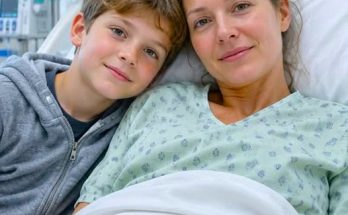
The judge issued her ruling that afternoon.
I remember very little of the legal phrasing.
There were references to the children's welfare, credible evidence, psychological harm, judgment, safety, and the extraordinary nature of compelled visitation under circumstances where trust had been severely damaged.
What I remember clearly was the conclusion.
Evelyn's petition was denied.
No court-ordered visitation.
No forced reunification.
No requirement that Maya or Lily sit across from the person who had watched them disappear into freezing weather.
Any future contact would occur only if David and I believed it was appropriate and if the children were willing.
My mother did not react immediately.
Her attorney leaned toward her and whispered.
Arthur closed his eyes.
David squeezed my hand beneath the table.
I should have felt triumph.
I didn't.
Winning would have implied there was something to celebrate.
There wasn't.
There was only safety.
Sometimes safety is quieter than victory.
We waited while the courtroom emptied.
Rachel gathered papers.
Arthur left first.
He did not approach me.
I appreciated that.
Evelyn remained at her table longer than necessary.
Finally she stood.
As she passed our row, she stopped.
Our attorneys noticed immediately.
So did the court officer.
Evelyn looked directly at me.
“You got what you wanted.”
I considered ignoring her.
Instead I said, “I wanted my daughters to be safe.”
“You wanted to punish me.”
“No.”
“You've spent a year turning everyone against me.”
“No.”
“Arthur left.”
“That was his decision.”
“Maya won't speak to me.”
“That was not my decision.”
Her eyes sharpened.
“You let an eight-year-old decide something she doesn't understand.”
“She understands what happened to her.”
“Because you've told her how to interpret it.”
I looked at my mother and realized that this might be the last conversation we ever had.
Strangely, that knowledge did not make me desperate.
It made me precise.
“Maya remembers knocking.”
Evelyn looked away.
“She remembers asking Grandpa to open the door.”
Silence.
“She remembers Lily becoming too weak to walk.”
“Enough.”
“She remembers thinking her sister might die.”
“I said enough.”
I lowered my voice.
“You have spent a year asking everyone to stop talking at the exact moment your choices become impossible to defend.”
My mother stared at me.
For a fraction of a second, I thought she might finally collapse into remorse.
Instead she straightened her coat.
“One day your children will judge you too.”
“Probably.”
That answer surprised her.
“I hope when they do, I can admit where I failed.”
She walked away.
I watched the courtroom doors close behind her.
Then I let myself breathe.
Outside, the February air was bitter.
Snow remained in dirty piles along the courthouse parking lot, gray from salt and exhaust.
Maya had stayed at school that day.
We had chosen not to make the hearing part of her life more than necessary.
When she came home, she dropped her backpack beside the door and immediately studied my face.
“What happened?”
I knelt.
“The judge said nobody can make you visit Grandma.”
Her shoulders dropped.
“What about Grandpa?”
“Same.”
She nodded.
“Did Grandma get mad?”
“Yes.”
“At me?”
“No.”
That was the most important answer.
“Not at you.”
Maya looked toward the kitchen.
“Can I have hot chocolate?”
And just like that, the court case became something that had happened in another building while she returned to being a child.
We made hot chocolate.
Lily demanded marshmallows.
David put too many in both mugs.
That evening Maya asked whether Arthur had been in court.
“Yes.”
“Did he say what he did?”
“Yes.”
“The whole thing?”
I paused.
“As much as he was asked.”
She accepted that.
She still did not want to see him.
Weeks passed.
Then months.
Spring returned.
Lily turned four.
She remembered almost nothing of the road.
For a long time I had wondered whether that was a blessing.
Eventually I stopped deciding what her memory should mean.
Maya remembered enough for both of them.
She became less vigilant as the year went on.
The locks remained ordinary locks again.
A knock at the door no longer made her freeze.
She began sleeping with her bedroom door open.
Dr. Patel called these signs of recovery.
I simply called them Maya coming home to herself.
Arthur respected the silence.
That was perhaps the first truly selfless thing he did after the incident.
No surprise visits.
No birthday gifts designed to force acknowledgment.
No letters asking Maya to forgive him.
Once every few months he sent me a short message.
I hope everyone is well.
Nothing more.
I did not always respond.
When I did, I kept it simple.
We are.
Evelyn stopped contacting us after the hearing.
For a while I expected escalation.
More attorneys.
Letters.
Relatives recruited to pressure me.
None came.
My aunt called once and said Evelyn was telling everyone I had destroyed the family.
I answered, “You don't need to take sides.”
My aunt was quiet.
Then she said, “I already did.”
I ended the call politely.
That became another lesson.
Not every relationship deserved a trial.
Some could simply end.
The third Christmas after the incident approached.
Maya was ten.
Lily was five.
David had become absurdly serious about holiday cookies because apparently surviving pneumonia had convinced him that gingerbread architecture was an essential life skill.
Our kitchen smelled like cinnamon and burnt sugar.
One evening the girls were hanging ornaments on the tree when Maya suddenly said, “I want to see Grandpa.”
I nearly dropped the ornament in my hand.
David looked over.
Maya continued arranging silver stars.
“Not Grandma.”
“Okay.”
“Just Grandpa.”
I sat on the couch.
“Why now?”
She shrugged.
Then corrected herself.
“I don't know.”
That answer was allowed.
“Do you want him here?”
“No.”
“At the gardens?”
“Maybe.”
“With us there?”
“Yes.”
I nodded.
“We can arrange it.”
She looked relieved.
Arthur responded within minutes when I texted.
Whatever works for Maya.
No additional request.
No question about Lily.
No attempt to expand the invitation.
We met the following Saturday at the same botanical gardens where Maya had confronted him almost two years earlier.
Arthur looked older.
He carried no gift.
He stopped several feet away.
“Hello, Maya.”
“Hi.”
This time she did not tell him where to sit.
She walked toward a bench and he followed.
David and I remained within sight but beyond easy hearing.
They spoke for nearly twenty minutes.
Later Maya told me most of it.
She asked whether he still loved Grandma.
He said yes.
That confused her.
“You can love somebody and leave them?”
“Yes,” he told her.
“Why?”
“Because love doesn't make everything safe.”
I wished I had heard that sentence when I was twenty.
Then Maya asked whether he regretted leaving Evelyn.
He said no.
“Do you regret not opening the door?”
“Every day.”
Maya considered that.
Then she asked the question I had always feared she might carry forever.
“Was it because you didn't love us enough?”
Arthur cried.
But this time, according to Maya, he did not ask her to comfort him.
“No,” he said. “I loved you. I was weak. Sometimes people who love you can still fail you badly. That's why you should pay attention to what they do, not only what they say they feel.”
Maya accepted that answer.
Not because it erased anything.
Because it did not try to.
At the end of the meeting, Arthur asked, “May I hug you?”
Maya thought about it.
Then she said no.
Arthur answered, “Okay.”
They left separately.
In the car, I asked how she felt.
“Fine.”
“Just fine?”
She smiled slightly.
“Mom, you always want a big feeling.”
I laughed.
She was right.
Sometimes closure is not a door slamming.
Sometimes it is discovering you can walk away from one without needing to look back.
Arthur eventually became part of our lives again, but differently.
Slowly.
Carefully.
There were no unsupervised visits for a long time.
Then Maya asked for one afternoon at a museum.
Later Lily wanted him at a school concert.
Trust returned in pieces so small they could easily have been mistaken for ordinary moments.
That was probably why they mattered.
Arthur never spoke badly about Evelyn around the girls.
He never asked us to forgive her.
He never suggested reconciliation.
He seemed to understand that his responsibility was not to repair everyone.
Only himself.
As for my mother, years passed without contact.
I heard fragments through relatives.
She stayed in the house.
She redecorated.
She joined a church committee.
She told different versions of our story depending on who was listening.
In some, I abandoned my children.
In others, Arthur betrayed her.
In others, David had manipulated the entire family.
I stopped caring which version she preferred.
Reality did not require her agreement.
One winter afternoon, when Maya was twelve, she found the pink mitten.
I had forgotten the storage box still contained it.
She came downstairs carrying it between two fingers.
“Is this mine?”
I knew immediately.
“Yes.”
“From that night?”
“Yes.”
“Why did you keep it?”
I took a long time to answer.
“At first because I thought it was evidence.”
“Of what?”
“That it really happened.”
Maya looked at me strangely.
“You knew it happened.”
“I know.”
“Then why did you need evidence?”
Because I had spent a lifetime being trained to doubt my own interpretation whenever it inconvenienced my mother.
I did not say all of that.
Instead I said, “Sometimes adults hold onto objects because we're still trying to understand something.”
Maya turned the mitten over.
“It looks normal.”
“Yes.”
She put it on.
It was far too small.
Her fingers pushed against the ends.
“I don't want it.”
“You can throw it away.”
She frowned.
“Can I burn it?”
I laughed.
“Probably not in the house.”
David overheard from the kitchen.
“Fire pit.”
That evening we took the mitten outside.
I expected Maya to make a ceremony of it.
She didn't.
She tossed it into the flames and immediately asked whether we had marshmallows.
The yarn curled.
Blackened.
Disappeared.
I watched until there was nothing left.
Then Lily handed me a marshmallow on a bent metal skewer and complained that David had burned hers.
Life continued.
That was the part nobody had explained to me after the hospital.
I had assumed healing would feel like reaching a destination.
Instead it became the accumulation of ordinary days that were not controlled by what happened.
Birthdays.
School mornings.
Arguments over homework.
Lost teeth.
Flu season.
Family movies.
David teaching Lily to ride a bicycle.
Maya joining the school orchestra and regretting her choice of clarinet within two weeks.
Arthur sitting quietly in the third row at concerts.
A door opening when someone knocked.
A door staying closed when someone unsafe stood outside.
Both could be acts of love.
Years later, Maya wrote about that Christmas for a school assignment.
She showed it to me before submitting it.
I expected the story to be about snow or the hospital.
Instead she had written about doors.
One sentence stayed with me.
A locked door tells you who is outside, but an open door tells you something about the person inside.
I read it twice.
“Is this about Grandma?”
“Sort of.”
“And Grandpa?”
“Sort of.”
“And us?”
She shrugged.
“Mostly me.”
I handed the paper back.
“That makes sense.”
She looked toward our front door.
“You know what I remember most?”
“What?”
“Thinking Grandpa was coming.”
My heart tightened.
“But now,” she said, “I also remember that man at the gas station did.”
I had never met him properly after the hospital.
His name was Samuel.
He had been working Christmas night because another employee wanted to stay home with his newborn baby.
He saw Maya and Lily in the snow.
He ran outside without a coat.
He carried Lily inside.
He called emergency services.
He wrapped Maya in his own sweatshirt.
He stayed until the ambulance left.
We found him the following week.
Maya wanted to thank him.
Samuel cried when he saw the girls.
He kept their Christmas card behind the register for years.
Family, I learned, is not always defined by who has known you longest.
Sometimes it is defined by who opens the door.
My parents' house had looked warm that night.
Lights in the windows.
Christmas wreath.
Tree glowing behind the curtains.
Safety had seemed only inches away.
But safety is not appearance.
It is action.
Arthur failed us because fear mattered more to him than courage.
Evelyn failed us because control mattered more than compassion.
David and I failed in our own smaller ways too. We assumed. We hurried. We trusted people without confirming what our children actually needed.
The difference was not perfection.
It was what came afterward.
Responsibility.
Truth.
Change.
Maya is grown now.
Lily barely remembers being three.
Every Christmas, they still come home.
Sometimes Arthur joins us.
Sometimes he doesn't.
Nobody is invited out of obligation.
Nobody earns access through guilt.
Nobody is required to forgive in order to belong.
And every Christmas morning, before the kitchen fills with noise and before David ruins at least one batch of cookies, I notice the front door.
The same ordinary door we once checked obsessively.
Most years, it stands unlocked while family arrives.
But I never again confuse an open door with unconditional access.
Love can welcome.
Love can refuse.
Love can forgive without forgetting.
And sometimes the most loving thing a mother can do is close a door and know exactly why.
The End
Read more original stories on Feel Every Story.
While My Husband Fought for Breath, My Father Finally Told Me Why My Parents Had Locked Their Door
Part 8 of 8