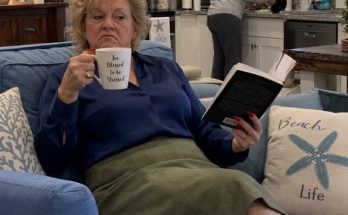
The first exam Mom took after returning to university was not difficult because of the material.
She had spent weeks reading.
She had filled pages of notes.
She had even started carrying index cards in her purse, which she insisted were “just practical reminders” even though I caught her reviewing them while waiting for a dentist appointment.
The difficult part came when the professor handed the class their papers.
Mom stared at the first page.
Then she turned it over.
Then back again.
When she got home that afternoon, she dropped her bag onto the kitchen chair.
“I hate exams.”
I laughed.
“You've taken one.”
“One too many.”
“How did you do?”
“I don't know.”
“You haven't received the grade.”
“Exactly.”
She opened the refrigerator and stared inside.
“Do you want something?”
“No.”
“Then why are you looking?”
“I don't know.”
She shut the door.
I smiled.
“You're nervous.”
“I'm sixty years old. I'm allowed to be nervous.”
“Absolutely.”
She sat down.
For a moment she said nothing.
Then she looked at me.
“What if I fail?”
The question surprised me.
“You won't.”
“That isn't an answer.”
“Okay. What happens if you do?”
She thought about it.
“I suppose I take it again.”
“Exactly.”
Mom sighed.
“I know that.”
“Then why are you worried?”
“Because when I was nineteen, failing meant something different.”
I sat across from her.
She looked toward the window.
“At nineteen, I thought every mistake proved I wasn't smart enough.”
“And now?”
“Now I know better.”
She smiled.
“Unfortunately, knowing better doesn't always stop you from feeling the old thing.”
That was something I understood.
A few days later, Mom received her grade.
She opened the email herself.
Then she stared at the screen.
“What?”
She handed me the phone.
A high mark.
Not perfect.
But high.
I looked at her.
“You did it.”
Mom smiled.
“I did.”
Then she frowned.
“I missed two questions.”
I laughed.
“You're impossible.”
She put the phone down.
“I'll do better next time.”
That was when I knew she had changed.
Years ago, a mistake might have become evidence against herself.
Now it was simply information.
That semester passed quickly.
Mom attended classes.
She continued teaching her community course.
Laura visited often.
Nathan joked that his mother had become Mom's unofficial academic assistant.
She denied it.
“I am not an assistant.”
“What are you?”
Laura considered.
“A colleague.”
Mom smiled.
“That's better.”
Their relationship had settled into something neither of them had predicted.
They still disagreed.
Laura still occasionally overexplained things.
Mom still occasionally told her she was making a simple problem unnecessarily complicated.
But there was respect now.
One afternoon, Laura arrived carrying an envelope.
Mom was in the garden.
“What's that?” I asked.
“Something she should see.”
Mom came inside with dirt on her gloves.
Laura handed her the envelope.
Mom opened it.
Her expression changed.
“What is it?”
“A nomination.”
“For what?”
“The university's community education award.”
Mom stared at the letter.
“No.”
Laura laughed.
“You haven't even read it.”
“I don't need to.”
“You do.”
Mom looked at the page.
The award recognized people who had expanded access to education outside traditional academic paths.
Mom read the first paragraph.
Then the second.
“No.”
Laura sat down.
“Why not?”
“I don't want an award.”
“Why?”
“Because it makes it sound like I did something extraordinary.”
Laura looked at her.
“You did.”
Mom shook her head.
“I taught a class.”
“You changed how people think about learning.”
“So did you.”
Laura smiled.
“Exactly.”
Mom folded the letter.
“I'll think about it.”
Laura stood.
“You always say that when you don't want to answer.”
“I learned it from you.”
They both laughed.
But later that night, Mom called me.
“I don't want people thinking I'm some kind of example.”
“You're not responsible for what they think.”
She was quiet.
“I don't want anyone feeling sorry for me.”
“They won't.”
“You can't know that.”
“No.”
I sat beside her.
“But I know why you don't like the award.”
She looked at me.
“You do?”
“You spent years refusing to let people define you by what you didn't have.”
Mom's eyes softened.
“And now you're worried they'll define you by it again.”
She nodded.
“That sounds ridiculous when you say it.”
“It doesn't.”
She folded the letter again.
“I don't want my whole story to be about not going to college.”
“Then don't make it that.”
“What do I make it about?”
“You tell them what you learned.”
She looked at me.
“And what did I learn?”
I smiled.
“That you were right when you said not knowing isn't the same as being incapable.”
Mom laughed.
“That was a good line.”
“It was.”
“I should have written it down.”
“You did.”
She pointed toward the study.
“Then I hope I can find it.”
The award ceremony was scheduled for the end of the semester.
Mom eventually agreed to attend.
She didn't want a speech.
The university promised she wouldn't have to give one.
Laura arranged a small dinner afterward.
Mom immediately objected.
“No large gathering.”
“It's not large.”
“How many?”
“Thirty.”
“That is large.”
Laura laughed.
“We can make it twenty.”
“Fifteen.”
“Twenty.”
“Seventeen.”
Laura smiled.
“Seventeen.”
The dinner was held at a quiet restaurant near campus.
Mom wore a simple navy dress.
She looked uncomfortable for the first ten minutes.
Then someone at the table asked about her course.
She began talking.
Soon everyone was listening.
She described how difficult it was to return to a classroom after decades.
She described the fear of raising her hand.
She talked about how strange it felt to be the oldest student in the room.
Then she said, “The funny thing is, once I stopped worrying about being the oldest, I realized everyone else was worried about something too.”
Laura smiled.
“That is exactly what she teaches.”
Mom looked at her.
“Don't make me sound profound.”
“You are profound.”
“No.”
Mom took a sip of water.
“I'm practical.”
Everyone laughed.
After dinner, Laura walked Mom outside.
I followed a few steps behind.
They stood beneath the restaurant awning.
Laura said something I couldn't hear.
Mom's expression changed.
Then she hugged Laura.
When they returned, Laura looked emotional.
I waited until later to ask.
“What did you say to her?”
Laura shook her head.
“Nothing important.”
Mom heard.
She smiled.
“She told me she was proud of me.”
I looked at Laura.
She nodded.
“I am.”
Mom touched her arm.
“I know.”
That was enough.
The following week, something unexpected happened.
Mom received a letter from the university asking whether she would consider continuing her studies.
Not just another course.
A formal program.
She brought the letter home.
She didn't open it immediately.
She placed it on the table.
Then she made coffee.
She watered the plants.
She folded laundry.
She returned to the letter.
Finally, she opened it.
She read it twice.
Then she looked at me.
“What do you think?”
I knew better than to answer for her.
“What do you think?”
Mom looked at the letter.
“I think I want to know how far I can go.”
That sentence was different from everything that had come before.
She wasn't trying to repair the past.
She wasn't trying to prove Laura wrong.
She wasn't trying to prove herself right.
She was simply curious.
And curiosity, I had learned, was one of the most powerful things my mother had ever possessed.
Click here to continue reading: PART 10: Mom Chose to Keep Studying, but the Decision Forced Laura to Face a Truth She Had Avoided Since Her Own University Years
My Mother Had Given Up College for Her Family, But One Dinner Revealed Exactly What My Future Mother-in-Law Thought That Meant
Part 9 of 20