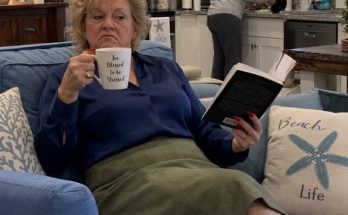
The morning after graduation, Mom woke before the alarm.
She told me later that she had expected to feel different. Not transformed, exactly, but altered in some obvious way. She had spent years imagining what it would be like to finally hold the degree she once believed she had lost forever. She had pictured the ceremony, the photograph, the applause, even the moment she would place the diploma beside her grandfather’s picture.
What she had not pictured was Tuesday morning.
The kettle clicked off at 6:42. The kitchen window was gray with early light. Mom stood in her slippers, poured hot water into her cup, and looked toward the dining room where her graduation gown was still draped over the back of a chair.
Then she laughed at herself.
“Apparently,” she said, “I am still expected to make breakfast.”
I was sitting at the table with Nathan, who had spent the night because the family had stayed late after the ceremony. He looked over his shoulder.
“Unfortunately, your degree doesn't exempt you from toast.”
Mom gave him a look.
“That sounds suspiciously like something your father would say.”
Nathan smiled. “Dad would probably make a spreadsheet proving it.”
She laughed again, but after the laughter faded, she became quiet.
On the wall in the living room, her new degree hung beneath the small community education certificate she had earned earlier. Beside them was the old photograph of her grandfather. The photograph had been faded when Margaret gave it to her, and Mom had carefully placed it in a simple frame rather than replacing it with something expensive.
The three pieces looked strangely natural together.
One represented the opportunity she had missed.
One represented the work she had chosen to begin later.
And one represented the person who had understood her choice long before she understood it herself.
I watched Mom stare at them while she drank her coffee.
“You're thinking too loudly,” I said.
She turned.
“I was wondering whether your grandfather would have liked the diploma.”
I smiled. “You know what Margaret said.”
“I know.”
“He would have been proud.”
Mom nodded, but she did not answer immediately.
“I believe that now,” she said.
That mattered more than the degree.
For years, Mom had carried the idea that she had failed some invisible test at nineteen. She had treated the decision to leave that evening course as evidence that she had chosen badly. Even when everyone around her praised the sacrifices she had made, some private part of her still whispered that another woman might have stayed in school and built a different life.
Now she could finally look at the decision without looking away from the consequences.
She had not abandoned education.
She had postponed one form of it.
And in the meantime, she had learned everywhere else.
Later that morning, Laura arrived carrying a paper bag.
She stepped inside without her usual briskness and placed the bag on the counter.
“I brought pastries.”
Mom raised an eyebrow.
“Should I be worried?”
Laura smiled.
“Only if you dislike almond croissants.”
Mom opened the bag.
“I tolerate them.”
“You're impossible.”
“So I've been told.”
The exchange was light, but something about Laura's presence had changed. Months earlier, she would have entered the kitchen, glanced around, and immediately found something to correct. Now she waited until Mom finished looking through the bag before asking whether she had slept.
It was a small thing.
That was how most of the changes between them had happened.
Small things.
Questions asked instead of assumptions made. Invitations instead of instructions. Listening without preparing a correction.
Laura sat down at the table.
“I have something to ask you.”
Mom looked at her.
“That's becoming dangerous.”
Laura smiled, then pulled an envelope from her handbag.
“I received confirmation yesterday.”
Mom opened the envelope.
Inside was a letter from the university confirming Laura's appointment to lead the new community learning program.
She had been offered the position weeks earlier, but the formal paperwork had taken time. She had told Mom about it before the graduation ceremony, although she had spoken about the appointment almost apologetically.
Now the letter was official.
Mom read it carefully.
Then she looked up.
“Congratulations.”
Laura exhaled.
“Thank you.”
There was a pause.
“I was afraid,” Laura admitted.
Mom folded the letter and returned it.
“Of what?”
“That people would think I got it because of you.”
Mom frowned.
“That would be ridiculous.”
“I know.”
“Then why are you worrying about it?”
Laura looked down at her hands.
“Because I spent a long time worrying about what people thought of my credentials.”
Mom leaned back.
“That sounds like your problem, not theirs.”
Laura laughed softly.
“That is exactly the sort of thing I would expect from someone with a history degree.”
Mom smiled.
The conversation might have ended there, but Laura kept looking at her.
“I also wondered whether you would think I didn't deserve it.”
Mom's expression changed.
“You don't get to decide what I think before I tell you.”
Laura nodded.
“You're right.”
“You earned it,” Mom said. “You did the work. You changed how you teach. You changed how you listen. You changed because you decided you needed to.”
Laura swallowed.
“I wish I had known that years ago.”
Mom looked toward the framed photograph.
“So do I.”
Neither woman tried to soften the sentence.
It did not need softening.
The next few weeks settled into a rhythm none of us had expected.
Mom continued attending university events, but she was no longer introduced as the woman who had “returned to school late in life.” She was simply Mom, or Professor—depending on who was speaking—and she seemed amused by the title.
She also kept teaching the community class.
Laura now had an administrative role, while Mom remained involved in the teaching side. Their classroom was rarely quiet.
Students argued.
People interrupted.
Someone always forgot to turn off a phone.
One afternoon, a retired engineer challenged Mom on a historical point. He spoke with the certainty of a man who had spent forty years being listened to.
Mom did not bristle.
She asked him to show her his source.
He did.
Then she showed him hers.
They discovered that both sources were describing different years.
The man stared at the pages.
“I was wrong.”
Mom smiled.
“About that detail.”
He laughed.
Laura watched from the back of the room.
Afterward, she told Mom, “You enjoyed that.”
“I enjoyed being corrected without being embarrassed.”
Laura nodded.
“That may be the hardest thing to teach.”
“It shouldn't be.”
“No,” Laura said. “It shouldn't.”
But outside the classroom, something unexpected began.
Mom started receiving letters.
Some came from people who had attended her university talk. Others came from students in the community program. One came from a woman in her seventies who had left school decades earlier to care for her husband.
Another came from a man who had never attended college but had spent his life repairing farm equipment and wanted to know whether he was “too old” to take a history course.
Mom answered every letter.
Sometimes she wrote three pages.
Sometimes she wrote only six lines.
She never told people what decision to make.
She told them to ask themselves what they wanted to learn and why.
That distinction became important.
One evening, I found Mom at the dining table surrounded by envelopes.
“You're starting a correspondence department.”
She looked up.
“I don't know how to answer some of these.”
“That's allowed.”
“I thought having a degree meant I was supposed to know things.”
I laughed.
“Mom.”
She smiled.
“I know. I know.”
Then she tapped one envelope with her finger.
“This woman thinks she wasted her life.”
I pulled out a chair.
“What are you going to tell her?”
Mom looked at the letter again.
“I don't know.”
For once, she did not rush to fill the silence.
Finally she said, “Maybe I shouldn't tell her she didn't waste it. Maybe I should ask her what she still wants to do.”
That became the answer she gave.
Not a speech.
Not a lesson.
A question.
A week later, the woman wrote back.
She had registered for a local writing class.
Mom cried when she read it.
Not dramatically.
She simply took off her glasses and wiped beneath one eye.
“You see?” I said.
Mom shook her head.
“No. She did that.”
I knew exactly what she meant.
Mom had learned something that mattered more than the diploma.
Helping someone was not the same as taking responsibility for their life.
She could offer a question.
She could share what she had learned.
She could open a door.
But the other person had to decide whether to walk through it.
That lesson followed Mom into the autumn.
And then, one afternoon, an envelope arrived from the university addressed not to Mom as a graduate, but to her as a researcher.
She opened it standing at the kitchen counter.
Her face changed.
“What is it?” I asked.
She read the first page again.
Then she sat down.
“It was accepted.”
“Your paper?”
She nodded.
Her research on adults who had left formal education early had been accepted for publication in the university's community education journal.
I hugged her.
She held on tightly.
Laura arrived twenty minutes later and found both of us still sitting at the table.
Mom handed her the letter.
Laura read it.
Then she smiled.
“You know what this means?”
Mom shook her head.
“It means you're going to have to let people argue with you in print now.”
Mom laughed.
But Laura's expression became serious.
“It also means something else.”
“What?”
“You don't have to prove anything anymore.”
Mom looked at her.
For a moment, neither woman spoke.
Then Mom said quietly, “I know.”
And this time, I believed her.
Click here to continue reading: PART 14: Mom’s Research Opened a Door She Had Never Planned to Enter, and an Invitation From Another University Forced Her to Decide What She Wanted Next
My Mother Had Given Up College for Her Family, But One Dinner Revealed Exactly What My Future Mother-in-Law Thought That Meant
Part 13 of 20