I used to think the worst thing my family could do was underestimate me.
I was wrong.
The worst thing was discovering that they had been making decisions about my life without asking me a single question.
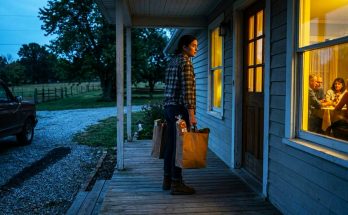
I found that out on a Saturday afternoon, standing outside my parents’ front door with two bags of groceries cutting into my fingers.
Inside the house, my sister was talking about me.
And my father was asking how much money they had given her to help me.
I remember the groceries more clearly than anything else.
Milk in one bag.
Bread, coffee, and the cinnamon creamer my mother liked in the other.
Ordinary things.
I had bought them because Mom had asked me to, the same way she sometimes asked me to pick up something on my way over.
There was nothing unusual about the visit.
At least, that was what I had believed when I pulled into the driveway.
My old pickup sat behind my knees in the memory I kept replaying afterward, its engine ticking as it cooled.
I had parked beside Dad’s sedan.
Ranata’s SUV was there, too.
My older sister had apparently arrived before me.
I remember noticing that and thinking nothing of it.
I took the bags from the passenger seat, shut the truck door, and walked toward the house.
Then I heard her voice.
“She won't admit how bad things have gotten.”
I stopped on the porch.
At first, I thought she was talking about somebody else.
Then she said my name.
“Fay has always been too proud to ask for help.”
I stood there with both hands occupied, looking at the closed blinds beside the front door.
My mother usually left those blinds open during the day.
That afternoon, every slat seemed to hide something.
I should have knocked.
Instead, I listened.
It was not something I was proud of later.
But there was a difference between overhearing a conversation and hearing your family discuss a version of your life that you knew was untrue.
I had spent years being quiet whenever Ranata made remarks about my farm.
I had let my parents believe whatever they wanted to believe about my choices.
I had never thought I needed to correct every little misunderstanding.
Standing outside that door, I began to wonder whether my silence had given them room to believe far more than I realized.
My mother spoke, but I couldn't make out the words.
Ranata answered.
“I've been handling it for her.”
I tightened my grip on the bags.
Handling what?
I was thirty-seven years old.
I owned my home, managed my property, paid my bills, and had spent fifteen years working for everything I had.
There were difficult days.
There were expensive repairs.
There were mornings when I wondered how much longer I wanted to keep working the way I did.
But I had never needed Ranata to handle my life.
Then my father's voice came through the door.
“How much are we talking about this time?”
I went still.
That question changed the conversation.
Until then, I had assumed Ranata was doing what she had always done: describing my life in a way that made hers look better.
She had a comfortable house, a husband, and a vehicle that didn't sound like it might fall apart at a stoplight.
I had an old truck and work clothes that never stayed clean for long.
It was easy for people to draw their own conclusions.
I had allowed them to.
But my father hadn't asked whether I was struggling.
He had asked about an amount.
Mom sounded uneasy.
“Do you think she really needs it?”
Ranata answered without much hesitation.
“If I thought she could manage on her own, I wouldn't be asking.”
I looked down at the bags.
The plastic handles had twisted around my fingers, leaving red marks across my skin.
I could have walked away right then.
I could have left the groceries on the porch and driven home.
Instead, I stayed long enough to hear my father ask another question.
“Has she returned any of what we gave her before?”
For a moment, the house went quiet.
I heard a faint movement inside, perhaps someone shifting in a chair.
Then Ranata spoke again.
“Not yet. She keeps falling behind.”
I felt something cold settle in my stomach.
I had never borrowed money from my parents.
Not once.
I had never asked Ranata to pay a bill, cover a repair, or rescue me from a bad season.
If I needed something, I figured out how to pay for it.
If I couldn't afford it, I waited.
Sometimes that meant repairing an old piece of equipment instead of replacing it.
Sometimes it meant driving my truck another year.
It had never occurred to me that those choices might be interpreted as evidence that I was secretly desperate.
But this was not about interpretation anymore.
My family believed money had been given to me.
They believed I had failed to repay it.
And my sister was the person explaining why.
I stood there, unable to make the pieces fit.
Then my phone vibrated inside my coat.
The sudden sound made me flinch.
I pulled it out and looked at the screen.
A message from my accountant.
He was confirming that the final paperwork connected to the sale of my land was ready for my files.
The message was short and ordinary.
I read it twice anyway.
Three days earlier, I had sold my farm for thirty-nine million dollars.
I had signed the documents, completed the closing, and watched the money arrive in my account.
No celebration.
No announcement.
No new truck sitting in the driveway.
I had gone home and made dinner.
Now I was standing outside my parents' house while they discussed how much money they had supposedly given me.
I looked at the phone again.
Then I looked at the door.
For one strange second, I wanted to laugh.
Not because any of it was funny.
Because the difference between what they believed and what was true was so enormous that I didn't know what else to do.
I had spent fifteen years being treated as the daughter who couldn't quite get ahead.
And now I was hearing that my parents had apparently been helping me financially, while I had never seen a penny of that help.
I could have opened the door and demanded an explanation.
I could have called Ranata out in front of them.
I could have told my parents about the sale and watched their faces change.
But the money in my account was no longer the thing I wanted to talk about.
I wanted to know where the money they thought they had given me had gone.
That question was bigger than my pride.
I set the bags down beside my boots.
For a moment, I considered leaving them there.
Then I picked them up again and carried them back to my truck.
I did not ring the bell.
I did not send Mom a message saying I had arrived.
I placed the groceries on the passenger seat, shut the door, and sat behind the steering wheel.
The accountant's message remained open on my phone.
Thirty-nine million dollars.
That was the number everyone would eventually care about.
But as I backed out of the driveway, I understood that I had just discovered something more important than the sale of my farm.
My family had been telling a story about me for years.
And somebody had apparently been making money from it.
Click here to continue reading: PART 2: For Fifteen Years, They Had Mistaken My Old Truck and Work-Worn Clothes for Failure While I Kept the Real Value of My Land to Myself
I Went to My Parents’ House With Groceries, Believing I Knew Exactly Where I Stood in My Family Until I Heard My Own Name
Part 1 of 9