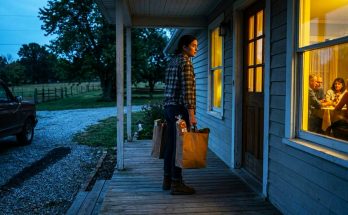
I did not always know how to explain my life to my family.
The truth was, I had stopped trying.
When I bought the farm, I was younger and more certain that hard work would speak for itself.
I had eighty acres, a willingness to learn, and enough money to get started.
I knew the property would take years to become what I wanted.
I also knew there would be no easy way to do it.
That did not scare me.
I liked the work.
I liked knowing that a repaired fence would hold because I had taken the time to fix it properly.
I liked walking across land that belonged to me.
And I liked making decisions without needing anyone's permission.
The farm was not glamorous.
There were no shiny new machines lined up for visitors to admire.
Some equipment was older than I was willing to admit.
A good day could be undone by a mechanical problem, and a small repair could turn into an expensive one before I finished figuring out what had gone wrong.
I learned to be patient.
I learned to keep records.
Most of all, I learned that spending money simply to look successful was a good way to make sure I had less money when I needed it.
That was why I kept the pickup.
It had more than two hundred thousand miles on it, and the driver's seat had worn thin in places.
The dashboard rattled over rough roads.
The air conditioner worked when it felt like working.
But the engine still ran, and I knew the truck's habits well enough to recognize when something was wrong.
Buying another one would have made very little difference to my life.
So I kept driving it.
My father never understood that choice.
At family gatherings, he would glance toward the driveway and ask whether I planned to replace the truck someday.
I would tell him that I had no reason to.
He would shake his head as though I had just confirmed something disappointing about myself.
Ranata usually stood nearby.
She rarely needed to add anything.
A little smile was enough.
When she did speak, she had a way of making my choices sound like shortcomings.
“You've always been determined to do everything the hard way.”
She said it lightly, as if she were teasing me.
I used to answer with a shrug.
Maybe I was stubborn.
Maybe I did make things harder than they needed to be.
I had spent enough time alone with my own thoughts to know that I wasn't right about everything.
But there was a difference between being stubborn and being unable to take care of myself.
My family seemed to have stopped noticing that difference.
At first, the comments were small.
They asked whether the farm was keeping me busy.
They wondered whether I had considered doing something more dependable.
They looked at my clothes and assumed that if I wasn't spending money on myself, I must not have much to spend.
Then the comments became more specific.
Ranata would mention that farm repairs were expensive.
She would talk about how difficult it was to keep a property running when prices went up.
Sometimes she would say that I never told anyone when I was having a hard time.
The implication was always the same.
I was struggling.
I was too proud to admit it.
And my sister understood my situation better than I did.
I let it go.
That was partly because I disliked arguments.
It was also because I had a habit of thinking that people who cared about me would eventually ask if they wanted to know the truth.
My parents never asked.
They accepted what Ranata said and moved on.
Looking back, I can see how much that hurt me.
At the time, I pretended it didn't matter.
I told myself that I had nothing to prove.
There was some truth in that.
But there was pride in it, too.
I wanted them to recognize that I was doing well without my having to explain myself.
Instead, I kept my head down and worked.
The farm demanded enough attention that I rarely had time to sit around thinking about what my family believed.
There were fences to inspect.
Equipment to maintain.
Bills to pay.
Paperwork to finish.
I bought supplies when I needed them and put off unnecessary purchases.
I paid my property taxes.
I kept up with insurance.
When something broke, I worked out how to fix it.
I did not expect my parents to cover any of it.
And I never told Ranata that I needed her help.
The older I got, the less interested I became in defending ordinary decisions.
If I wanted to wear the same flannel shirt for another season, that was my business.
If I preferred an old pickup to a new vehicle, that was my choice.
If I spent my money improving the property instead of buying things other people could see, I saw no reason to apologize.
My family saw the surface.
I lived with the details.
And for a long time, that arrangement suited me.
Then, two years before the sale, a survey brought unexpected attention to the land.
I remember the first time I understood that the property might be worth far more than I had ever imagined.
The survey itself was not dramatic.
There were measurements, boundaries, documents, and conversations about the surrounding area.
It was the kind of thing that could have passed through my life as another piece of farm administration.
But the location of the property mattered to a company planning a major expansion nearby.
Suddenly, the acreage I had spent years maintaining was not being viewed only as a farm.
Someone saw a different use for it.
I did not immediately believe the numbers I began hearing.
Land could be valuable on paper and still be difficult to sell.
An offer was not the same as money in the bank.
And I had no intention of making a decision based on excitement.
So I listened.
I asked questions.
I hired the professionals I needed.
The conversations grew more serious.
There were appraisals and legal reviews.
There were meetings and revised proposals.
Every time I thought the process might be nearing an end, another document needed attention.
I learned to keep my mouth shut until something was final.
Not because I was ashamed of what was happening.
Because it wasn't final.
A sale of that size was not something I wanted to discuss around a dinner table before I knew whether it would happen.
I did not tell my parents.
I did not tell Ranata.
I went on working at the farm while the negotiations continued.
My pickup remained the same.
My clothes remained worn.
My daily routine changed very little.
From the outside, nothing about me looked different.
That was one reason I kept the matter private.
Another was that I wanted to make the decision without a crowd of opinions surrounding me.
My family had already shown me how quickly they could decide what my life meant based on a few visible details.
I did not want the possibility of a major sale to turn into another family discussion before I had even signed the papers.
I wanted to know what I thought before hearing what everyone else thought.
So I kept going.
The paperwork moved forward.
The property was evaluated.
The offers were discussed and revised.
My attorney reviewed the terms.
I checked every number I could understand and asked questions about the ones I couldn't.
There was nothing magical about the process.
It was work.
Different work from repairing a fence or keeping a machine running, but work all the same.
And then the closing date arrived.
Three days before I went to my parents' house with the groceries, I signed the final documents.
The sale was complete.
Thirty-nine million dollars.
I remember how quiet everything felt afterward.
I had expected some overwhelming reaction.
Maybe relief.
Maybe excitement.
Maybe the sudden urge to do something I had never been able to afford.
Instead, I sat in my pickup and looked at the confirmation on my phone.
I read the amount once.
Then again.
I checked that the transaction had gone through.
After that, I put the phone down.
The truck was still old.
My hands were still rough from years of work.
I was still the same person who had walked into the property office that morning.
The money was real, but it had not changed my understanding of myself.
I drove home.
I placed the closing papers in a plain brown folder and put it away.
I made dinner.
The next morning, I got up and went about my day.
I did not order a new truck.
I did not tell my parents.
I did not contact Ranata to announce that her version of my life had been wrong.
For once, I wanted to let things stand as they were.
I wanted to see how much of my family's opinion depended on what they thought I owned.
That was not the noblest reason to keep quiet.
I knew there was a part of me that wanted to be proven right without having to say a word.
I wanted them to discover, eventually, that the sister they pitied had been doing just fine.
But I also wanted peace.
I did not know what a large amount of money would do to family relationships.
I had heard enough stories to understand that money could turn ordinary disagreements into something uglier.
Until I knew what I wanted to do with it, I preferred not to invite that problem into my home.
Three days passed.
Then my mother sent me a message asking me to pick up a few things from the grocery store.
Milk.
Bread.
Coffee.
Her usual cinnamon creamer.
I agreed.
It seemed like an ordinary favor.
I had no idea that by the time I reached her porch, the quiet life I had built was about to become entangled in a financial story I had never been part of.
Click here to continue reading: PART 3: My Mother Asked for Her Usual Groceries, but a Conversation Behind the Closed Blinds Sent Me Home to Examine Every Dollar I Had Ever Spent
I Went to My Parents’ House With Groceries, Believing I Knew Exactly Where I Stood in My Family Until I Heard My Own Name
Part 2 of 9