Dad began sorting the papers into separate piles.
He placed the entries he could verify on one side and the ones that needed more checking on the other.
It was a small action.
But it changed the conversation.
Until then, we had been arguing about what people remembered.
Now Dad wanted facts.
Mom brought a notebook from the drawer beside the refrigerator.
She set it near the records and opened to a blank page.
I watched her write down the first date.
She asked Dad for the amount.
He read it from the statement.
She wrote it carefully, then asked what the payment had been intended to cover.
Dad repeated the description.
Farm equipment.
Mom paused before writing the words.
I could tell she was remembering how often Ranata had used that phrase.
Every time my parents had asked about the farm, my sister had apparently had an expense ready to explain.
Something needed repairing.
Something needed replacing.
A bill had become difficult to manage.
And each time, she had presented herself as the person who knew what I needed.
I had never known any of those conversations were happening.
Mom asked whether I remembered having trouble paying for equipment around that period.
I told her the truth.
There had been expensive purchases, but I had planned for them.
I had paid the bills myself.
I could not remember every transaction without checking my records, but I knew I had not received money from my family.
Dad nodded and marked the entry for further review.
Then he moved to the next page.
We went through the records one at a time.
Some descriptions were general.
Others were specific enough that I could remember the expense they referred to.
The more I recognized, the more certain I became that the money had not gone where my parents believed it had.
I did not claim to know what had happened to every dollar.
I had no access to the accounts through which the payments had been made.
But I knew what I had received.
Nothing.
That was the one fact nobody at the table could dispute.
Desmond asked whether there were receipts.
Dad said they would need to check.
Ranata shifted in her chair.
“You're turning this into an investigation.”
Dad looked at her.
“We're trying to find out what happened to our money.”
“You're acting like I stole it.”
Nobody answered immediately.
The word hung over the table.
I looked at the papers.
Dad had not accused her of anything in those exact words.
He had asked where the money had gone.
She had been unable to explain.
The distinction mattered.
“Then show us where it went,” Desmond said.
Ranata turned toward him.
“You're supposed to be on my side.”
He looked at her for a long moment.
“I don't know what side I'm supposed to be on until you tell us the truth.”
She looked away.
I felt a strange sadness watching them.
Desmond was not someone I knew well enough to predict.
He had always been polite to me.
He asked about the farm when we met and listened when I answered.
I had never suspected that he might be caught in the middle of something like this.
I wondered how much he knew.
I wondered whether he had ever heard the story about my supposed financial problems.
I did not ask.
The room already held enough questions.
Mom wrote another entry into the notebook.
Then she stopped.
She looked at Ranata.
“When you told us Fay couldn't pay us back, did you believe she had received the money?”
Ranata's shoulders tightened.
“I believed I was helping.”
Mom shook her head.
“That isn't what I asked.”
For the first time, I saw my mother refuse to let an answer pass simply because it sounded reasonable.
Ranata stared at the notebook.
She said the arrangements had become difficult to manage.
She said she had intended to sort everything out.
She said she had not expected the questions to come up this way.
Each answer seemed to move us farther from the beginning.
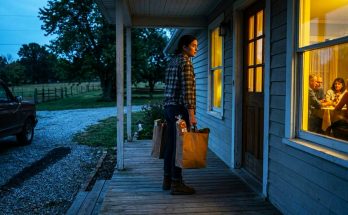
I thought about the porch again.
I could still remember the weight of the grocery bags and the sound of my father's voice asking about repayment.
At the time, I had wondered whether I had somehow missed an important conversation.
Now I knew I had not.
The conversation had happened without me.
The money had been handled without me.
And my name had been used to explain it all.
Dad asked whether the records accounted for every payment.
He said he wanted to compare the entries against the bank statements and any receipts they could find.
Mom agreed.
Neither of them sounded as though they expected the process to be easy.
Ranata said that some of the money had gone toward family expenses.
Dad asked which expenses.
She did not answer.
I looked at Desmond.
His face had gone pale.
He asked what she meant by family expenses.
Ranata told him not to start.
He sat back, staring at her.
I could not tell whether he was shocked by the records or by the way she was responding to them.
Perhaps both.
Dad placed the notebook beside the statements.
“We'll need to check everything.”
Ranata pushed her chair back a few inches.
“I can't sit here all night while you question me.”
“You don't have to sit here all night,” Dad replied. “But we are not going to forget this tomorrow.”
She looked toward the door.
For a moment, I thought she would stand up.
Then Mom spoke.
“Please don't leave before we understand what happened.”
My sister remained seated.
I felt no satisfaction in that.
I had once imagined that if my family finally understood how wrong they had been about me, I would feel vindicated.
Instead, I felt as though I had walked into a room where something fragile had already broken.
The money could be counted.
The records could be checked.
The sale of my farm could be confirmed.
But trust was not something we could place in separate piles and examine one entry at a time.
Dad turned toward me.
“Fay, do you have records of your farm expenses?”
“Yes.”
“Could you bring them so we can compare the dates?”
I nodded.
“I can.”
I knew exactly where they were kept.
I had spent years recording payments because I needed to know what the farm cost to run.
I could show when equipment had been purchased.
I could show which bills I had paid.
I could show that the money had come from my accounts.
Those records would not prove where my parents' money had gone.
But they would help establish that it had not come to me.
Dad thanked me quietly.
I looked at him.
He seemed uncomfortable hearing the words come out of his own mouth.
I did not tell him he had nothing to thank me for.
We had reached a point where ordinary kindness felt awkward because so many ordinary things had been left unsaid.
Mom closed the notebook.
She had written down several entries, with space left for the rest.
She said they would continue checking the records.
Dad gathered the bank statements into a neat stack.
Desmond stayed beside Ranata, but he no longer tried to defend her.
My sister sat very still.
I could see that she wanted the conversation to end.
So did I.
But ending it would not make the missing money appear.
It would not erase the years in which my parents believed I was receiving help while I continued paying my own bills.
And it would not answer the question that had been waiting for us since I stood on the porch.
I placed the brown folder under my arm.
The closing statement was still inside.
When I arrived that afternoon, I had thought the sale would be the most important fact I could share with my family.
Now I understood that the amount in my account was only one part of what we needed to face.
My parents had believed they were helping me.
I had believed they knew me well enough to ask if something was wrong.
Ranata had spoken for me, and none of us had challenged her until the records made silence impossible.
I looked at my sister one last time before standing.
She did not look back.
I had no way to know what she would say when we met again.
I only knew that the next conversation could not be built on assumptions.
For fifteen years, I had let my family believe I was struggling because I thought correcting them would accomplish nothing.
Now I had learned what could happen when nobody asked for the truth.
I picked up my truck keys.
The old pickup was waiting outside, exactly as I had left it.
I was still the same person who had driven it to the grocery store that afternoon.
But I could no longer pretend that the only thing my family had misunderstood was my financial situation.
The records were still on the table when I left.
And this time, I knew they would have to be read all the way through.
Click here to continue reading: PART 9: I Had Sold My Farm for Thirty-Nine Million Dollars, but the Truth About My Family Was Worth More Than Anything I Could Have Bought
I Went to My Parents’ House With Groceries, Believing I Knew Exactly Where I Stood in My Family Until I Heard My Own Name
Part 8 of 9