I went home that night with the brown folder on the passenger seat.
The closing statement was still inside.
So were the records I had gathered to prove that I had paid my own expenses for fifteen years.
I drove slowly, not because the road was difficult, but because I did not want to arrive anywhere in particular.
For most of my life, I had treated home as the place where I could stop explaining myself.
Now I wasn't sure what home meant when the people who knew me best had believed a story about me without ever asking whether it was true.
When I reached my house, I carried the folder inside and placed it on the kitchen table.
The grocery bags from earlier were still there.
I put the milk away, slid the bread into its usual place, and returned the cinnamon creamer to the refrigerator.
My mother's favorite creamer.
I stood with the refrigerator door open longer than necessary.
Then I closed it.
Somehow, putting those ordinary things away was easier than deciding what to do with the rest of the evening.
I did not call Ranata.
I did not call my parents.
I went into my office, opened my records, and began gathering the documents Dad had asked me to bring.
There were years of expenses to sort through.
I worked carefully.
Equipment purchases.
Insurance payments.
Property taxes.
Repairs.
Every entry had a date and an amount.
I had kept those records because I needed them to run the farm, not because I expected my family to question whether I could support myself.
Still, I was grateful for them.
They showed what I had paid and when I had paid it.
They gave me something solid to hold on to while everything else seemed uncertain.
I finished near midnight.
Then I placed the documents in a separate folder and left it beside the brown one.
I slept badly.
Every time I closed my eyes, I heard my father's question from the porch conversation.
How much had I paid back?
The question had been asked as if my debt were already established.
As if my failure to repay were simply another fact about my life.
I had spent years worrying about things that were actually my responsibility.
I had never imagined I would have to defend myself against a debt I had never incurred.
The next morning, I woke before sunrise.
Out of habit, I made coffee and looked out toward the yard.
For years, the beginning of my day had been simple.
Get up.
Get dressed.
Check what needed doing.
I no longer had the same farm waiting for me, but the habits remained.
I sat at the kitchen table with my coffee and looked at the two folders.
One held proof of the sale.
The other held proof of my ordinary life.
Neither could tell me why Ranata had done what she had done.
I could not make that answer appear by staring at paperwork.
So I waited for my parents to finish checking their records.
They called later that day.
Dad asked whether I could come over again.
I told him I could.
This time, I took the expense records with me.
When I arrived, Mom opened the door herself.
She looked as though she had not slept much.
She stepped aside to let me in.
Nobody had arranged groceries on the counter.
Nobody asked whether I wanted coffee.
The papers were back on the kitchen table, and Dad had added more documents to the stack.
Ranata was there.
Desmond sat beside her.
My sister looked up when I entered, then lowered her eyes.
I placed my folder next to Dad's papers and took a seat.
Dad thanked me for bringing the records.
He had spent part of the morning comparing the information they already had with their bank statements.
He said they were still working through the entries.
I opened my folder and showed him the records for the expenses that appeared on his list.
We checked the dates.
We checked the amounts.
Where I had records of a purchase or repair, I showed him the payment.
Where a bill had been paid from my account, I showed him that, too.
The process took time.
It was not dramatic.
There were no sudden revelations in every page.
There was just one entry after another, and the same fact kept returning.
I had paid my own expenses.
Dad eventually set his pen down.
“I believe you.”
I nodded.
I had wanted to hear those words for years without knowing it.
But hearing them then did not make me feel the way I had imagined.
I was relieved.
I was also angry that the proof had been necessary.
Mom sat beside him with her hands folded together.
“We should have asked you ourselves.”
“Yes,” I said.
She looked at me.
“I thought we were helping you without making you feel uncomfortable.”
“I understand that.”
It was the truth.
I understood why she had wanted to help her daughter quietly.
I understood why Dad had trusted Ranata to manage the arrangements.
What I could not understand was why neither of them had checked with me, especially when the money was supposedly meant to cover expenses I would have known about.
I told them that.
Not loudly.
Not to punish them.
I simply wanted them to understand that their intentions had not changed what had happened.
Dad accepted that without arguing.
Then he turned toward Ranata.
“We need your explanation now.”
She looked at the table.
Desmond leaned forward.
“Please tell them what you did with the money.”
Ranata took a breath.
She said she had not intended for things to reach this point.
Dad asked what she meant.
She said that, at first, she had believed she could manage everything.
I waited for her to explain what everything meant.
She did not make it clear.
She spoke about the payments, about the way she had described my situation, and about the difficulty of admitting that things had gone wrong.
The details came slowly.
She acknowledged that the money had not been passed to me.
She acknowledged that our parents had been told it was for my expenses.
But she still struggled to explain why she had allowed the arrangement to continue without correcting them.
Dad asked her to account for the payments.
He wanted to know what had happened to each amount.
Ranata said she would need to review the records.
Dad told her they had already begun doing that.
She had been given opportunities to explain the entries.
She had not yet provided an account that matched the information they had.
Desmond looked at her with an expression I could not read.
He asked whether she had told him the same story about my financial problems.
Ranata did not answer immediately.
Then she admitted that she had described me as struggling.
Desmond looked down.
I wondered how many conversations had happened in rooms where I wasn't present.
I wondered how often my name had been used to explain a decision I knew nothing about.
But I did not ask.
I had come to hear the truth about the money, not to collect every hurtful thing anyone had ever said about me.
Dad explained that they would continue reviewing the transfers and records.
They would not treat the matter as settled until they understood the amounts and what had happened to them.
Ranata nodded.
She did not argue this time.
I could see that she wanted me to speak.
Perhaps she expected me to tell our parents to forgive her.
Perhaps she hoped I would say that the money was not important because I had sold my farm.
I could not do either.
The sale did not make the missing money irrelevant.
Thirty-nine million dollars in my account did not turn a false claim into a harmless mistake.
My parents had given money because they believed I needed it.
I had never received it.
And my sister had allowed them to believe I was responsible for repaying something I had never borrowed.
I looked at her.
“I need you to understand something.”
She raised her eyes.
“This was never about whether I had enough money.”
She said nothing.
“I could have been struggling. I could have been doing well. It wouldn't have changed the fact that you told them you were helping me when you weren't giving me anything.”
Her face tightened.
I continued.
“You made decisions about my life without asking me. Then you used those decisions to explain why I was failing.”
She looked away.
“I didn't know how to fix it.”
I believed that she might have felt trapped by the story she had told.
But a difficult lie did not become the truth simply because it had been repeated too many times.
“You could have told them,” I said.
She did not answer.
“You could have called me.”
Still nothing.
That was the part I kept returning to.
There had been so many chances to stop.
One phone call could have corrected the misunderstanding.
One honest conversation could have prevented years of false assumptions.
Instead, the story had continued until the records forced everyone to look at it.
Mom began to cry.
Dad reached for her hand.
I felt sorry for them.
They had wanted to help their daughter.
They had believed they were doing something loving.
They now had to face the possibility that their trust had been used in a way they had never intended.
But I could not take that pain away by pretending nothing serious had happened.
Dad told Ranata that they expected a full account of the money.
He wanted every payment explained.
He wanted the records reviewed carefully.
And he wanted the false claims about me to stop.
Ranata agreed.
Her voice was barely audible.
Desmond remained beside her, but he did not speak for her again.
I knew that agreement was only a beginning.
The records still needed to be checked.
The payments still needed to be accounted for.
The trust between my parents and my sister would not return simply because everyone had finally sat down together.
And whatever happened between Ranata and Desmond was theirs to face.
I could not make those decisions for them.
I could only decide what I was willing to accept in my own life.
Dad turned toward me.
“Fay, what do you want us to do?”
The question caught me off guard.
For years, my parents had accepted someone else's explanation of what I needed.
Now they were asking me.
I looked at the papers on the table.
“I want the truth about the money.”
Dad nodded.
“And after that?”
“I want you to ask me about my life instead of letting somebody else tell you what it is.”
Mom wiped her cheeks.
“I will.”
I believed she meant it.
I did not know how quickly the habit would change, or whether we would all manage to avoid falling back into familiar roles.
But at least the question had finally been asked.
I gathered my expense records and placed them back in my folder.
The brown folder containing the closing statement remained on the table.
Dad glanced at it.
“I still can't believe you sold the farm for that much.”
I looked at him.
“Neither could I, at first.”
He gave a faint, tired smile.
For the first time since I had arrived, the conversation moved away from the money my parents had sent.
He asked what I planned to do now.
I told him I hadn't decided.
I explained that I had kept quiet because I wanted time to think about the sale without everyone having an opinion about it.
I admitted that part of me had wanted to see whether my family would treat me differently if they believed I had nothing special to show them.
Dad listened.
Then he said something I had not expected.
“You shouldn't have had to prove anything to us.”
I looked down at my hands.
“No,” I said. “I shouldn't have.”
It was not a complete reconciliation.
It was not an apology for every careless comment or every dinner when my choices had been treated as evidence of failure.
But it was honest.
And honesty was the one thing I had wanted from that kitchen table.
When I finally stood to leave, Mom walked me to the door.
She asked whether I would come by again soon.
I told her I would, provided we could talk to one another directly.
She nodded.
Outside, my old pickup sat in the driveway.
I rested one hand on the driver's door before climbing in.
For fifteen years, I had thought that if I worked hard enough, paid my bills, and stayed out of trouble, my family would eventually understand me.
I had been wrong about that.
People could see what they wanted to see.
They could take an old truck and turn it into a story about failure.
They could take independence and call it pride.
They could even believe they were helping someone who had never asked for help.
I could not control every story told about me.
But I could stop letting other people speak for me when the truth mattered.
I drove home and put the folders away.
The sale proceeds remained in my account.
I still had no grand plan for the future.
There would be time to decide whether I wanted another property, a different kind of work, or a quieter life.
For now, I was learning how to live with the knowledge that the people closest to me had misunderstood me for years.
I did not want to spend the rest of my life punishing them for it.
I also did not want to pretend that forgiveness meant forgetting.
The financial records would be reviewed.
Ranata would have to account for the money.
My parents would have to decide what trust meant after what they had learned.
Those things would take their own course.
I could not promise that our family would return to what it had been.
I wasn't sure I wanted it to.
The old version of our family depended on my silence and on everyone accepting the easiest explanation.
I had no desire to rebuild that.
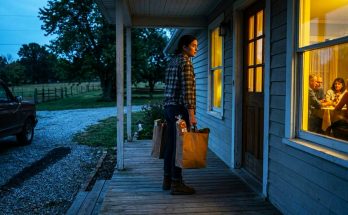
A few days after the sale, I had carried two bags of groceries to my parents' house because my mother had asked me to help.
I left without knocking because I heard my sister telling them I couldn't support myself.
I had thought the thirty-nine million dollars in my account was the secret that would change everything.
It wasn't.
The money was a result of years of work, patience, and a decision to sell land that had become valuable in ways I could never have predicted.
The real surprise was discovering how little my family had asked about the life I had actually lived.
I had never needed their money.
I had needed them to know me well enough to ask.
That was what I wanted to change.
Not the truck.
Not the way I dressed.
Not the fact that I preferred to live quietly.
I wanted the next conversation to begin with a question addressed to me.
And if someone wanted to tell a story about my life, I wanted the chance to answer for myself.
The End
Read more original stories on Feel Every Story.
I Went to My Parents’ House With Groceries, Believing I Knew Exactly Where I Stood in My Family Until I Heard My Own Name
Part 9 of 9