The first thing I lost that morning was my job.
The second was the belief that doing the right thing would always leave me with something to be proud of.
I was standing outside the conference room with my laptop bag digging into my shoulder when Gavin asked me why I had abandoned my responsibilities.
I had been running.
My tie was crooked, my shirt stuck to my back, and I could barely get enough air into my lungs to answer him.
Behind him, the presentation was still displayed on the wall.
I had spent most of the previous night working on those slides.
Now they were useless.
"Where were you, Christopher?"
Gavin didn't raise his voice at first.
That made it worse.
He stood with his hands planted on his hips, staring at me as if he had caught me stealing from the company.
"I know how this looks," I said.
"Then explain it."
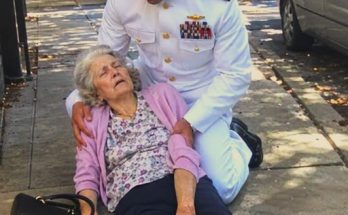
"There was a woman on the road. She collapsed right in front of me."
He waited.
I could tell he expected something more convincing.
"She grabbed her chest, and her legs gave out. I stopped to help her."
Gavin's expression hardened.
He looked past me at the employees gathered near their desks.
Nobody was pretending to work anymore.
"Was this woman someone you knew?"
"No."
"Someone in your family?"
"No."
He let out a short breath through his nose.
"Then why were you dealing with her instead of being here?"
I opened my mouth.
Nothing useful came out.
I had already explained the emergency twice that morning, once to the receptionist when I called and once to the office manager when I finally arrived.
I had hoped that once Gavin heard the details, he would understand.
I was wrong.
"She was in trouble," I said. "I couldn't just leave her there."
Gavin glanced toward the conference room.
"The clients waited for you."
"I know."
"They had eight-thirty blocked off for this meeting."
"I know."
"We have spent weeks trying to get this account."
"I know, Gavin."
"Then you should understand what you've done."
My face felt hot.
I looked down at my laptop bag, where the zipper had caught a loose thread from my shirt.
It was a stupid little detail to notice at that moment.
But I noticed it anyway.
"I called as soon as I could," I said. "I told the office I was dealing with an emergency."
"And you still decided to come in late."
I stared at him.
For a moment, I wondered whether he had heard anything I said.
"The woman had collapsed," I repeated. "She needed help."
Gavin shook his head.
"We needed you."
There it was.
Two different needs.
One woman on the roadside, unable to stay on her feet.
A room full of clients waiting for me to present a proposal.
And Gavin had already decided which one mattered.
I had worked for that man for nearly four years.
Four years of answering messages after dinner.
Four years of fixing campaigns that other people had nearly ruined.
Four years of sitting at my desk long after the cleaning staff started emptying the trash cans.
I knew which clients hated phone calls and which ones needed three reminders before approving anything.
I knew which employees needed help without being asked.
I knew where every important file was stored and which passwords had to be reset whenever our systems went down.
If someone had asked me what I did for a living, I would have said I helped keep the agency running.
I believed that mattered.
Apparently, it mattered only when I was doing it.
"Gavin, I understand that the meeting was important," I said. "I worked on that presentation until after midnight. I wouldn't have missed it for something trivial."
He looked at the wall monitor.
"The clients aren't interested in how late you worked."
"I never said they were."
"Then stop making excuses."
I felt something tighten in my chest.
I wanted to tell him that I wasn't making excuses.
I wanted him to understand that the woman hadn't been a choice between convenience and work.
She had been a human being who needed someone to stop.
But I could see that he wasn't listening.
He had already turned the morning into a business problem.
And I was the problem he intended to remove.
"I did what I thought was right," I said.
Gavin stepped closer.
"Your job isn't to decide what's right for everyone you happen to see on the road."
I looked at him for a long moment.
That was when I realized he wasn't asking me to explain myself anymore.
He wanted me to admit that I had made the wrong choice.
I couldn't do that.
Not even to save my job.
"I couldn't leave her," I said quietly.
Gavin's jaw moved.
He looked around the office again, making sure everyone could hear what came next.
"Christopher, we aren't running a rescue service. We're a business. You had a team depending on you, and you chose to put a stranger ahead of them."
I swallowed.
"We lost the account because you weren't here."
The words landed harder than I expected.
I had spent weeks trying to win that account.
I had studied the client's existing campaigns, compared their numbers with their competitors, and rewritten the proposal so many times that I could recite most of it without looking at the slides.
The opportunity had been hanging over our department for months.
I knew what winning it would mean.
More work.
More revenue.
More pressure.
Possibly a promotion, although I had stopped letting myself think too much about that.
Now the account was gone, and Gavin had found someone to blame.
Me.
"I'm sorry," I said.
I hated how small my voice sounded.
"I really am. But what was I supposed to do? Drive past her?"
"Yes."
I thought I had misunderstood him.
He didn't hesitate or soften the answer.
He simply stared at me.
"Yes, Christopher. You were supposed to get here on time."
The office was so quiet that I could hear the printer near the copy room feeding a sheet of paper through its rollers.
Nobody moved.
Nobody said anything.
I had always thought there were certain things people didn't need to explain to one another.
A person collapsed on the roadside.
You stopped.
Someone needed help.
You helped if you could.
I had never imagined that the same act could be described as a professional failure.
"Four years," I said before I could stop myself.
Gavin frowned.
"What?"
"Almost four years I've worked here."
He folded his arms.
"I know how long you've worked here."
"I've stayed late. I've covered for people. I've taken calls on weekends. I've fixed problems that weren't even mine."
I wasn't trying to sound heroic.
I was trying to remind him that I had been loyal.
Looking back, I know that was part of my mistake.
I believed loyalty was something a person earned by giving enough of himself away.
I thought that if I kept showing up, kept helping, kept proving I could be relied on, then the people above me would remember it when I needed understanding.
I had mistaken being useful for being valued.
"I've given this place everything I have," I said.
Gavin's face didn't change.
"That doesn't alter what happened this morning."
I waited for something else.
An alternative.
A warning.
Even a suspension would have been easier to understand than what he said next.
"Clear your desk."
I blinked.
"What?"
"You're finished here."
For a second, the words didn't seem connected to me.
I looked toward the desks behind him, at the familiar monitors and office chairs, at the little plant someone had left beside the reception counter.
My desk was near the windows.
I had a photograph of my two daughters tucked beside my monitor.
One was smiling with her front teeth missing.
The other had her arms wrapped around her sister's shoulders.
I had looked at that picture every morning for years.
Now I was supposed to collect it and leave.
"Gavin, please."
I heard the word come out of my mouth.
I wished I could take it back.
"Don't make this harder than it needs to be."
I stood there holding my bag.
I couldn't think of a single sentence that would change his mind.
The woman had needed help.
I had stopped.
I had arrived late.
And now I was unemployed.
It sounded simple when arranged in that order.
It felt unbearable when it happened to me.
One of the account managers lowered her eyes toward her keyboard.
A man from the creative team turned his chair away.
Someone near the kitchen picked up a mug and then set it down without drinking.
They were all watching.
I couldn't blame them for staying silent.
They had their own jobs, their own bills, their own reasons to avoid becoming the next person Gavin decided was expendable.
Still, their silence hurt.
I turned toward the hallway.
My eyes were already filling, and I hated myself for it.
I had always imagined that if I ever lost a job, I would take it like an adult.
I would ask for the paperwork.
I would shake hands if necessary.
I would leave without giving anyone the satisfaction of seeing me break.
Instead, I walked away so quickly that the strap of my bag slid down my arm.
I caught it before it fell.
That small movement nearly undid me.
I made it through the office doors without speaking to anyone.
The morning sun hit my face.
Cars moved along the road beyond the parking lot, and people crossed the pavement carrying coffee cups and talking into their phones.
The world looked exactly as it had when I arrived.
That seemed cruel.
I got into my car and shut the door.
Then I locked it.
For several seconds, I sat with both hands on the steering wheel.
My fingers were trembling.
I looked at the empty passenger seat and thought about the woman I had stopped for.
I wondered whether she had survived.
I wondered whether anyone had stayed with her after I left.
I wondered whether I should have done something differently.
Then I thought about my daughters.
Their school expenses.
The bills waiting at home.
The mortgage payment that would come due whether Gavin liked me or not.
I pressed my forehead against the steering wheel.
And I screamed.
It wasn't a word.
It was everything I had swallowed in that office, everything I had wanted to say and couldn't, everything I feared I had just lost.
When the sound finally stopped, I sat there breathing through my mouth.
My eyes hurt.
My hands hurt.
I had no idea what I was going to tell my family.
I had no idea how I would explain that I had lost my job because I stopped to help someone whose name I didn't even know.
And I certainly had no idea that she would soon be looking for me.
Click here to continue reading: PART 2: I Drove Away With Nothing but My Laptop Bag and a Photograph of My Daughters, Still Wondering Whether Saving a Stranger Had Been a Mistake
I Thought Being a Good Man Meant Doing the Right Thing, Until My Boss Made Me Choose Between My Job and a Stranger
Part 1 of 15