By the end of the week, I had stopped expecting every day to bring a turning point.
That didn't mean I had stopped hoping.
It meant I was learning to get through an ordinary morning without deciding that the absence of good news was a verdict.
I woke up.
I made coffee.
I helped the girls get ready for school.
I checked the job listings and sent applications where I could.
I did the laundry, bought groceries, and tried not to turn every small expense into an argument with myself.
Some days went smoothly.
Others didn't.
There were mornings when I opened my laptop and felt so tired of explaining my experience to strangers that I wanted to close it again.
There were afternoons when I remembered the office and felt anger rise so quickly that I had to stand up and walk around the house.
I didn't always handle those moments well.
Once, my wife asked me a simple question about dinner, and I answered too sharply.
She went quiet.
I knew immediately that I had taken my frustration out on her.
"I'm sorry," I said.
She looked at me for a moment.
"Are you angry with me?"
"No."
"Then don't talk to me as if I am the problem."
The words stung because they were fair.
I put the papers I'd been holding down on the table.
"You're right. I'm sorry."
She nodded, but she didn't pretend the moment hadn't happened.
I sat beside her.
"I don't know how to stop thinking about it."
"About losing the job?"
"About all of it. The money. The way it happened. The fact that I did something I thought was right and still ended up paying for it."
She folded her hands in her lap.
"I don't think you have to stop thinking about it all at once."
"I wish I could."
"I know."
She looked toward the hallway.
"But you can't let what happened at work decide how you treat the people who are still here with you."
I lowered my head.
"I don't want to."
"Then keep trying."
That was all she said.
She didn't give me a speech about being strong.
She didn't tell me the future would reward me for doing the right thing.
She asked me to keep trying, and I understood what she meant.
The next morning, I apologized again.
Not because she demanded it.
Because I wanted her to know I had heard her.
We made breakfast together, and the tension eased.
Later, I returned to the kitchen table.
The bills were still there, but I'd begun putting them into the folder my wife had prepared.
The photograph had a place beside them.
So did the small stone my daughter had brought home from the park.
It was an odd collection of things.
A picture from a job I no longer had.
Numbers showing what we owed.
A stone that meant nothing to anyone except a child who had found it interesting.
I liked having them together.
They reminded me that the part of my life I could measure was not the only part that mattered.
I still wanted a job.
I still needed an income.
I wanted to give my family stability, and I wasn't going to pretend that desire was unimportant.
But I also wanted to be able to look at myself without feeling that I'd betrayed something essential just to protect my schedule.
I had no easy way to balance those things.
I could only make the next decision when it came.
That afternoon, the woman called again.
I'd started recognizing her number before I reached for the phone.
"Hello?"
"Hi, Christopher. I hope I'm not interrupting."
"You're not."
She asked how the search was going.
I told her about the screening and the other applications.
"I haven't heard back from the first company," I said. "I did speak to another recruiter, but that position had already been filled."
"I'm sorry."
"It's all right. That's how it goes sometimes."
I realized I sounded calmer than I had the previous week.
Not cheerful.
Just less like every unanswered email was a door slamming shut.
"Have you been getting any rest?" she asked.
"More than I was."
"Good."
I could hear the care in her voice, but I didn't try to make it mean more than it did.
She was checking on someone who had helped her.
I was grateful.
That was enough.
After a moment, she said, "I've been wanting to tell you something."
I sat up a little.
"All right."
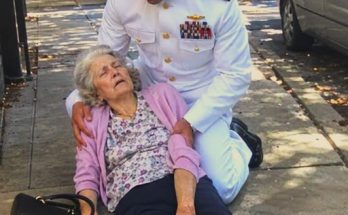
"When I think about that morning, I remember how frightened I was. I remember not knowing what was going to happen. And I remember you stopping."
I didn't interrupt.
"I know what it cost you afterward," she continued. "I can't undo that. But I didn't want you to think that your help was something I would forget as soon as I felt better."
I looked at the photograph beside the bills.
"I haven't thought that."
"Have you thought that it wasn't worth it?"
The question caught me off guard.
I looked down at my hands.
There were honest answers I could have given.
I could have said that I wished I hadn't lost my job.
I could have said I wished Gavin had handled the situation differently.
I could have admitted that the financial strain frightened me more than I'd expected.
All of those things were true.
But they weren't the answer to her question.
"No," I said. "I haven't thought that helping you wasn't worth it."
She was quiet for a moment.
"Thank you."
I breathed out slowly.
"I won't lie and say it hasn't been hard."
"I wouldn't expect you to."
"I'm worried about my family. I don't know how long it will take me to find work. There are days when I'm angry about the way everything happened."
"I understand."
"But when I picture myself driving past you, I know I wouldn't have been comfortable with that."
The words settled between us.
I had said something similar before, but this time I didn't feel the need to defend it.
The woman thanked me again.
Then she asked whether I had anyone helping me with the job search.
I told her my wife was supporting me and that I had been working through applications every day.
"That sounds like a good person to have beside you."
"She is."
We spoke a little longer before ending the call.
I set the phone down.
For a while, I stayed at the table.
I hadn't received an offer.
I hadn't learned anything that changed our budget.
The call hadn't solved a single practical problem.
Yet I felt a little more settled.
I understood why the woman had kept checking on me.
She didn't want her survival to be followed by silence, as though the person who'd stopped to help her could simply be erased from the story.
I didn't know whether she realized how much that mattered to me.
I didn't need to tell her.
Later, when my wife came home, I mentioned the conversation.
She listened while taking off her coat.
"What did she say?"
"She told me she wouldn't forget that I stopped."
My wife smiled faintly.
"I doubt she will."
"I told her I don't regret it."
"Do you?"
"No."
The answer came without a pause.
My wife studied my face.
"You sound sure."
"I am sure about that part."
She nodded.
"Then hold on to that part."
I thought about the distinction.
I wasn't sure how the job search would turn out.
I wasn't sure how long we would need to stretch our savings.
I wasn't sure whether the next interview would lead anywhere.
But I was sure about the roadside.
That part no longer needed to be argued over in my head.
We ate dinner with the girls.
Afterward, I helped one of them prepare for a school assignment while my wife sat with the other.
The house was busy, and I found comfort in the noise.
At bedtime, my younger daughter asked whether I would be home again the next day.
"Yes," I told her.
"Can we make pancakes?"
"If we have time."
She considered that.
"We have time on Saturday."
I laughed.
"Then Saturday it is."
She hugged me and went to bed.
I stood in the doorway for a moment after she had settled beneath the covers.
I'd spent so much of the previous weeks thinking about what I had lost that I hadn't fully noticed what had remained.
My family was still here.
My wife was still beside me.
My daughters still expected me to help with homework, answer questions, and remember promises about pancakes.
Those responsibilities didn't erase the need for work.
They reminded me why I needed to keep looking for it.
I went downstairs and opened the laptop.
There were new listings to review.
I read them carefully, saved two that seemed suitable, and submitted another application.
Then I closed the screen.
I wasn't going to solve the future tonight.
I could only prepare for it.
Before bed, I checked the folder on the kitchen table to make sure the bills were in order.
The photograph was still beside it.
I picked it up and looked at my daughters again.
I remembered carrying it into the office, setting it on my desk, and believing that if I worked hard enough, I could keep the important parts of my life safe.
I understood now that work could provide security, but it couldn't guarantee that every decision would be understood or every circumstance would remain under my control.
I would keep searching.
I would keep applying.
I would take the phone calls and attend the interviews that came.
And if the woman called again, I would answer when I could.
None of those things required me to pretend that losing my job had been painless.
None required me to regret stopping.
I returned the photograph to its place.
Then I turned off the kitchen light and went upstairs.
The next day would bring its own questions.
For once, I let them wait until morning.
Click here to continue reading: PART 13: I Kept Sending Applications and Showing Up for My Family, Until I Realized That Waiting for Someone Else to Judge My Worth Had Become Its Own Kind of Burden
I Thought Being a Good Man Meant Doing the Right Thing, Until My Boss Made Me Choose Between My Job and a Stranger
Part 12 of 15