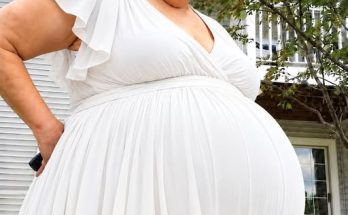
By the second afternoon, I could sit upright for short periods.
The first time I swung my legs over the edge of the bed, the room tilted. A nurse steadied me while I waited for the dizziness to pass.
I hated needing help with something as simple as sitting up.
I hated it more when the nurse apologized for moving slowly, as though my frustration were her fault.
“Don't apologize,” I told her. “I'm cross with the situation, not with you.”
She smiled and helped me settle back against the pillows.
The incision hurt whenever I coughed or shifted my weight. My abdomen felt tender and unfamiliar, and the doctors wanted me to move only as much as they recommended.
I followed their instructions.
I had learned that stubbornness and courage were not the same thing.
Daniel returned after speaking with the hospital's records department. He had brought a notebook and a list of questions.
“I wrote down what I remembered about the basement,” he said.
“Read it to me.”
He opened the notebook.
The safe had been behind two storage cabinets beneath the stairs. Robert had never mentioned it, and Daniel had discovered it while sorting his father's belongings after the funeral.
Inside were folders, medical reports, research notes, and a small envelope of photographs.
One photograph showed Robert standing beside Evelyn Carter in a laboratory. They were both wearing white coats, and Robert's hand rested on a table covered with equipment.
On the back, someone had written PROJECT MARGARET — PHASE ONE.
Daniel had found it unsettling, but at the time he had assumed the project concerned a study of family biology.
“Did you read all the papers?” I asked.
“Most of them. Some were too technical for me to understand. I searched for your name and found the references to the implantation.”
“And then?”
“I put everything back in the safe.”
“Why?”
He rubbed his forehead.
“I thought I needed to understand what I was looking at before I came to you. Then I kept putting it off. Every time I tried to make sense of it, I found something else that made it look worse.”
“Did you ever ask Evelyn?”
“No.”
“Did you ever ask your father?”
“He was already dead.”
I looked at him.
“That did not prevent you from asking someone else.”
“No.”
He shut the notebook.
There was no point in making him repeat the admission. I had heard it already, and I suspected he would hear it himself for a long time.
I asked him to describe the papers again, this time from the beginning. He did so, naming the dates and headings he remembered.
The original surgical marker had been registered around the time Robert died. A record connected it to a private medical facility affiliated with Carter Biomedical Research.
The folder contained references to a planned second procedure.
There were also documents bearing my name, including a consent form I had never seen before.
The signature looked like mine.
It had the same long stroke across the M in Margaret and the small upward curve at the end of Whitmore. Whoever had copied it had studied an old document carefully.
But I knew the difference between signing my name and seeing someone reproduce it.
“I did not sign that,” I said.
Daniel shook his head.
“I know.”
“You cannot know what I signed every day of my life.”
“I know you never agreed to this.”
That was a different answer, and it was the one I needed.
The door opened before I could say more.
A hospital administrator entered with a woman from the patient advocacy office. They introduced themselves and asked whether I felt well enough to discuss the handling of my records.
I told them I did.
The administrator explained that the hospital had secured the material removed during surgery and was preserving the available historical documentation. The team would review the records to determine what had occurred at the earlier facility and whether any additional reporting was required.
“Will you tell me if someone asks you to keep this private?” I said.
The administrator paused.
“We will explain any request that affects your records or your care. We cannot promise that every part of an investigation will be public while it is underway.”
“I didn't ask you to promise that. I asked whether you would tell me.”
“Yes. We will communicate with you about the process.”
The patient advocate placed a card on my table and explained that I could contact her directly if I felt pressured or excluded from decisions.
I put the card beside the hospital menu.
It was a small rectangle of paper, but it represented something I had not known I needed: a person whose job was to help me ask questions, rather than to tell me when to stop asking them.
After they left, Daniel looked toward the closed door.
“Do you think they'll believe you?”
“They don't need to believe a story. They need to examine the evidence.”
“And if the records are incomplete?”
“Then they will have to say what they can establish and what they cannot.”
I had spent enough time listening to people speak with certainty about things they had never experienced.
I no longer wanted confident guesses.
I wanted the truth, including the parts that might remain unknown.
Late that afternoon, the patient advocate returned with news that Evelyn Carter had agreed to meet with me.
The appointment was arranged for the following morning, provided my medical team agreed I was well enough.
I said yes before anyone could offer me another option.
Daniel looked uncertain.
“Mom, you don't have to see her so soon.”
“I have waited twelve years without knowing that I needed to ask her anything.”
“You need time to recover.”
“I will rest after I hear what she has to say.”
He did not argue again.
That evening, I could not sleep for long stretches. The hospital lights dimmed, but footsteps and distant voices continued through the corridor.
I thought about Robert.
For twelve years, I had remembered him as the man who squeezed my hand before falling asleep, who made terrible jokes at the dinner table, and who could never remember where he had left his glasses.
I had kept his armchair in the same place because moving it felt like admitting that the life we shared was finished.
Now I wondered whether I had preserved more than his memory.
Had I preserved his authority?
Even after his death, his decisions had shaped my life. His papers had remained hidden. His promise to tell me the truth had never reached me in time.
I turned toward the wall and waited for sleep.
The next morning, Evelyn arrived with a leather folder held tightly against her side.
She was older than the woman in the laboratory photograph, with silver hair cut just below her ears. Her face had become thinner, but I recognized her immediately.
I remembered the silver case she had carried when she visited Robert shortly before he died.
I remembered the way she had stood near the hospital window, speaking to him in a low voice while I lay exhausted in the bed.
At the time, I had thought she was one of his colleagues.
Now she stood beside my hospital bed, looking at me as though she had rehearsed this meeting for years.
“Margaret,” she said.
“Dr. Carter.”
She flinched slightly at the formal address.
“Thank you for agreeing to see me.”
“I did not agree to make you comfortable. I agreed to hear what you know.”
Evelyn lowered her eyes.
“You're right.”
She took the chair the nurse had placed beside my bed but did not open the folder.
For several seconds, she seemed unable to begin.
I watched her hands. They were trembling.
“Tell me what was put inside me,” I said.
Evelyn drew a breath.
“Robert and I were working on a research program involving the preservation of damaged biological tissue. The goal was to develop a membrane that could protect biological material under certain conditions and allow it to remain stable.”
“Explain it in words I can understand.”
“We believed the material could be contained within a specially designed membrane and monitored over time. We were trying to understand how it behaved inside a living body.”
“And you chose mine.”
“Yes.”
The answer was quiet, but it did not soften the meaning.
“Why?”
“Your medical history and the compatibility information collected from your family made you a candidate under the criteria we were using.”
“A candidate,” I repeated.
Evelyn pressed her lips together.
“I know how cold that sounds.”
“It sounds exactly as cold as it is.”
She nodded.
“The biological material came from research associated with your family. Daniel's samples were part of the compatibility work. Robert believed the material could be safely contained and later removed.”
“Did Daniel know?”
“No. He provided samples and underwent preliminary examinations, but he was not told the full purpose of the project. He did not authorize the implantation.”
I looked at my son.
His face had gone pale.
Evelyn continued.
“The plan was to remove the membrane within a year. That was always supposed to be the next stage. It was not meant to remain in your body for twelve years.”
“Then why was it left there?”
“Robert died, and the project went through major changes. Funding was withdrawn, the research was reorganized, and the people responsible for the follow-up procedure were no longer working together in the same way.”
“You were still alive.”
“Yes.”
“You knew where I lived.”
“Yes.”
“You could have found me.”
“Yes.”
Each answer came more quietly than the one before.
I stared at her.
“Why didn't you?”
Evelyn opened the folder but did not look at the papers inside.
“At first, I told myself I needed to understand what had happened to the project. Then I told myself that contacting you without a complete plan could cause unnecessary harm. Later, I was afraid of what the records would reveal and what would happen to my career.”
“So you decided that I should continue living without knowing.”
“Yes.”
The word hung in the room.
She looked up at me, and I saw tears in her eyes.
“I am sorry, Margaret.”
I had imagined hearing those words. I had imagined that they might make something inside me loosen.
They did not.
“Your apology cannot return twelve years to me.”
“I know.”
“No. You know that you failed to tell me. You cannot know what it was like to feel something moving inside my abdomen and wonder whether I was losing my mind.”
Evelyn began to cry silently.
I did not reach for her.
“What did Robert know?”
“He knew the implantation was performed without your informed consent. He knew the form was not valid.”
“Did he know my signature had been copied?”
“Yes.”
“Did he agree to that?”
“He approved the procedure despite knowing the consent was not genuine.”
I turned my face away.
For a moment, I could not look at her.
The pain from my incision seemed to rise into my chest, though I knew the two things were not connected.
Robert had been dead for twelve years. I could not ask him why he had done it. I could not watch his face change as he tried to explain himself.
I could only listen to the woman who had helped him.
“Did he ever change his mind?”
Evelyn looked down at the folder.
“He did. But not soon enough.”
“What does that mean?”
She placed one paper on the bedside table.
“It means he began to understand that the project could not justify what had been done to you. He wrote to me about it. He asked for the material to be removed and for you to be told.”
“Then why wasn't I told?”
Evelyn's fingers tightened around the folder.
“Because by then he was ill, and he kept delaying the conversation. He said he wanted a safe removal plan before you learned what had happened. I argued that you needed to know regardless, but I did not force the issue or go to you myself.”
“You had the records.”
“Yes.”
“You knew the consent was false.”
“Yes.”
“And you left me alone with it.”
Evelyn nodded.
“I did.”
I looked at the paper she had placed before me.
The page was old, with a fold running through the middle. At the top was Robert's name, followed by a reference to the research project.
I could not yet read all of it without tiring.
I asked her to leave the documents with the patient advocate so they could be copied and preserved.
She agreed.
Before she stood, she looked at me.
“I will cooperate with any investigation. I will provide the records and explain what I did.”
“You will tell them what Robert did, too.”
“Yes.”
“And you will not make Daniel carry blame for a decision he did not make.”
“I won't.”
I held her gaze.
“You do not get to decide what happens next. Neither does Robert, and neither does Daniel. I do.”
Evelyn rose slowly.
“I understand.”
She left the room without asking me to forgive her.
That was the first sensible thing she had done since entering it.
After the door closed, Daniel stood beside my bed. He looked as though he wanted to say several things but could not decide which one to begin with.
I reached for the water on my table.
He brought it to me and held the cup while I drank.
Then he set it down.
“Mom, I'm sorry.”
I looked at him.
“I believe you didn't know about the implantation.”
He closed his eyes briefly.
“But you did know enough to come to me with the folder,” I continued. “You were afraid, and you waited.”
“Yes.”
“We will have to talk about that again.”
“I understand.”
For the moment, that was enough.
I leaned back against the pillows and closed my eyes. My body needed rest, and the meeting had taken more out of me than I wanted to admit.
But my mind had become clearer.
The swelling had not been a mystery. The movement had not been a fantasy. The paper with my name on it had not been a misunderstanding.
Two people had known what was inside me.
One was dead.
The other had finally begun to speak.
Source: calismaportali.com
Click here to continue reading: PART 7: The Records Forced Me to Reconsider the Man I Had Loved, and Every New Detail Made My Silence Harder to Accept
At Eighty, I Felt Something Move Inside My Swollen Stomach, and the Memory of My Dead Husband Suddenly Became Impossible to Ignore
Part 6 of 9