By the end of the first month, I had learned the rhythm of supervised work.
I arrived early enough to review the schedule without rushing.
I read the patient notes before entering a room.
I asked for help when I needed it.
I did not treat asking for help as an admission that I was incapable.
Dr. Patel reviewed my cases regularly.
Sometimes she agreed with my decisions.
Sometimes she asked me to explain why I had chosen one approach over another.
When I had missed something, she told me plainly.
I listened.
The training sessions were less comfortable.
We discussed the difference between empathy and personal involvement, between respecting a patient’s wishes and accepting every request, between offering support and becoming the center of someone’s decision.
I thought about Alicia more during those sessions than I did at home.
Not because the lessons were all about her, but because I could see where my reasoning had gone wrong.
I had believed that refusing to abandon her was the same as doing what was best for her.
I had not considered that there were ways to stay present without agreeing to marry her.
I could have listened.
I could have asked what the marriage meant to her.
I could have involved someone trained to help us navigate the request.
I could have told her that I cared about what she was asking for and still said no.
I had acted as though those choices would make me cruel.
Now I understood that saying no might have been the more responsible form of care.
That did not mean I stopped believing Alicia had meant what she said.
I believed her.
I believed she had wanted to make one decision that belonged to her.
I believed she had wanted to give me the inheritance because she knew how hard I had worked.
I also believed I had been wrong to agree to the marriage.
The truths no longer seemed to cancel one another out.
They simply sat beside each other.
One Saturday, I helped Dad unload a delivery of electrical fittings.
He had ordered too many of one size and not enough of another.
We spent most of the morning checking the invoice against the boxes.
At noon, he brought two sandwiches from the bakery across the street.
We ate them on overturned crates in the storeroom.
“How’s the hospital?” he asked.
“Busy.”
“Are they treating you all right?”
“They’re treating me like someone who has to earn back trust.”
Dad took a bite of his sandwich.
“Seems reasonable.”
I smiled faintly.
“You really don’t make this easy.”
“I’m not trying to make it easy. I’m trying to make it useful.”
He brushed crumbs from his trousers.
“You can’t change what happened. You can change what you do next.”
I had heard versions of that sentence before.
From Mom.
From Dr. Patel.
From myself, late at night when I was trying to get through another page of training.
It was beginning to sound less like advice and more like a practical description of my life.
I kept working Saturdays.
The extra money went toward my loans.
I paid the minimum due each month and made additional payments when I could.
The balance moved slowly.
I no longer opened the account every day to imagine how quickly Alicia’s inheritance would have erased it.
Sometimes I still calculated the difference.
I did not pretend otherwise.
But I stopped treating the money I had refused as a debt I owed to her.
Alicia had offered a gift.
I had declined it.
That decision belonged to me, and so did the work of paying what I owed.
The lawyer’s confirmation arrived in the mail a few weeks later.
I opened it at the kitchen table.
The letter stated that my refusal had been received and processed according to the estate documents.
There was no further action required from me.
I read it once, then folded it along the existing crease.
Mom was standing at the counter, cutting vegetables for dinner.
“Finished?”
“Yes.”
“How do you feel?”
I thought about it.
“Like I can stop waiting for another letter.”
She nodded.
“That sounds like something.”
I put the confirmation in the folder with the review decision.
I kept Alicia’s note in the box on the shelf.
I did not combine them.
One was a legal document.
The other was a personal message from someone I had cared about.
They belonged to different parts of the story.
A few days later, I received an email from Nora.
The subject line was simply “Correction.”
I opened it while sitting in my car outside the hospital.
She wrote that she had removed the part of her public post that implied she knew I had married Alicia for the inheritance.
She had not changed her view that the marriage was inappropriate.
She did not believe my decision had been responsible.
She was not apologizing for making the complaint.
She wanted me to know that the post now reflected what she actually knew.
I read the message twice.
Then I typed a reply.
Thank you for correcting it. I understand that you still disagree with what I did.
I paused before sending.
I wanted to add that I had never known about the inheritance.
I wanted to remind her that I had refused it.
I wanted to ask whether she had kept Alicia’s scarf somewhere safe.
I deleted the extra sentences.
The reply was enough.
I sent it and put the phone away.
There was no answer.
I did not expect one.
At work, my supervised duties continued.
I learned to bring difficult questions to Dr. Patel before they became urgent.
I learned that a pause could be useful.
I learned that a patient could ask for something with complete sincerity and still need a different kind of answer from the person they trusted.
I did not become a perfect doctor.
I made small mistakes.
I corrected them.
I asked questions.
I listened more carefully when a patient’s family spoke over them.
And when a situation felt personal, I tried not to mistake that feeling for special permission.
The formal reprimand remained in my record.
The hospital did not erase it because I had completed the training.
Dr. Patel did not tell me everything was forgiven.
She continued to supervise me, and I continued to work under the conditions the review had set.
I learned to live with that without turning every ordinary day into a trial.
Then came the first morning I was scheduled to return to the ward under the next stage of the supervision plan.
I arrived before the department became busy.
The corridor lights were already on.
A cart stood beside the wall with clean sheets stacked in uneven piles.
Somewhere behind a closed door, a monitor gave a soft, steady beep.
I waited outside the ward while Dr. Patel confirmed the arrangements with the nurse in charge.
My replacement badge sat in my hand.
The plastic was new and stiff.
My photograph looked the same as it had on the old badge, though I thought I looked more tired.
I shifted the folder under my arm.
My phone vibrated.
A loan reminder appeared on the screen.
The payment was due in three days.
For a moment, I stared at the amount.
It was still there.
The debt had not disappeared because I had returned to work.
Neither had the consequences of the wedding.
I put the phone away.
Then I looked at the badge again.
I could not make it represent innocence.
I could not make it promise that I would never misjudge a situation again.
It only identified me as a doctor permitted to enter that ward under the conditions the hospital had set.
That was enough for the moment.
Dr. Patel came back and glanced at the badge in my hand.
“The arrangements are confirmed,” she said.
I nodded.
She looked toward the ward door.
“You know the plan?”
“Review the notes, check in with the supervising clinician, and bring any concerns to you before acting.”
“And if you’re uncertain?”
“I ask.”
“Even if you think the answer should be obvious?”
“Especially then.”
She gave a small nod.
I raised the badge to the reader.
My hand trembled once.
The reader beeped.
The lock released with a quiet click.
I stood there for a second before pushing the door open.
Dr. Patel watched me.
“No more weddings, Lucas.”
She frowned as she said it, as if the words were meant to make sure I understood the seriousness beneath them.
I nodded.
There was nothing clever to say.
I stepped into the ward.
The work was waiting.
I had no way to know how long it would take for my colleagues to trust me without supervision, or whether Nora would ever believe that I had not married Alicia for her money.
I could not decide either outcome by wanting it badly enough.
I could only do the next thing carefully.
I checked the notes.
I listened to the nurse’s handover.
I entered the first room when I was told to.
And when the patient asked me a question I could not answer with confidence, I did not pretend that I could.
I told him I would check.
Then I went and checked.
That was how the day began.
Not with forgiveness.
Not with a clean slate.
Just a door that had opened, a badge in my hand, and work I was responsible for doing well.
I still missed Alicia.
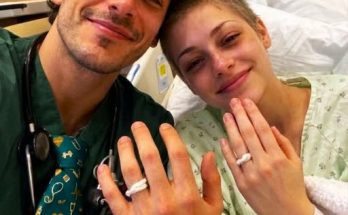
I still thought about the white scarf, the bandage ring, and the note she had written when she believed she was giving me something good.
I did not have to turn those memories into proof that I had been right.
I could remember her kindness and admit my mistake.
I could refuse the inheritance and still be grateful that she had wanted to help me.
I could accept the reprimand without deciding that it was the only thing true about me.
The debt remained.
The trust had to be rebuilt.
The past could not be rewritten into something simpler.
But I was back at work, and I understood that the next choice mattered more than the explanation I might someday give for the last one.
I put my phone away, checked the next name on the list, and continued.
The End
Read more original stories on Feel Every Story.
I Thought One Small Act of Kindness Could Change Her Final Days, Until I Realized I Had Never Asked What It Might Cost Me
Part 12 of 12

One Comment on “PART 12 – The Door Opened When I Held Out My New Badge, but I Knew Trust Would Take Longer”