The inheritance papers arrived the following week.
They came in a large envelope from Alicia’s lawyer, with my name printed neatly on the front.
I carried it inside and placed it on the kitchen table.
Mom was folding towels in the next room.
Dad had gone to the shop to collect an order, so the house was quiet except for the washing machine turning behind the laundry-room door.
I opened the envelope carefully.
The lawyer had prepared the documents needed to finalize my refusal of Alicia’s bequest.
There were several pages explaining the transfer, the amount, and the legal effect of declining it.
The number was still there.
I looked at it longer than I should have.
It was enough to clear my student loans.
It would have changed the shape of my life almost overnight.
I could have stopped worrying about interest.
I could have saved for a place of my own.
I could have helped my parents without calculating what I could afford to give them.
For a moment, I imagined all of that.
Then I saw Alicia’s name at the top of the page.
I thought about the way she had watched the rain slide down her hospital window.
I remembered her teasing me about my handwriting and asking whether doctors were trained to make every letter look like a small emergency.
She had known I was in debt.
She had wanted to help.
I didn’t doubt that anymore.
But accepting the money would not make the circumstances cleaner.
It would tie my future to a decision I had made while she was dying, and to a gift she had arranged without knowing how much public suspicion would gather around it.
I signed the refusal.
My signature looked ordinary.
That was what surprised me.
I had expected the moment to feel dramatic, as if I were giving up something enormous.
Instead, it felt like writing my name on a form at the bank.
I checked each page and put the documents back into the envelope.
Then I sat there with my hands resting on the table.
Mom came in carrying a stack of towels.
“Is that the paperwork?”
“Yes.”
“Did you sign it?”
“I did.”
She placed the towels on the chair beside her.
“Are you sure?”
I looked at the envelope.
“No,” I said. “But I’m certain I can’t accept it.”
She sat down.
“That’s not quite the same thing.”
“I know.”
I rubbed the edge of the paper with my thumb.
“I wanted to help Alicia. I still think she deserved to have one thing she chose for herself. But I can’t make the money part of my life now.”
Mom nodded slowly.
“You don’t have to turn down her kindness to admit that.”
“I’m not trying to.”
“I know.”
She reached for the envelope and straightened it, although it was already flat.
“Just make sure you’re not refusing it because you think you have to punish yourself forever.”
I looked at her.
“I don’t know how to tell the difference.”
“Maybe you don’t have to know today.”
She stood and carried the towels upstairs.
I stayed at the table for another ten minutes.
Then I called Alicia’s lawyer.
He confirmed that he had received the signed documents and explained the remaining administrative steps.
He didn’t try to persuade me to change my mind.
He only asked whether I understood that refusing the bequest meant the funds would be handled according to the terms of Alicia’s estate.
“I understand.”
“And this is your final decision?”
“Yes.”
He thanked me for confirming and told me he would send written acknowledgment when the process was complete.
After we hung up, I placed the phone beside the envelope.
I did not feel noble.
I felt tired.
That afternoon, I took the paperwork to the post office and sent it back using the requested delivery method.
The clerk weighed the envelope and printed a label.
I paid the fee.
When I stepped outside, I checked my bank balance before I even reached the car.
Old habits were difficult to interrupt.
My student loan payment was due in nine days.
I had enough to cover it, but not much more.
I stood beside the car and calculated how much I would have left after rent, groceries, and gas.
Then I put the phone away.
I had chosen the debt.
Not the circumstances that had created it, and not the fact that I had spent years studying while borrowing money I could not yet repay.
But I had chosen not to accept Alicia’s inheritance.
I needed to live with that choice without making it into a tragedy.
The next Saturday, Dad asked whether I could help him at the shop again.
“I was going to ask if you needed me,” I said.
He gave me a look.
“I need you to stop saying that like you’re doing me a favor.”
I laughed for the first time in several days.
“I can come in early.”
“Eight o’clock.”
“I’ll be here.”
The work was not complicated, but it demanded attention.
I learned which customers preferred to be left alone while they browsed and which ones wanted someone to explain the difference between two nearly identical fittings.
I carried boxes from the storeroom.
I swept the floor.
I restocked batteries and screws.
When an older man came in looking for a replacement part for a lamp, I helped him find the right one.
He thanked me and left.
I felt no need to tell him I was a doctor.
That was a relief.
At the hospital, I had become the subject of a review.
At Dad’s shop, I was the person who knew where the spare fuses were kept.
Both things could be true.
Over the next few weeks, I worked Saturdays whenever the shop needed help.
Dad paid me for the hours.
I asked him to record every payment so I could track what I was earning.
He made a face at that.
“I’m your father, not a stranger.”
“I know. I still want the record.”
He studied me for a moment, then took out his notebook.
“All right.”
I put the money toward the loan payment and the small bills that had begun to gather on my desk.
I did not make a plan that assumed everything would go right.
I made a plan based on what I actually had.
At night, I completed the hospital’s required reading.
The training materials were blunt about the imbalance between a doctor and a patient, especially when the patient was frightened, dependent, or nearing the end of life.
I had learned those ideas before.
I had even believed I understood them.
Reading them now, I saw how easily I had treated Alicia’s request as an exception because I cared about her.
The material did not suggest that compassion was dangerous.
It explained that compassion could make boundaries harder to see.
I wrote notes in the margins.
When a scenario asked what I would do if a patient made an intensely personal request, I wrote that I would pause, involve a supervisor, and avoid making a decision alone.
Then I added another line.
I would not assume that a patient’s willingness made the choice appropriate.
I underlined it.
I didn’t want to forget that again.
One evening, Nora’s name appeared on my phone.
I watched it ring before answering.
“Hello?”
“Did the lawyer finish everything?”
Her voice was careful and flat.
“He received the refusal. He said he’d send confirmation when the process is complete.”
“So you really turned it down.”
“Yes.”
There was a pause.
“I didn’t call to argue about the money,” she said.
I waited.
“I wanted to know if you were going to keep telling people that Alicia meant it as a gift.”
“I haven’t been telling people anything about her private note.”
“That’s not what I asked.”
I looked toward the box on my desk.
“I believe she meant it as a gift,” I said. “I also understand why you don’t trust my judgment.”
Nora breathed out sharply.
“I don’t know what she told you about the money before she died. I know what she told me. I know what I saw. I don’t know what happened in every conversation between you two.”
“That’s fair.”
“Stop saying that like it makes anything better.”
I closed my eyes.
“You’re right. It doesn’t.”
She was quiet for a moment.
Then she said, “I sent the lawyer the information he asked for from my side. I’m not going to interfere with the estate.”
“Thank you.”
“I’m not doing it for you.”
“I understand.”
She hung up.
I put the phone down.
I wanted her to believe me.
I wanted her to understand that I had never looked at Alicia and seen a way out of my debt.
But I could not demand that she accept my account just because it was the truth as I remembered it.
I had made a decision that gave her reasons to question me.
I could explain it.
I could not force her to feel differently.
The next morning, I put Alicia’s letter back inside the box.
I folded the white scarf beside it, taking care not to catch the fabric on the edge of the lid.
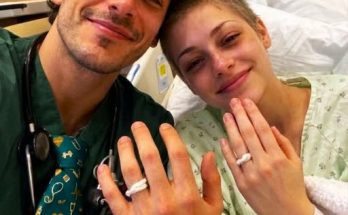
The bandage ring rested in a small paper envelope.
I closed the box and placed it on the shelf.
Then I went downstairs, made coffee, and checked my loan payment date.
It was still nine days away.
I had work to do.
Click here to continue reading: PART 11: Returning to the Hospital Meant Learning to Stand in the Same Corridors Without Pretending Nothing Had Happened
I Thought One Small Act of Kindness Could Change Her Final Days, Until I Realized I Had Never Asked What It Might Cost Me
Part 10 of 12