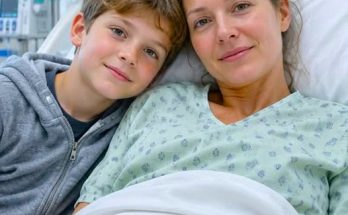
Mom did not speak for several seconds after Dr. Reeves closed the curtain.
She sat upright on the narrow hospital bed, one hand spread across the blanket, the other still turned palm-up so the little blue flower remained visible. Under the fluorescent lights, the tattoo looked older than I had ever noticed. The petals were no longer truly blue. They had faded toward gray.
I waited.
Dr. Reeves seemed to understand that anything he said would be an intrusion. He moved his chair slightly farther away, giving us the illusion of privacy inside a room guarded by two security officers.
“Tell me,” I said.
Mom swallowed.
“Maplewood House was called a residential treatment center.”
“Called?”
“That was the official description.”
“What was it really?”
Her gaze settled on a point somewhere beyond my shoulder.
“A place where people with money sent problems they didn’t want anyone else to see.”
The words chilled me.
“What kind of problems?”
“Girls, mostly.”
I frowned.
“What girls?”
“Teenagers. Some younger. A few older.”
Dr. Reeves shifted but remained silent.
Mom rubbed her thumb along the side of her index finger, a nervous habit I had watched my whole life without understanding how much history could hide inside such ordinary movements.
“Maplewood was private,” she continued. “Very private. It was outside the city, behind trees and a stone wall. Families brought daughters there for all kinds of reasons. Pregnancy. Drug use. Depression. Running away. Behavior their parents considered embarrassing.”
My throat tightened.
“Was it a hospital?”
“It had medical staff.”
“That isn’t what I asked.”
“No.”
The answer came quietly.
“It wasn’t really a hospital.”
“What did you do there?”
“I was twenty-three. Newly licensed. I needed work. Maplewood paid more than anywhere else I had interviewed, and they offered housing for some employees.”
“You lived there?”
“For a while.”
The thought made the room feel smaller.
I had seen photographs of twenty-three-year-old Mom smiling beside other nurses. I had imagined those years as the beginning of the sensible life I knew.
Now I pictured iron gates and hidden girls.
“What happened?”
Mom looked at Dr. Reeves.
He gave the slightest nod, encouraging her to continue.
“I didn’t understand what Maplewood was when I started.”
“That sounds like a careful sentence.”
“It is.”
“Then stop being careful.”
Her face tightened.
I hated the sharpness in my voice, but thirty-two years of unanswered questions had finally gathered in one room.
“I’m trying,” she said.
I folded my arms.
Mom drew a breath.
“At first it looked respectable. There were doctors. Counselors. Nurses. Classrooms. A kitchen. Recreation rooms. Everything was clean. Everything was documented.”
“But?”
“But the documentation wasn’t the truth.”
A cart rolled past beyond the curtain. Glass bottles clinked softly.
Mom went on.
“Girls were admitted under false diagnoses. Records were altered. Some were kept there because their families didn’t want a pregnancy known. Others because they had accused someone important of hurting them.”
I stared at her.
“Accused?”
“Yes.”
“You mean abuse?”
Her eyes met mine.
“Yes.”
“And Maplewood locked them up?”
“Sometimes.”
My stomach turned.
“How?”
“The doors were controlled. Mail was screened. Phone calls were monitored. Some families instructed the staff not to allow direct outside contact.”
“That’s kidnapping.”
“Sometimes it became very close to that.”
“Very close?”
Dr. Reeves finally spoke.
“Emma, standards and laws were different in some respects then, but what happened at Maplewood went far beyond questionable treatment.”
I turned toward him.
“How do you know?”
He hesitated.
“Because Maplewood has been investigated more than once.”
Mom looked sharply at him.
“When?”
“The most recent review started several months ago.”
Her face changed.
“What prompted it?”
“A former resident died. Her family found documents among her belongings.”
Mom whispered something I could not hear.
“What?”
She looked at Dr. Reeves.
“Who?”
“I’m not authorized to discuss names until we establish exactly what connection you had.”
“My connection?”
His eyes dropped to the flower.
“The tattoo suggests more than employment.”
I looked between them.
“What does the flower mean?”
Mom closed her fingers around her wrist.
“That came later.”
“Later than what?”
She shut her eyes.
“Than the girl.”
My lungs seemed to stop working properly.
“What girl?”
Mom looked at me again.
This time she did not turn away.
“Your mother.”
Silence.
For an instant the sentence made no sense.
Then it made too much.
I felt my chair beneath me, the floor beneath my shoes, the cold air from the vent above us. I noticed absurd details because my mind refused the obvious one.
“My mother?”
Mom’s lips trembled.
“Your biological mother.”
I stood so quickly the chair legs scraped across the floor.
Dr. Reeves rose automatically.
I put out a hand.
“Don’t.”
He stopped.
I stared at the woman on the bed.
Helen Carter.
My mother.
The person who taught me to tie my shoes, held ice against my forehead when I had the flu, attended every school performance, packed notes in my lunch and called me every Sunday after I moved away.
“No.”
“Emma—”
“No.”
She flinched.
I pressed both hands to my head.
“You’re saying I’m adopted?”
Her voice broke.
“Yes.”
I laughed once.
It sounded horrible.
“Thirty-two years.”
“I know.”
“No, apparently you don’t.”
I paced two steps before the curtain stopped me.
“You and Dad adopted me?”
“Yes.”
“Legally?”
“Yes.”
“From Maplewood?”
The hesitation answered before she did.
“Not exactly.”
I turned.
“What does that mean?”
Mom’s breathing had become shallow.
Dr. Reeves moved toward the monitor, but she waved him away.
“I’m fine.”
He did not look convinced.
Neither was I.
“Tell me everything,” I said. “Right now.”
Mom pulled the blanket higher over her legs.
“Her name was Sarah.”
My body went still.
I had expected another evasion.
Instead she had given me a name.
Sarah.
The name of the woman whose body had created mine.
“Sarah what?”
“Donovan.”
I repeated it silently.
Sarah Donovan.
Nothing happened.
No buried memory awakened. No instinctive recognition.
It was only a name.
Yet my entire life had split around it.
“How old was she?”
“Sixteen when she arrived at Maplewood.”
I gripped the back of my chair.
“Pregnant?”
Mom nodded.
“She was already several months along.”
“Who brought her there?”
“Her father.”
“Why?”
“She told me her family didn’t want anyone in their community to know.”
“She told you?”
“Yes.”
“So you knew her.”
“Very well.”
Something in Mom’s voice made me stop.
“How well?”
“She trusted me.”
I heard the sentence differently now.
“You were her nurse.”
“Yes.”
“My biological mother was your patient.”
“Yes.”
The room became unbearable.
I pulled the curtain open.
One of the security officers turned.
I needed air, but there was nowhere to go without walking past him.
Dr. Reeves stepped toward me.
“You’re free to leave the room.”
“Then why is security here?”
“They are not here to detain you.”
“Her?”
“No.”
I looked at Mom.
“Then why are they here?”
Dr. Reeves answered carefully.
“Because the Maplewood investigation involves allegations of falsified identities, missing records and children whose legal histories may not match what they were told.”
I felt the blood drain from my face.
“Children.”
“Yes.”
I turned slowly toward Mom.
“You said my adoption was legal.”
“It was.”
“But?”
Mom pressed her fingers over her mouth.
“I didn’t steal you.”
The fact that she needed to say it nearly knocked the air from my lungs.
“I didn’t ask if you stole me.”
“I know.”
“Why would you say that?”
“Because that’s what this sounds like.”
“It sounds like you’re hiding the most important fact of my life.”
“I was trying to protect you.”
“From whom?”
Mom’s voice lowered.
“From the people who ran Maplewood.”
I stared at her.
“They knew about me?”
“Some did.”
“Did Sarah want to give me up?”
Mom’s face crumpled.
And suddenly I knew the answer was not going to be simple.
“She wanted you safe.”
“That is not the same thing.”
“No.”
“Did she want me?”
“Yes.”
The word struck harder than anything else.
I sat because my knees felt unreliable.
“What happened to her?”
Mom looked down at the tattoo.
“She tried to leave.”
“When?”
“After you were born.”
My hands were shaking.
“Where was I?”
“In the nursery.”
“At Maplewood?”
“Yes.”
My voice rose.
“They delivered babies there?”
“Sometimes.”
“Then what?”
Mom’s face had gone pale.
“Sarah was told you had been transferred.”
“Transferred where?”
“She wasn’t told.”
“Why?”
“Because they planned to place you privately.”
“Adoption?”
“Yes.”
“Without her consent?”
Mom’s silence lasted too long.
I covered my mouth.
“Oh my God.”
“She had signed papers.”
“Did she understand them?”
“No.”
The answer was immediate this time.
Mom’s eyes filled.
“She was medicated. She was frightened. She was sixteen. She believed she was signing temporary care documents.”
I stood again.
“You knew?”
“Not at first.”
“But you found out.”
“Yes.”
“When?”
“The morning they took you from the nursery.”
I stared at her.
“What did you do?”
“That’s the part I should have told you years ago.”
Outside the curtain, one of the officers spoke softly into a radio.
Dr. Reeves checked the doorway and then looked back.
Mom straightened as much as her knee allowed.
“Sarah had been asking me questions for weeks. She suspected the director was arranging adoptions privately. Families paid donations. Records disappeared. Birth certificates changed.”
“Changed how?”
“Names. Dates sometimes. Information about fathers.”
I felt sick.
“And babies?”
“Yes.”
“What happened to them?”
“They were sent away.”
“With adoptive families?”
“Usually.”
“Usually?”
Mom’s voice dropped.
“I never learned everything.”
I paced back toward her.
“But you learned about me.”
“Yes.”
“How?”
“Because Sarah made me promise.”
“What?”
“That if anything happened, I wouldn’t let them make you disappear.”
A current of cold moved through my chest.
“What happened?”
“She tried to get out of Maplewood.”
“Did she?”
“For less than an hour.”
Mom’s words became more difficult.
“She got through a service entrance. Someone saw her near the road. Staff brought her back.”
“Then?”
“She was restrained.”
I waited.
Mom did not continue.
“Then what?”
“She was injured.”
“How?”
“I wasn’t in the room.”
The distinction sounded important.
“Who was?”
“Two orderlies and a physician.”
“What kind of injury?”
“She fell.”
I heard the doubt.
“You don’t believe that.”
“No.”
My hands clenched.
“Did she die?”
“No.”
Relief came too quickly.
Mom shook her head.
“Not then.”
The relief vanished.
“What happened to her?”
“They transferred her.”
“Where?”
“That’s what I never learned.”
I stared.
“You never saw her again?”
“No.”
The word barely existed.
I turned to Dr. Reeves.
“Can you find her?”
His expression changed.
“Possibly.”
“Possibly?”
“We may already have information that answers that question, but I cannot speculate without confirming identities.”
Mom looked at him sharply again.
“You know who Emma is.”
It was not a question.
Dr. Reeves did not answer directly.
“The tattoo is connected with a group of former Maplewood employees and residents who helped preserve evidence after the facility closed.”
My attention snapped to him.
“What?”
Mom’s eyes closed.
Dr. Reeves continued.
“The blue flower was used as a private identifier.”
I looked at the tattoo I had traced when I was seven.
“A secret symbol?”
“In a sense.”
“For what?”
Mom answered.
“For people who promised not to forget.”
My throat tightened.
“What weren’t you supposed to forget?”
She looked at me.
“The girls.”
I thought of every time she had brushed off the tattoo as a foolish decision of youth.
It had never been foolish.
It was a memorial.
A signal.
Maybe evidence.
“Who gave it to you?”
“One of the former residents.”
“After Maplewood closed?”
“Yes.”
“Why?”
“Because I helped get records out.”
Dr. Reeves leaned forward.
“Helen, what records?”
Mom looked at him.
“Copies.”
“Of?”
“Admissions. Medication logs. Birth records. Payment ledgers.”
His posture changed immediately.
“Do you still have them?”
My mind raced to the attic.
The wooden chest.
Mom saw recognition on my face.
“Yes,” she said.
The word seemed to alter the air inside the room.
Dr. Reeves stood.
“Where?”
Mom did not answer him.
She looked at me.
“At home.”
The security officers outside were suddenly no longer mysterious.
They were guarding a witness.
Or evidence.
Or both.
I thought about the chest sitting in the spare room because Mom had brought it down a week before surgery.
“You knew this investigation was happening?”
“No.”
“Then why did you take the box out of the attic?”
Her eyes met mine.
“Because I thought if anything happened during surgery, you might finally need to know where it was.”
I could barely breathe.
“You were going to tell me afterward.”
“Yes.”
“And if you died?”
“There’s a letter inside.”
My anger returned so fast it almost steadied me.
“A letter.”
“For you.”
“You wrote me a letter instead of telling me?”
“I was trying to find the courage.”
“You had thirty-two years to find it.”
She nodded.
“I know.”
There was no defense in her voice.
That made it worse.
Dr. Reeves stepped toward the doorway.
“I need to contact the investigator assigned to the Maplewood records.”
Mom reached for him.
“Wait.”
He stopped.
“What?”
She looked at me.
“There’s more.”
I almost laughed.
“Of course there is.”
Her fingers closed around the blanket.
“Emma, Sarah did not simply ask me to protect you.”
I stared at her.
“What else?”
“She gave me something before they transferred her.”
“What?”
Mom’s eyes moved toward the security officers, then back to me.
“A name.”
“Whose?”
“The man she said was your father.”
The ground shifted again.
I gripped the chair.
“Do you know him?”
Mom whispered, “I know who he was.”
Click Here to continue read next: PART6: The Name My Birth Mother Whispered Before Vanishing Connected Maplewood to a Family Powerful Enough to Bury Every Record
The Tiny Blue Flower on My Mother’s Wrist Was the Only Question She Would Never Let Me Ask Twice
Part 5 of 12