I drove back to the hospital with the chest buckled into Dad’s old passenger seat.
That detail felt absurdly important.
The box was too large for the seat belt to fit properly, so I looped it through the metal handle and pulled until the warning light on the dashboard stopped blinking.
All the way there, I kept hearing Investigator Moreno.
She asked if your name was Elizabeth.
Sarah remembered.
After thirty-two years, she remembered the name she had chosen for a baby she had been allowed to keep only briefly.
Lizzie.
My hands shook so badly at one intersection that I missed the light changing.
A horn sounded behind me.
I drove.
At the hospital entrance, Moreno met me with one of the security officers and a hospital administrator I had not seen before.
The officer took the chest only after I insisted on watching him carry it.
“Evidence procedures,” Moreno explained.
“It’s my family.”
“It’s also evidence.”
That distinction made me angry.
Then I remembered the pages documenting other girls.
Not only Sarah.
The chest belonged to more ghosts than mine.
We carried it into a small conference room away from the surgical bays.
Mom had been moved there in a wheelchair.
Her surgery had been postponed.
Of course it had.
Somewhere in the last few hours, an ordinary knee replacement had become the least important thing in the hospital.
Mom looked at my face and knew immediately.
“You read it.”
I put my keys on the table.
“Yes.”
Her shoulders lowered.
“I’m sorry.”
“Don’t start with that.”
She nodded.
Moreno asked whether we wanted privacy.
“No,” I said.
Mom looked at me.
“There are things I want witnessed.”
The words hurt her.
I saw it.
For once, I did not rescue her from the feeling.
The chest was placed on the table.
Moreno put on thin gloves before opening it.
She lifted the first Maplewood folder and stopped.
For an investigator trained to remain composed, her reaction was surprisingly human.
“Oh.”
“What?”
“These are original photocopies made before records were altered.”
Mom nodded.
“How can you tell?”
“Some of the documents we have contain later changes. These don’t.”
Moreno turned a page.
“This could establish a timeline.”
“For Sarah?”
“For several residents.”
I looked at Mom.
“You kept all of this.”
“Yes.”
“For thirty-two years.”
“Yes.”
“Why not come forward when Maplewood closed?”
“I did.”
“You told me the police returned records.”
“They did.”
“After that.”
“I was afraid.”
“Of losing your license?”
“Partly.”
“Of the Bells?”
“Yes.”
“Of losing me?”
Mom’s eyes filled.
“Mostly.”
I laughed without humor.
“There it is.”
She nodded.
“I know how selfish that sounds.”
“It sounds honest.”
For once, she did not defend herself.
Moreno continued cataloguing folders.
I pulled the photograph of Sarah toward me.
Mom watched.
“You never showed me this.”
“No.”
“Did you look at it?”
“Many times.”
“How many?”
“I don’t know.”
“Every year?”
Her voice became faint.
“Sometimes on your birthday.”
That angered me more than I expected.
“You looked at her on my birthday and still didn’t tell me?”
Mom’s mouth trembled.
“Yes.”
I pushed the photograph away.
“You don’t get to make that sad.”
She stared.
“You don’t get to turn this into something that happened to you.”
Moreno stopped moving.
Mom closed her eyes briefly.
“You’re right.”
The answer disarmed me again.
I wanted resistance.
It would have been easier to fight.
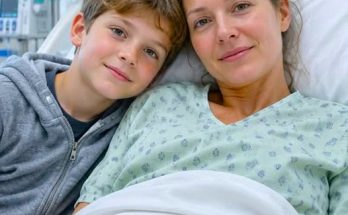
Instead she sat there in a hospital gown with a paper bracelet around her wrist and accepted every accusation.
“I loved you,” she said.
“I know.”
“I know that doesn’t fix this.”
“No.”
“I thought if I told you, you would wonder whether anything about us was real.”
“I’m wondering that now.”
Her face folded inward.
I regretted the cruelty but not enough to take it back.
“Dad was my dad?”
“Yes.”
“In every sense except biology.”
“Yes.”
“And you were my mother.”
“Yes.”
“Then why didn’t you trust that?”
Mom looked at me.
There it was.
The real question.
Not Maplewood.
Not adoption paperwork.
Not Sarah.
Why had a woman who loved me for thirty-two years believed truth could erase that love?
“I didn’t trust myself,” she said.
I frowned.
“What does that mean?”
“I knew how you came to me.”
“Through foster care.”
“That’s the legal version.”
“What’s the other version?”
“I interfered.”
“You protected me.”
“Sometimes.”
I waited.
“Sometimes what?”
She rubbed her hands together.
“Sometimes I also wanted you.”
The distinction settled heavily.
“When the first adoption failed, I told myself I was protecting Sarah’s rights.”
“You were.”
“Yes.”
“But?”
“When the second placement was proposed, I already knew I couldn’t bear the idea of never seeing you again.”
My anger quieted.
Mom stared at the tabletop.
“You were so small. You had this little crease between your eyebrows whenever you were hungry. Sarah used to joke that you looked offended by being alive.”
A sound escaped me before I could stop it.
Almost a laugh.
Mom smiled through tears.
“She loved holding you.”
“How much time did she get?”
“Not enough.”
“Hours?”
“Days.”
“How many?”
“Four.”
Four days.
I looked at the older photograph of Sarah on my phone.
A woman had carried a child for months, held her for four days, and then spent three decades trying to find her.
“Did she know you adopted me?”
“No.”
“Why?”
“Because once the adoption became final, the attorney advised us not to contact anyone tied to Maplewood.”
“Convenient.”
“Yes.”
“You followed that advice for thirty years.”
“Yes.”
“Even after Sarah started looking.”
Mom’s eyes closed.
“Yes.”
I stood and walked to the window.
The hospital parking lot spread below us.
Cars moved in and out of painted spaces.
I pressed my fingertips to the glass.
“What happens now?”
Moreno answered.
“We document the records. We compare them with surviving archives. We may ask Helen for a formal statement.”
“What about me?”
“That depends on what you want.”
I turned.
“What can I want?”
“Information. Records. Genetic confirmation.”
The words made my stomach tighten.
“DNA.”
“If you choose.”
“And Sarah?”
Moreno glanced toward Mom.
“She has agreed to provide a sample.”
I stared.
“She already agreed?”
“She has been trying to identify her daughter for years.”
Of course she had.
“Where is she?”
“Portland.”
“Is she healthy?”
Moreno hesitated.
The hesitation terrified me.
“What?”
“She has health issues.”
“What kind?”
“I don’t have permission to discuss her medical details.”
“Is she dying?”
Mom made a small sound.
Moreno shook her head.
“I have not been told that.”
I sat again.
“Does she want to meet me?”
Moreno’s expression softened.
“She wants whatever you are comfortable with.”
I laughed bitterly.
“That sounds very reasonable for someone whose child was taken.”
“She has had a long time to think about how this moment might happen.”
“She probably imagined someone else telling me.”
Moreno did not answer.
Mom did.
“Yes.”
I looked at her.
She seemed smaller in the wheelchair.
“I found one of the letters from twelve years ago.”
Her eyes closed.
“I know.”
“You could have answered.”
“Yes.”
“She might have found me when I was twenty.”
“Yes.”
“Dad was alive.”
“Yes.”
“I could have had both families.”
Mom’s tears returned.
“Yes.”
That one word broke something in me.
I had spent the last hours seeing Mom as a frightened young nurse, a whistleblower, a protector.
Now I saw another woman too.
A middle-aged mother who had received a letter from someone searching for a stolen child and chosen silence.
Both women were Helen.
That was the hardest part.
Good people could be brave once and cowardly later.
Love could motivate rescue and concealment.
No single explanation could make the contradictions disappear.
“I don’t know how to forgive you,” I said.
Mom’s voice barely carried.
“I’m not asking you to.”
I looked at her.
“What are you asking?”
“That you don’t let my fear take anything else from you.”
I turned away.
Moreno’s phone vibrated.
She checked the screen.
Her expression became focused.
“I need to step out.”
Something in her tone made me tense.
“Why?”
She looked at me.
“It’s Sarah’s advocate.”
My heart started pounding.
“Is something wrong?”
“I don’t know.”
Moreno stepped into the hallway.
Mom and I remained inside.
Neither of us spoke.
I stared at Sarah’s photograph.
After perhaps two minutes, Moreno returned.
She did not sit.
“Emma.”
“What happened?”
“Sarah has been told we have confirmed documentation linking Helen to the infant placement.”
“And?”
“She asked whether you have decided about contact.”
“I haven’t.”
“That’s fine.”
“Then why do you look like that?”
Moreno glanced at Mom.
“Because there’s another development.”
My stomach dropped.
“What?”
“Sarah is not in Portland.”
“Where is she?”
“She flew here yesterday.”
I stared.
“Here?”
“She came because investigators requested an in-person statement.”
Mom’s hand flew to her mouth.
“You knew she was coming?” she asked Moreno.
“I did not know until just now.”
“How close?”
Moreno looked at me.
“About fifteen minutes away.”
The room tilted.
I gripped the table.
“Does she know I’m here?”
“She knows you may be.”
“May?”
“We have not given her personal information without your consent.”
I looked at Mom.
For thirty-two years, she had been the only mother whose face I knew.
Now another woman was fifteen minutes away.
A woman who had named me.
A woman who had searched.
A woman whose child had been removed while she was medicated and imprisoned.
My first instinct was to say no.
Not because I did not want to meet Sarah.
Because wanting it was terrifying.
“What am I supposed to say to her?”
Mom cried quietly.
“You don’t have to say anything.”
I looked at her.
“Would you meet her?”
Mom froze.
“If you were me.”
“That isn’t fair.”
“I know.”
She looked at the flower on her wrist.
Then she nodded.
“Yes.”
“Why?”
“Because I spent my whole life remembering what she looked like when they took you away.”
I could not breathe for a second.
Moreno’s phone rang.
She looked at the screen.
“Her advocate.”
I stood.
“Answer.”
Moreno accepted the call.
“Yes.”
She listened.
Her gaze moved toward me.
“She is.”
Another pause.
“No. That has to be Emma’s choice.”
My pulse hammered.
Moreno listened again.
Then she lowered the phone.
“She would like to speak with you.”
“Now?”
“Only if you want.”
“On the phone?”
“Yes.”
I stared at the device in her hand.
Mom did not move.
The entire story of my life seemed to narrow into that small black rectangle.
“What does she want to say?”
Moreno’s expression softened.
“She asked if she could hear your voice.”
Something inside me gave way.
Not forgiveness.
Not understanding.
Something more primitive.
Recognition of a loss I had not known belonged to me.
I held out my hand.
Moreno placed the phone in it.
My fingers were cold.
I lifted it toward my ear.
For a second I could hear only faint breathing.
Then a woman spoke.
Her voice was older than Mom’s.
Quiet.
Unsteady.
“Hello?”
I opened my mouth.
Nothing came out.
The woman waited.
Then she whispered the name nobody had ever used for me.
“Lizzie?”
My eyes closed.
“Yes,” I said.
On the other end of the line, Sarah Donovan began to cry.
Click Here to continue read next: PART9: Sarah Called Me Lizzie With Absolute Certainty, but One Question About My Birth Made Everyone in the Room Stop Talking
The Tiny Blue Flower on My Mother’s Wrist Was the Only Question She Would Never Let Me Ask Twice
Part 8 of 12