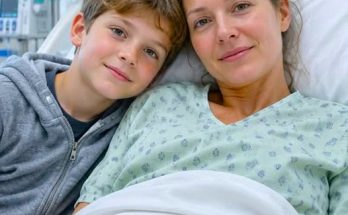
For several seconds, neither Sarah nor I said anything.
I stood beside the conference table with Investigator Moreno’s phone pressed to my ear, staring at the rain-striped hospital window. Behind me, Mom sat completely still in the wheelchair. Moreno watched without intruding. The wooden chest rested open between us, its folders spread beneath the harsh ceiling lights.
Sarah’s breathing came through the phone in small, uneven pulls.
“Are you there?” she finally asked.
“Yes.”
“I’m sorry.”
“For what?”
“For calling you that.”
“Lizzie?”
“Yes. I shouldn’t have assumed.”
I looked at Mom.
She had gone pale.
“It’s the name you gave your daughter.”
“Yes.”
The answer was barely audible.
“Elizabeth.”
I swallowed.
“What did she look like?”
Sarah made a sound that was half laugh, half sob.
“She was a newborn, so mostly furious.”
Despite everything, my mouth twitched.
“She had dark hair. More than I expected. She wrinkled her forehead when she cried.”
Mom lowered her eyes.
I remembered what she had told me earlier—that I had a crease between my eyebrows when hungry.
“Did you hold her?”
“For four days.”
The same number Mom had given me.
My pulse quickened.
“Did Helen take care of you?”
There was a pause.
“Helen?”
“My mother. Helen Carter.”
Sarah inhaled sharply.
Then nothing.
“Sarah?”
“I knew a Helen.”
Mom’s head came up.
I turned toward her.
“What do you remember about her?”
“She was young. A nurse.”
Mom covered her mouth.
Sarah continued.
“She was kind to me when kindness wasn’t exactly encouraged there.”
I closed my eyes.
Whatever doubts I still had about the connection seemed to collapse.
“She’s here.”
Another silence.
“With you?”
“Yes.”
I heard Sarah crying again.
“Can she hear me?”
“Not unless I put you on speaker.”
“No. Please don’t.”
I glanced at Mom.
She could read enough from my face to understand.
“All right.”
Sarah gathered herself.
“I have imagined this conversation so many times that I had entire speeches prepared. Now I can’t remember any of them.”
“That makes two of us.”
A faint laugh reached me.
It was strange hearing it.
There was something familiar in the rhythm, though I knew that might be imagination doing what frightened minds do—searching for resemblance because resemblance offers certainty.
“I don’t expect anything from you,” Sarah said. “I need you to know that.”
“I don’t know what I expect either.”
“You don’t have to call me anything. You don’t have to meet me. You don’t owe me a relationship.”
“I know.”
“I just wanted to know you were alive.”
My throat tightened.
“I am.”
“I can hear that.”
I turned away from the others.
For the first time, I wished the room were empty.
“Did you look for me the whole time?”
Sarah hesitated.
“Not every day.”
I appreciated the honesty immediately.
“There were years when I couldn’t.”
“Why?”
“I was trying to survive my own life.”
The answer carried more weight than explanation could have.
“After Maplewood?”
“Yes.”
“Where did they send you?”
“A psychiatric facility first.”
Mom closed her eyes when I repeated the question aloud enough for her to understand.
Sarah continued.
“My father arranged it. After several months, I was discharged to relatives in another state.”
“Did you go home?”
“Never.”
“What happened to your parents?”
“My mother died years ago. My father and I never reconciled.”
“And Thomas Bell?”
The line became silent.
I immediately regretted asking.
“You know about Thomas.”
“Helen told me.”
“Everything?”
“I don’t know what everything means anymore.”
Sarah exhaled slowly.
“That’s fair.”
“Was he my father?”
“I believed he was.”
The wording stopped me.
“Believed?”
“Yes.”
I looked toward Moreno.
She noticed the change in my expression.
“What does that mean?”
Sarah was quiet for so long that I wondered whether the call had dropped.
Then she said, “There are parts of those months I don’t remember clearly.”
“Because of Maplewood?”
“Because of several things.”
“But Thomas—”
“I was certain then.”
“And now?”
“I’m certain he hurt me. I’m not certain about anything Maplewood wrote afterward.”
I pressed my fingers against my forehead.
“Sarah, I need facts.”
“I know.”
“I found records.”
“I know investigators have records.”
“They show a baby born to you.”
“Yes.”
“They show placement documents.”
“Yes.”
“Helen says that baby was me.”
Another pause.
“I hope she’s right.”
Hope.
Not certainty.
Something inside me shifted.
“You called me Lizzie.”
“Because the investigator said Helen Carter had a daughter your age.”
“That’s not proof.”
“No.”
The room suddenly felt much colder.
“Have you seen a photograph of me?”
“No.”
“Birth records?”
“Not complete ones.”
“Then how do you know?”
“I don’t.”
The answer struck harder than certainty would have.
I lowered the phone.
Moreno stepped closer.
“What happened?”
I looked at her.
“She doesn’t know.”
Mom’s brow tightened.
“Know what?”
“That I’m her daughter.”
Moreno’s expression remained careful.
“We told you the identification was preliminary.”
“You told me she asked whether my name was Elizabeth.”
“She did.”
“That sounded considerably less preliminary.”
“You’re right.”
Her acknowledgment irritated me more.
Mom pushed herself upright in the wheelchair.
“Emma, the documents—”
“Which documents?”
“The birth records.”
“Baby Donovan?”
“Yes.”
“Do they have my fingerprints? DNA? A photograph?”
Mom stared at me.
“Do they?”
“No.”
My heart began hammering again, but differently now.
I raised the phone.
“Sarah?”
“I’m here.”
“What date was Elizabeth born?”
She answered.
“April eighteenth.”
I stopped breathing.
Mom made a small sound behind me.
My birthday was April twenty-first.
Three days.
Not a huge difference if records had been altered.
But enough.
“What time?”
“Just after six in the morning.”
I looked at Moreno.
She was already opening a folder.
“What was her birth weight?”
Sarah told me.
I repeated it.
Moreno searched the copied newborn chart.
Her finger stopped.
“That matches Baby Donovan.”
Relief and fear arrived together.
“Okay.”
Then Sarah said, “There was something else.”
“What?”
“Lizzie had a birthmark.”
My hand tightened around the phone.
“Where?”
“High on her back. Near her right shoulder.”
I froze.
Mom looked at me.
She knew.
I had no such birthmark.
Not now.
Not in childhood photographs.
Nothing.
“Emma?” Sarah asked.
I could not answer.
Mom whispered, “You never had one.”
The conference room went completely silent.
Moreno took the phone gently from my hand.
“Sarah, this is Investigator Moreno. I need to ask you a few questions.”
I stepped backward.
For the first time since Patricia had lifted Mom’s sleeve, I felt physically unsteady.
Mom reached toward me.
I moved away.
Not because I blamed her.
Because I could not bear another person touching me while my identity changed again.
“You said I was Sarah’s baby.”
“I believed you were.”
“You believed?”
“The documents I copied—”
“You said she named me Elizabeth.”
“Yes.”
“Did you hear her?”
Mom’s face changed.
“No.”
“Did Sarah ever tell you that?”
“She talked about the baby constantly, but I don’t remember—”
“Then how did you know?”
“The placement records.”
I laughed sharply.
“The records from the facility whose records were falsified.”
Mom looked stricken.
I walked to the table.
“Show me.”
She opened one of the folders with trembling fingers.
There it was.
INFANT: ELIZABETH DONOVAN.
Below it, a placement code.
Mom pointed to a handwritten notation linking that code to another file.
The second file bore the surname Carter years later.
But Moreno leaned over it.
“Wait.”
She pulled the page closer.
“What?”
“This isn’t an adoption number.”
Mom stared.
“What do you mean?”
“It’s an internal Maplewood tracking number.”
She retrieved another folder from the chest.
Then another.
Numbers repeated.
Not names.
Not identities.
Codes.
Moreno frowned.
“These files were cross-referenced later.”
“How much later?” I asked.
“I can’t tell yet.”
Mom looked horrified.
“I thought—”
“You thought I was Baby Donovan.”
“Yes.”
“For thirty-two years?”
“Yes.”
“Why?”
“Because your file was the one stored behind hers. Because the placement notation matched. Because when your records disappeared from the nursery system—”
I stopped her.
“Nursery?”
Mom’s face drained.
I heard it too.
Something we had all accepted without examining.
According to the story she had told me, I had been born at Maplewood.
But there were fragments elsewhere in the chest referring to a toddler placement.
I had seen them and assumed they belonged to another child.
Moreno had apparently noticed too.
She pulled a thin folder from beneath the stack.
“Helen.”
Mom stared at it.
Moreno opened the cover.
Inside was a photograph.
A little girl.
Two years old, perhaps.
Dark hair.
Round cheeks.
Standing beside a wooden rocking horse.
I knew the child immediately.
Me.
Not because I remembered the photograph.
Because Dad had kept another copy in his desk.
My knees nearly gave way.
Moreno turned the page.
The heading read:
EMMA — TEMPORARY RESIDENTIAL PLACEMENT.
Not newborn.
Not Elizabeth.
Emma.
My name before Helen and Dad adopted me.
I stared at Mom.
“You knew me as Emma?”
Mom looked as though she had been struck.
“I—”
“Did you change my name?”
Her mouth opened.
Then closed.
“No.”
Every story she had told me about Elizabeth collapsed at once.
I turned toward the phone on the table.
Moreno was still speaking quietly to Sarah, asking dates and identifying details.
I backed against the wall.
Mom began crying.
“Emma, I swear to you, I thought—”
“How could you think I was a baby you met at birth if I arrived at Maplewood when I was two?”
Her face twisted.
“I knew there were two files.”
“What?”
“I knew there had been confusion.”
“Confusion?”
“I thought the toddler record was fabricated to conceal the original placement.”
“Why?”
“Because Maplewood did that.”
“Or because you needed the explanation to fit what you already believed.”
Mom went silent.
That landed.
For thirty-two years, she had carried guilt, fear and fragments of corrupted paperwork. Somewhere along the way, memory and suspicion had fused.
I looked at Sarah’s photograph.
She had lost a daughter.
That remained true.
But I might not be her.
Moreno ended the call.
“What did she say?” I asked.
“She agrees we should stop making assumptions.”
“DNA.”
“Yes.”
“How quickly?”
“We can arrange collection today, but results won’t be immediate.”
I nodded.
“Do it.”
Mom wiped her face.
“Emma—”
I turned.
“No more theories.”
She stopped.
“No more protecting me with things you aren’t certain about. No more filling gaps because the truth frightens you.”
“I understand.”
“I need documents. Dates. Evidence.”
“Yes.”
“And if Sarah isn’t my mother?”
Mom’s shoulders shook.
“Then I will help you find who is.”
I looked down at the photograph of the two-year-old girl.
On the back, written in faded ink, were three words.
Parents deceased — accident.
My heartbeat slowed.
I turned it over again.
There was a second line near the bottom.
Biological mother: Alicia.
I stared until the letters blurred.
Sarah Donovan was alive.
But the woman who had given birth to me had another name.
Alicia.
Click Here to continue read next: PART10: A Photograph of Me at Two Years Old Forced Helen to Admit the One Maplewood Memory She Had Been Too Ashamed to Question
The Tiny Blue Flower on My Mother’s Wrist Was the Only Question She Would Never Let Me Ask Twice
Part 9 of 12