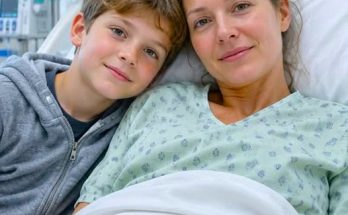
I could hear the hospital ventilation system blowing cold air above us.
Nothing else seemed real.
“Who was he?”
Mom looked at Dr. Reeves, as though weighing whether his presence made the truth more dangerous.
Then she returned her attention to me.
“His name was Thomas Bell.”
I waited.
Again, no recognition.
“Should that mean something?”
“Maybe not to you.”
“Who was he?”
Mom’s jaw tightened.
“A lawyer.”
“That’s it?”
“No.”
“Then stop making me pull every sentence out of you.”
She nodded.
“You’re right.”
A moment passed before she continued.
“Thomas Bell came from a prominent family. His father was a judge. His uncle served on several hospital boards. The family had business interests all over the county.”
Dr. Reeves looked sharply toward her.
“Bell?”
Mom noticed.
“You know the name.”
“I know of the family.”
I turned on him.
“How?”
He hesitated.
“Bell Foundation money helped fund several medical facilities in the region.”
My skin prickled.
“Including this hospital?”
“Years ago, yes.”
I glanced toward the security officers.
The situation suddenly felt far more complicated.
Mom shook her head.
“Thomas himself wasn’t the important one. His father was.”
“What did he have to do with Maplewood?”
“More than Sarah knew when she was admitted.”
“How did Sarah know Thomas?”
Mom looked away.
“She worked summers at a country club.”
The pieces came unwillingly.
“He was older?”
“Twenty-nine.”
“She was sixteen.”
“Yes.”
My stomach turned.
“Did he assault her?”
Mom’s eyes met mine.
“Sarah said the relationship was not something she chose.”
I closed my eyes.
That was enough.
When I opened them, Mom was crying silently.
Not dramatically. Tears simply moved down her face while she kept speaking.
“She told her mother she was pregnant. Her mother told her father. Within two days they took her to Maplewood.”
“Did anyone report Thomas?”
“Sarah tried.”
“To police?”
“First to someone at Maplewood.”
“What happened?”
“Her chart suddenly described her as delusional.”
I stared.
“You saw it?”
“Yes.”
“She told them who hurt her, and they diagnosed her as crazy?”
“That’s what happened.”
“And Thomas Bell’s father was a judge.”
“Yes.”
The relationship became obvious.
“They protected him.”
Mom nodded.
I walked to the edge of the room and back.
“Was my birth certificate changed?”
“Yes.”
“How?”
“Thomas’s name never appeared.”
“What name did?”
“None.”
“Father unknown?”
“Yes.”
I gave a humorless laugh.
“Convenient.”
Mom said nothing.
Dr. Reeves moved toward the hallway.
“I need to make a call.”
This time Mom did not stop him.
He stepped outside, speaking quietly to one of the officers. The second remained near the curtain.
I sat across from Mom.
“Did Dad know all of this?”
“Yes.”
“When did you tell him?”
“Before we married.”
I stared.
“So Dad knew before I was even born?”
“No. We weren’t married yet when I worked at Maplewood, but we knew each other.”
I tried to reconstruct a timeline I had never questioned.
“You and Dad were dating?”
“Off and on.”
“And then Sarah came in.”
“Yes.”
“You helped her.”
“I tried.”
“What happened the day she disappeared?”
Mom folded her hands.
“After they brought Sarah back from the road, I wasn’t allowed to see her for most of the day. They said she had become violent.”
“Was she?”
“I never saw her violent.”
“Then?”
“Near midnight, an orderly I trusted told me they were transferring her early the next morning.”
“Where?”
“He didn’t know.”
Mom inhaled slowly.
“I went to her room after the supervisor finished rounds.”
“You snuck in?”
“Yes.”
“What condition was she in?”
Mom’s eyes changed.
“Bad.”
I almost did not ask.
“What had they done?”
“She had bruising on her arms. A cut near her hairline. They had given her something that made her slow.”
My hands curled against my thighs.
“But she could talk?”
“Barely.”
“What did she say?”
Mom looked directly at me.
“She asked where you were.”
The sentence pierced straight through me.
“What did you tell her?”
“That you were safe in the nursery.”
“Were you?”
“At that moment.”
I looked away.
Mom continued.
“She grabbed my sleeve and told me Thomas Bell was your father. She said if they took her away, I needed to remember his name.”
“Why?”
“Because she thought it proved why she was being silenced.”
“Did it?”
“Yes.”
“Couldn’t you call police?”
“I was twenty-three.”
“That isn’t an answer.”
“I know.”
Mom wiped her cheek with the back of her hand.
“I called later.”
“What happened?”
“I was told Sarah was receiving lawful treatment and her father had authorized her transfer.”
“By whom?”
“A detective.”
“Did you tell him about Thomas?”
“Yes.”
“And?”
“He told me I should be careful making accusations without proof.”
My jaw tightened.
“Was he connected to the Bells?”
“I later learned his brother worked for them.”
The story was beginning to feel less like a family secret and more like a system designed to make truth impossible.
“What did you do?”
“I started copying records.”
“The ones in the chest.”
“Yes.”
“How?”
“Slowly. Overnight shifts. Documents I could access without being noticed.”
“What were you looking for?”
“Anything involving Sarah. Then I started noticing other patterns.”
“What patterns?”
“Girls who accused wealthy men were diagnosed similarly. Pregnant girls had inconsistent consent forms. Payments arrived from foundations or law offices rather than families.”
Dr. Reeves reentered.
His expression was more serious.
“The investigator is on her way.”
“How long?”
“Not long.”
I almost laughed at the absurdity.
Mom had waited thirty-two years and now everything was moving too fast.
Dr. Reeves addressed her.
“Helen, did anyone at Maplewood know you were copying files?”
“Eventually.”
“What happened?”
“I was fired.”
“Immediately?”
“After they found me in records storage after hours.”
“Were the copies discovered?”
“Some.”
“Not all?”
“No.”
She looked toward me.
“Your father helped me hide the rest.”
My chest tightened at the mention of Dad.
“What did Dad do?”
“He picked me up that night.”
“From Maplewood?”
“Yes.”
“Were you arrested?”
“No.”
“Threatened?”
Mom gave a tired smile without humor.
“Very clearly.”
“By whom?”
“The director and a man from Bell’s law firm.”
“What did they say?”
“That patient records were confidential. That taking documents was theft. That I could lose my license. That I could go to prison.”
“Could you?”
“Possibly.”
“So why keep them?”
“Because they were proof.”
I thought again of the wooden chest.
“You hid them for more than thirty years.”
“Yes.”
“Why didn’t you give them to police?”
“I tried.”
“When?”
“Twice.”
“What happened?”
“The first time, nothing.”
“And the second?”
“I received them back.”
I stared.
“What?”
“A box arrived at our apartment. Everything I had turned over was inside.”
Dr. Reeves frowned.
“Who returned it?”
“There was no letter.”
“That’s insane.”
“It frightened your father more than me.”
I imagined Dad young, not yet the comfortable middle-aged man of my memories, carrying stolen medical records into an apartment and realizing somebody powerful could reach them there.
“What did he want you to do?”
“Leave.”
“Leave where?”
“Town.”
“Did you?”
“Eventually.”
“But first?”
Mom looked at her wrist.
“First I found you.”
I stopped breathing.
“What does that mean?”
Her eyes filled again.
“The morning after Sarah was transferred, you were gone from the Maplewood nursery.”
My voice came out thin.
“Gone where?”
“No one would tell me.”
“You said they planned a private adoption.”
“They did.”
“Then how did you find me?”
Mom swallowed.
“I copied the placement sheet.”
“Where were they sending me?”
“To a couple named Harold and Denise Mercer.”
“Did they adopt me?”
“No.”
“Why not?”
“Because I went to them first.”
Every muscle in my body tightened.
“What did you do?”
“I told them the adoption might be illegal.”
Dr. Reeves looked startled.
Mom continued.
“They were horrified. They had been told your mother had willingly relinquished you.”
“Did they believe you?”
“Not immediately.”
“What changed their minds?”
“I showed them copies of Sarah’s chart.”
“And then?”
“They contacted their attorney.”
“What happened to me?”
“The placement was delayed.”
“For how long?”
“Three weeks.”
“Where was I during that time?”
“A temporary foster home.”
I stared at her.
“You knew where?”
“Eventually.”
“And Sarah?”
“No one would tell me anything.”
“So how did you end up adopting me?”
Mom pressed both hands flat on the blanket.
“It wasn’t planned.”
“Nothing about this sounds unplanned.”
“I mean your father and I had never discussed having a child then. We weren’t married. We were young.”
“But you took me.”
“Not immediately.”
“Then explain.”
Mom took a breath.
“The Mercers withdrew because they feared the legal process was compromised. Once they did, Maplewood tried to arrange another placement.”
“And you interfered again?”
“Yes.”
“How many times?”
“Twice.”
I stared.
“You sabotaged my adoptions?”
“I prevented placements I believed were based on fraud.”
“That is not how this feels from where I’m sitting.”
“I understand.”
“Do you?”
“I hope someday.”
“Don’t.”
She stopped.
“Don’t say someday to me again.”
Pain crossed her face.
“You’re right.”
I stood and turned away.
For thirty-two years, Mom had been the unquestioned center of my childhood.
Now I had to consider that she had not simply adopted me.
She had inserted herself into the process that determined where I went.
“Did you want me?” I asked.
Mom’s answer came without hesitation.
“Yes.”
“Before Sarah disappeared?”
Her silence returned.
I turned around.
“Mom.”
“I cared about you.”
“That isn’t what I asked.”
“No.”
The word hurt more than I expected.
“You didn’t want to adopt me at first.”
“I wanted Sarah to have you.”
That answer stopped me.
Mom’s voice steadied.
“That was always the first thing I wanted.”
I sat again.
“What changed?”
“We couldn’t find her.”
“For three weeks?”
“Longer.”
“How long?”
“Months.”
“Where was I?”
“In foster care.”
“Why didn’t another family adopt me?”
“Because by then questions had been raised about your relinquishment documents.”
“By you.”
“Yes.”
“And nobody could locate Sarah.”
“Yes.”
I looked at Dr. Reeves.
“Was she dead?”
He did not answer.
Mom’s hands trembled.
“We didn’t know.”
“Then what?”
“Your foster placement became unstable. The family had agreed to short-term care. They couldn’t keep you indefinitely.”
“How old was I?”
“Almost five months.”
A five-month-old baby.
Me.
Held by strangers while adults fought over documents.
“What did you do?”
“Your father and I got married.”
I blinked.
“Because of me?”
“Not only because of you.”
“But partly.”
“Yes.”
The admission hurt and comforted me at the same time.
“We applied to become foster parents.”
“For me specifically?”
“Yes.”
“Was that legal?”
“With the information the court had, yes.”
“And eventually you adopted me.”
“After more than a year.”
“Did anyone try to find Sarah?”
“We did.”
“How?”
“Private investigator. Letters. Hospitals. Shelters.”
“You paid for that?”
“Your father and I did.”
“What did you find?”
“Nothing certain.”
“And Thomas Bell?”
Mom looked at Dr. Reeves.
“We never contacted him directly.”
“Why?”
“Because Sarah had accused him of assaulting her.”
“He was still my biological father.”
“I know.”
“You decided for me.”
“I decided you were an infant who needed protection.”
My anger surged again.
“And then you spent thirty-two years deciding I still needed protection.”
Mom did not argue.
“Yes.”
The simplicity of her answer disarmed me.
She looked suddenly very old.
“I was wrong about that.”
Before I could respond, the curtain opened.
A woman stood beside one of the security officers. She was perhaps forty, dressed in dark slacks and a navy jacket, with a leather folder under one arm.
“Ms. Carter?”
Mom stiffened.
“Yes.”
“I’m Special Investigator Rachel Moreno. I’ve been reviewing the Maplewood House files.”
She looked at me.
“And you are?”
“Emma Carter.”
Moreno’s expression changed almost imperceptibly.
She already knew the name.
That frightened me.
“You know who I am.”
She glanced toward Dr. Reeves.
“I know there was an infant connected to a resident named Sarah Donovan.”
My heart began hammering.
“Was?”
Moreno pulled a chair closer.
“Helen, before we discuss that, I need to ask about the records Dr. Reeves says you retained.”
“They’re safe.”
“Do they include Sarah Donovan’s original intake documentation?”
“Yes.”
“Birth documents?”
“Yes.”
“Payment records?”
“Some.”
Moreno exhaled.
“We have been looking for those.”
“For how long?”
“Months.”
“Why?”
“Because several surviving residents have made allegations that cannot be verified using Maplewood’s official archive.”
Mom’s expression hardened.
“Because the official archive was cleaned.”
“That is our working conclusion.”
I leaned forward.
“What allegations?”
Moreno looked at me carefully.
“Illegal confinement. Assault. Forced relinquishment. Falsification of medical records.”
“And babies being placed without consent?”
“Yes.”
My hands went cold.
“Was I one of them?”
“We need the original documents to determine that conclusively.”
Mom spoke.
“She was.”
Moreno looked at her.
“You have proof?”
“Yes.”
“Where?”
“At my house.”
The investigator closed her folder.
“Then we need to secure it today.”
Mom looked at me.
I understood before she said anything.
“You want me to get the box.”
“Yes.”
I almost refused.
Then I thought about Sarah.
A sixteen-year-old girl I had never known, dragged back from a road and medicated while someone arranged to take her baby away.
My anger did not disappear.
But something else became larger.
“If I bring it here,” I said, “I want to see everything in it before anyone takes it.”
Moreno hesitated.
“Some documents may involve other victims.”
“I don’t care about reading theirs.”
I pointed toward Mom.
“I want everything that concerns me.”
Moreno nodded slowly.
“That can be arranged.”
I picked up my car keys.
Mom called my name.
I turned.
“There’s a small envelope underneath the records.”
I waited.
“It has your name on it.”
“The letter.”
“Yes.”
“Anything else?”
Her eyes filled again.
“One photograph.”
“Of Sarah?”
Mom nodded.
For the first time since hearing the name, the woman who gave birth to me became more than an abstraction.
There was a photograph.
A face.
I headed toward the curtain.
Moreno moved aside.
Just before I stepped out, she said, “Emma.”
I turned.
“There is something else you should prepare yourself for.”
Mom went still behind me.
Moreno continued.
“We believe Sarah Donovan survived Maplewood.”
Hope hit so hard it hurt.
Then I saw the investigator’s expression.
“But?”
Moreno glanced at Mom.
“We also believe she spent many years searching for the daughter she thought had been taken from her.”
Click Here to continue read next: PART7: Inside the Wooden Chest I Found My Birth Mother’s Face, My First Name, and Proof That She Had Never Stopped Looking
The Tiny Blue Flower on My Mother’s Wrist Was the Only Question She Would Never Let Me Ask Twice
Part 6 of 12