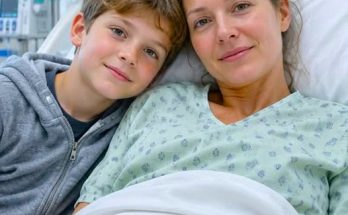
Mom’s knee replacement went exactly as her surgeon had predicted.
After everything that happened before it, the operation itself felt almost offensively routine.
I spent the next two hours in a waiting room with Alicia’s letter folded inside my purse and my phone on the chair beside me. Every few minutes I checked the screen even though I knew Moreno would not have DNA results that quickly.
The surgeon eventually appeared and told me the procedure had gone well.
No complications.
Good alignment.
Mom would be in recovery shortly.
I thanked him with an intensity that seemed to confuse him.
He had no idea that replacing a knee was approximately the seventh most important event of our day.
When I was finally allowed into recovery, Mom was groggy but awake.
Her first coherent words were, “Did they find Sarah’s daughter?”
I laughed.
“No.”
She frowned.
“Why not?”
“Because you were in surgery for two hours, not two years.”
“Oh.”
Her eyes closed.
A moment later they opened again.
“Did they fix my knee?”
“Yes.”
“Good.”
Then she fell asleep.
I sat beside her and took out Alicia’s letter.
I read it again.
This time I did not read it searching for evidence.
I read it as a daughter.
There was a strange comfort in the ordinary details.
Bananas.
Picture books.
Daniel’s bad singing.
My imaginary sky cars.
They gave my biological parents dimensions that tragedy alone could not.
Alicia and Daniel had not existed merely to die and make my adoption possible.
They had been people.
They had loved each other.
They had loved me.
They had expected a future.
That mattered.
The next morning, Moreno called while Mom was doing her first physical-therapy walk.
Mom was moving down the corridor with a walker, glaring at the therapist as though pain were a personal insult.
I stepped aside to answer.
“We have the preliminary kinship result.”
My stomach tightened.
“And?”
“Sarah Donovan is excluded as your biological mother.”
I closed my eyes.
Even though I expected it, finality carried its own weight.
“You’re sure?”
“Yes.”
“No possibility of altered names or dates changing that?”
“DNA doesn’t care what Maplewood wrote on paper.”
I looked through the doorway.
Mom had reached the end of the corridor.
She turned the walker around.
“Does Sarah know?”
“Her advocate is with her.”
“How is she?”
“Disappointed.”
The word felt painfully inadequate.
“But she asked us to keep searching.”
“Will you?”
“Yes.”
I looked down at my hands.
“And Alicia?”
“The original court file arrived this morning.”
My pulse quickened.
“Does it confirm her?”
“Yes. Alicia Grant was your biological mother. Daniel Grant was your biological father.”
I leaned against the wall.
“Both died in the accident?”
“Yes.”
“What about relatives?”
“There are names.”
My eyes filled.
“Alive?”
“At least two appear to be.”
I did not ask for telephone numbers.
Not yet.
One revelation at a time.
“Thank you.”
“There’s something else.”
Of course there was.
I almost laughed.
“What?”
“The chest has already helped us resolve one Maplewood identity.”
“Who?”
Moreno paused.
“Elizabeth Donovan.”
I stopped breathing.
“You found her?”
“We found the identity under which she was ultimately adopted.”
“Is she alive?”
“Yes.”
I covered my mouth.
“Does Sarah know?”
“Not yet. We have to approach Elizabeth first. She has the right to decide whether she wants contact.”
“Of course.”
“But the records Helen preserved gave us the cross-reference we needed.”
I looked through the doorway again.
Mom was arguing with the physical therapist about whether six steps counted as a meaningful distance.
The blue flower showed below her hospital bracelet.
“She did that.”
“Her files did.”
I smiled.
“Tell Sarah?”
“When we legally can.”
“I hope Elizabeth says yes.”
“So do I.”
After the call, I waited until Mom finished walking.
She lowered herself into the chair with a grimace.
“Physical therapists are sadists.”
“You chose yours before surgery.”
“I chose poorly.”
I sat opposite her.
“The DNA result came.”
Her joking expression disappeared.
“And?”
“Sarah isn’t my biological mother.”
Mom closed her eyes.
A tear escaped.
“I’m sorry.”
“I know.”
“I was so certain.”
“I know that too.”
She looked at me.
“Are you angry?”
“Yes.”
Her mouth tightened.
“But less than yesterday.”
“I’ll take it.”
I smiled faintly.
“There’s more.”
She braced herself.
“They confirmed Alicia and Daniel Grant were my parents.”
Mom’s eyes filled.
“Emma.”
“And they found living relatives.”
Her hand reached toward mine, then stopped.
She waited for permission.
I closed the distance.
Her fingers wrapped around mine.
“Do you want to contact them?”
“Eventually.”
“Whatever you want.”
“And they found Elizabeth.”
Mom froze.
“What?”
“Sarah’s daughter.”
Her face changed completely.
“How?”
“The records in your chest.”
She covered her mouth.
For several seconds she could not speak.
“Alive?”
“Yes.”
“Does Sarah know?”
“Not yet.”
Mom cried.
This time the tears seemed different.
Not fear.
Not guilt.
Relief.
“She searched so long.”
“I know.”
“I should have done more.”
“Probably.”
Mom looked at me, surprised.
I shrugged.
“We’re not rewriting yesterday just because something good happened today.”
A shaky laugh escaped her.
“Fair.”
“But you kept the records.”
“Yes.”
“That mattered.”
She squeezed my hand.
Over the following weeks, the Maplewood investigation expanded.
Mom recovered at home while investigators came and went.
The wooden chest did not return to the attic.
Every page was catalogued.
Every photograph was scanned.
Names were compared with court files, birth certificates, hospital records and adoption proceedings.
Some trails ended immediately.
Others opened.
One altered date connected a man in Arizona to a sister he had spent forty years believing died in childhood.
A photograph identified twins whose files had been separated.
An old medication log helped establish that several consent documents had been signed under circumstances investigators considered deeply questionable.
Not every story ended happily.
Truth rarely arrives with that guarantee.
Some relatives wanted no contact.
Some people discovered biological parents had died.
Others learned histories they would rather not have inherited.
But they were finally allowed to know.
That distinction became important to me.
Truth could hurt.
It could destabilize.
It could arrive decades late and expose mistakes made by people you loved.
But hiding it did not remove the pain.
It only decided who controlled it.
Mom understood that better after the hospital.
So did I.
Sarah remained in town long enough for investigators to confirm that the woman they had identified was almost certainly Elizabeth.
They approached her privately.
For several days, Sarah heard nothing.
Then Elizabeth agreed to exchange letters.
Not meet.
Not yet.
A letter.
Sarah told Moreno that was enough.
For now.
I never met Sarah during that visit.
We spoke once more by phone.
She thanked me for opening the chest.
I told her it had never been mine to keep closed.
Before hanging up, she said something I remembered.
“Your mother was wrong about you being Lizzie.”
“Yes.”
“But she remembered that there was a Lizzie.”
I looked across Mom’s living room.
Helen was asleep in her recliner with an ice pack on her knee and a physical-therapy worksheet balanced on her chest.
“Yes,” I said.
“She did.”
I eventually contacted one of Alicia’s relatives.
Her younger sister.
My aunt.
Her name was Rebecca.
Our first conversation lasted nineteen minutes.
Neither of us knew what to say.
She remembered me.
That was the strangest part.
She remembered holding me at Christmas.
She remembered Daniel bouncing me on one knee.
She remembered Alicia becoming furious when somebody gave me chocolate before dinner.
Rebecca had believed I had been adopted and that the records were sealed.
She had tried to locate me years earlier but stopped after being told further contact could disrupt my placement.
The system had not maliciously erased us in the way Maplewood had erased others.
But time had accomplished something similar.
We agreed not to rush.
Photographs came first.
Rebecca mailed a box.
Alicia holding me at the beach.
Daniel asleep on a sofa with me sprawled across his chest.
A birthday cake with two candles.
A photograph of all three of us outside a grocery store, squinting into sunlight.
I studied those images without feeling that Helen and Dad had become smaller.
That surprised me.
For years, Mom had feared love behaved like a fixed quantity.
If I discovered another mother, perhaps I would have less room for her.
The opposite happened.
Knowing Alicia gave shape to the first two years of my life.
Knowing Helen gave shape to everything afterward.
One did not cancel the other.
Several months after surgery, Mom and I sat on the same back porch where I had first asked about the tattoo.
The wicker chair was gone.
The railing had been repainted twice.
The yard had more flowers than grass now because Mom had gradually won her decades-long war against lawn maintenance.
Her new knee was healing well.
She still complained about the exercises.
She also did every one.
Some habits survive revelation.
She rested her arm on the table.
The little blue flower faced upward.
I touched it.
“You know,” I said, “this caused an unreasonable amount of trouble.”
Mom smiled.
“I considered having it removed.”
“When?”
“Years ago.”
“Why didn’t you?”
“I couldn’t.”
“Because of Maplewood?”
“Because it reminded me there were things I had promised myself I wouldn’t forget.”
“Then you spent thirty years trying not to discuss them.”
“I didn’t say I was consistent.”
I laughed.
She became serious.
“I’m sorry, Emma.”
“I know.”
“I’m not saying it because I expect you to tell me everything is fine.”
“I know.”
“I should have told you when you were young.”
“Yes.”
“I should have trusted you.”
“Yes.”
“I should have trusted what your father and I had built.”
I looked toward the garden.
“Yes.”
Mom was quiet.
“Do you wish someone else had told you?”
“No.”
She looked surprised.
“I wish you had told me sooner.”
“That’s different.”
“Very.”
She nodded.
A breeze moved through the garden.
For a while we watched bees work among the flowers.
Then I asked the question I had first asked at seven.
“So what does it mean?”
Mom looked at the tattoo.
This time she did not dodge.
“It meant Maplewood.”
I waited.
“It meant belonging when I first got it.”
Another pause.
“Then it meant shame because I had worked somewhere that hurt people.”
She rubbed one faded petal.
“Later it meant remembering.”
“Sarah?”
“Sarah. Elizabeth. The other children. You.”
“And now?”
Mom considered the question.
“I think now it means I finally stopped hiding.”
I nodded.
That answer was enough.
The investigation continued long after our family’s immediate questions were resolved.
Mom’s records did not solve every case.
No box could.
But they filled gaps.
Dates.
Names.
Photographs.
Relatives.
Evidence that contradicted altered files.
People who had spent decades believing their confusion was personal discovered that sometimes the records themselves had been wrong.
Patricia stayed in touch with Mom.
The two of them had coffee after Mom could drive again.
Apparently they spent half the afternoon comparing memories of Maplewood and the other half complaining about modern hospital administration.
Dr. Reeves returned to being nothing more dramatic than a physician whose name occasionally appeared in Mom’s stories.
Moreno continued the investigation.
And the two security officers who had terrified me that morning became, in retrospect, almost funny.
They had never come to arrest Mom.
They had been called because a nurse recognized a symbol tied to an active investigation and hospital staff wanted the situation handled carefully.
The terrifying part had never been security.
It had been recognition.
One person saw a five-petaled flower and understood that the past had entered the room.
Sometimes I thought about Dad.
I wished he had been there.
I also occasionally wanted to argue with him for helping Mom keep the secret as long as he did.
Love does not exempt the dead from criticism.
But I understood him better after finding the letters.
He had pushed Mom to tell me.
He had also stayed beside her when she could not.
That sounded like Dad.
Rebecca later sent me a copy of Alicia and Daniel’s wedding photograph.
I framed it.
Not beside Mom and Dad’s wedding picture.
That felt too staged.
Instead I placed it on another shelf among family photographs where it slowly stopped looking like an exhibit and started looking like what it was.
Part of my history.
Alicia had loved me first.
Helen had raised me.
Dad had chosen me.
Daniel had once expected to teach me to ride a bicycle.
Rebecca remembered my second birthday.
Sarah was not my mother, but her lost daughter had been found because records Mom saved survived long enough to be understood correctly.
None of those truths needed to compete.
On my next birthday, Mom gave me a small envelope.
I stared at it suspiciously.
“If this contains another thirty-year secret, I’m leaving.”
She laughed.
“No secret.”
Inside was a copy of Alicia’s letter.
The original had been preserved with the archive materials temporarily before being returned to me.
Mom had arranged for a conservation specialist to make a high-quality duplicate so I would not need to handle the fragile page often.
I looked up.
“Thank you.”
“I thought you might want to read it sometimes.”
“I do.”
Mom hesitated.
“Does it hurt?”
“Yes.”
She nodded.
Then I added, “But I’m glad I have it.”
That seemed to matter to her.
Later, while we cleared dishes, her sleeve slid upward.
The flower appeared.
For most of my life, I had understood it as the one locked door in an otherwise open woman.
Now I knew doors were rarely that simple.
Behind this one had been courage and cowardice.
A corrupt institution.
A young nurse who copied records because something felt wrong.
A grieving couple who adopted a two-year-old girl.
A mother who loved that girl so fiercely she became afraid truth might take her away.
A biological mother named Alicia who had written to a child she expected to watch grow.
A teenager named Sarah who had spent decades searching for Elizabeth.
And a box of old papers that eventually helped strangers recover pieces of themselves.
Mom caught me looking at her wrist.
“What?”
“Nothing.”
She raised an eyebrow.
“That’s my line.”
“I know.”
I dried my hands.
Then I touched the flower once, the way I had when I was seven.
Five faded petals.
A thin stem.
No larger than a coin.
The design itself had never changed.
Only what I was ready to understand about it.
Mom did not pull her wrist away.
She let the flower remain where I could see it.
And neither of us changed the subject.
The End
Read more original stories on Feel Every Story.
The Tiny Blue Flower on My Mother’s Wrist Was the Only Question She Would Never Let Me Ask Twice
Part 12 of 12