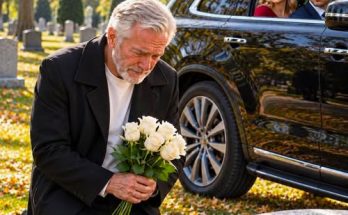
The next morning, Richard called while I was putting away groceries.
I had bought more than I needed because I still wasn't accustomed to shopping for one person.
Two loaves of bread sat on the counter.
So did a carton of eggs large enough for a family breakfast.
I put the extra bread in the freezer before answering.
"Have you had a chance to read the latest findings?" Richard asked.
"I read them last night."
"And?"
"They make me angry."
"That's understandable."
"But I don't want anger making decisions."
"That's why I'm calling."
He explained that the review was moving forward.
The accounting team had identified enough irregularities to support further recovery efforts, but some details still required verification.
The board needed to remain focused on the company's interests.
That meant separating my personal feelings about Vanessa from the questions surrounding Derek's conduct.
"I understand the distinction," I said.
"Understanding it and living with it can be different things."
He wasn't wrong.
Derek had been the operations director.
He had held a position of trust, access to company systems, and responsibility for work that affected hundreds of people.
Vanessa was my daughter.
She had also encouraged his appointment and had been present when some of the financial decisions were discussed.
Those facts could not be erased simply because I loved her.
"Do you believe she knew about the transfers?" I asked.
"I believe we need evidence before making that determination."
"That isn't an answer."
"It's the only responsible answer I can give you right now."
I rubbed my forehead.
"I don't want her blamed for something she didn't do."
"Then don't decide what she did or didn't do in advance. Let the review establish it."
I looked out at the lake.
A small fishing boat was moving slowly along the opposite shore.
"All right," I said.
"There's something else," Richard continued. "The board wants your confirmation that you won't use company resources to support either of them while the matter is being resolved."
I understood why.
The company had already frozen the corporate cards associated with the investigation and restricted Derek's access.
Any further financial support could create confusion about whether the company was being used to cover personal expenses.
"I won't use company money for them."
"And your personal money?"
"That's mine to decide."
"Yes. But I recommend clear boundaries and written records if you choose to help with anything."
"I don't plan to help with anything right now."
Richard didn't argue.
After we hung up, I finished putting away the groceries.
I had once believed that being a good father meant making sure Vanessa never experienced the full weight of a difficult decision.
If her car needed repairs, I paid.
If a holiday became expensive, I covered the difference.
If she and Derek wanted something beyond their budget, I often found a way to make it possible.
I hadn't thought of those gestures as buying affection.
But I had also rarely asked myself what would happen if I stopped.
Now I was finding out.
Vanessa called that afternoon.
I watched her name appear on the screen while I sat at the table with Richard's notes.
I let it ring twice before answering.
"Hello, Vanessa."
"Thank you for picking up."
Her voice sounded tired.
"What's going on?"
"I wanted to know how you're doing."
"I'm all right."
"Are you settled into the new place?"
"Mostly."
"Is it comfortable?"
"Yes."
She hesitated.
"Are you still angry with me?"
I looked at the page in front of me.
There were columns of dates, amounts, and invoice references.
"I am still hurt by what happened."
"I know."
"I'm not sure you do."
She went quiet.
I could hear something moving in the background, perhaps a drawer closing.
"I've been thinking about that day," she said.
"So have I."
"I shouldn't have left you there."
"No, you shouldn't have."
"I was upset, and Derek was upset, and everything had become an argument."
"You were not the one who had to walk away from the cemetery and wonder how you were going to get home."
"I know."
I waited.
I had learned that if I filled every silence for her, she rarely had to finish a difficult thought.
"I'm sorry, Dad," she said at last.
The apology sounded sincere.
It also sounded incomplete.
I couldn't tell whether she was beginning to understand what she had done or simply wanted the conversation to become easier.
"I hear you," I said.
"Can we meet?"
"For coffee, perhaps."
"Could we come to the house?"
"No."
The answer came out more firmly than I expected.
She took a breath.
"Why not?"
"Because I'm not ready to have you and Derek here."
"Derek and I aren't—"
She stopped.
I waited again.
"We've had a lot to deal with," she finished.
"I'm sure you have."
"Everything is changing at once."
"It is."
"I don't know what we're supposed to do."
I looked toward the hallway, where the moving boxes were still stacked against one wall.
"Neither did I when I was left at your mother's grave."
She didn't answer.
For a moment, I wondered if I had said too much.
Then I reminded myself that the words were true.
"Coffee," she said quietly. "Just you and me."
"Saturday morning."
"All right."
We agreed on a small café near the main road.
When the call ended, I didn't feel victorious.
I felt tired.
That evening, I took Eleanor's letter from the drawer beside my bed.
I had read it many times since finding it the night before the cemetery trip.
Her handwriting slanted slightly to the right.
She had written about dignity, about love, and about the danger of confusing generosity with obligation.
She had known me well enough to understand that I would keep giving long after the giving stopped helping.
One line stayed with me.
Don't buy the love you already have a right to receive freely.
I sat with that sentence for a long time.
Vanessa was my daughter.
Nothing Derek had done could change that.
Nothing Vanessa had done could make me stop loving her overnight.
But love did not mean I had to ignore evidence.
It didn't mean I had to protect her from every consequence.
And it certainly didn't mean I had to hand over the rest of my life because she had grown accustomed to receiving it.
Saturday came with a low ceiling of clouds and a sharp wind off the water.
I drove to the café alone.
Vanessa was already seated near the window.
She wore a dark sweater and had tied her hair back.
Without the handbag she had carried into the boardroom, she looked younger than she had that morning.
She stood when she saw me.
"Hi, Dad."
"Hello."
We hugged briefly.
She ordered tea.
I ordered coffee.
For the first few minutes, we talked about ordinary things.
The lake house.
The weather.
The road construction near the cemetery.
Then Vanessa put both hands around her cup.
"I don't know how to fix this," she said.
"You can't fix it in one conversation."
"I know."
"Do you?"
She looked down.
"I keep thinking about what happened, and I hate that I did it."
"Then don't repeat it."
Her eyes filled, but she didn't cry.
"I wasn't thinking clearly."
"You had enough time to think about leaving."
She flinched.
I regretted the sharpness, but I didn't take it back.
"I was angry," she said.
"At me?"
"At everything."
"That doesn't explain why you left me there."
"No."
She looked out the window.
"I thought you would call someone. I thought you'd be all right."
"I was eventually."
The difference mattered.
She had counted on my ability to survive the consequences of her decision.
That was not the same as caring whether I suffered them.
"I can't promise everything will go back to the way it was," I said.
"I don't expect that."
"Good. Because it won't."
She nodded.
We finished our drinks without discussing the investigation in detail.
Richard had advised me not to speculate with her about matters still under review, and I intended to follow that advice.
When we stood to leave, Vanessa asked if she could call me again.
"Yes," I said. "But calling doesn't mean I'll agree to everything you ask."
"I understand."
I hoped she did.
Outside, we said goodbye beside our cars.
She drove away first.
I watched her turn onto the road, then got into my own vehicle.
For the first time since the cemetery, I had spoken with my daughter without promising to rescue her from what came next.
I drove home with the windows closed and the heater running.
The wind pushed against the car as I crossed the bridge near the lake.
I kept both hands on the wheel.
Click here to continue reading: PART 11: The Numbers Started to Make Sense, but the Hardest Part Was Accepting That My Own Generosity Had Helped Hide the Warning Signs
I Thought Visiting My Wife’s Grave Would Be the Hardest Thing I Faced That Day, Until I Read Two Messages
Part 10 of 16