Thursday morning, I stopped at a thrift store on the other side of town.
I didn't tell anyone where I was going.
There was no reason to involve my office staff, and I didn't want a phone call reaching the restaurant before I arrived.
The store was small and crowded.
A bell rang above its entrance, and an elderly woman behind the counter looked up long enough to greet me.
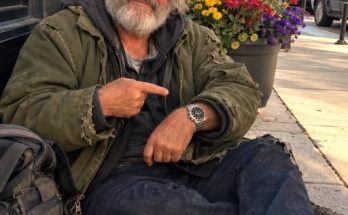
I walked between racks of used clothing until I found a jacket that had seen better days.
It was faded around the shoulders.
One pocket had a tear along the seam, and the zipper caught when I tried to pull it up.
I bought it along with a pair of jeans and some battered shoes.
The whole outfit cost less than what I usually spent on lunch.
I took the clothes home and changed.
Then I stood in front of the bathroom mirror.
The man looking back at me wasn't convincing because of any one thing.
It was the combination.
The loose jacket.
The worn denim.
The shoes with their damaged soles.
I skipped shaving and let my hair sit untidily.
I left my good watch in its box.
My wallet stayed at home.
I didn't want an employee to recognize something expensive and start treating me differently because of it.
The only valuable thing I carried was my cellphone.
I tucked it inside the jacket, where I could reach it without drawing attention.
Then I took four dollars in crumpled bills and loose change.
I counted the money twice.
Four dollars.
It was an amount that wouldn't buy much at most restaurants.
At Rosie's, it might cover a small bowl of soup if the prices hadn't changed.
That was enough for my test.
I wasn't going to pretend I had a story about losing my home or being abandoned by my family.
I didn't need to invent a tragedy.
I only needed to ask for something to eat and see what happened.
On the drive to the restaurant, I kept both hands on the steering wheel.
I passed the familiar streets and the storefronts I had driven by hundreds of times.
A few blocks from Rosie's, I considered turning around.
Not because I was afraid someone would recognize me.
I was afraid they wouldn't.
I knew what I had looked like twenty years earlier, when I was washing dishes and trying to save enough money to start something of my own.
I had told myself that the struggle had made me more understanding.
But I had also spent years surrounded by people who knew me as the owner.
People stood when I entered the room.
They returned my calls.
They brought problems to me because they believed I could solve them.
I couldn't remember the last time I had walked into a restaurant and worried that the staff might refuse to serve me.
I had forgotten how much that possibility could change a person's posture.
By the time I parked, I had made myself a promise.
I wouldn't reveal who I was unless I absolutely had to.
I wouldn't argue over the treatment I received.
And I wouldn't let anyone's first mistake become an excuse to ignore what they did next.
The front of Rosie's looked exactly as it always had.
The windows were clean.
The red lettering on the glass was beginning to fade at the edges, something I'd been meaning to fix.
Through the entrance, I could see the tables, the counter, and the framed photograph of my mother.
For a moment, I felt relieved.
Nothing looked wrong.
Then I opened the door.
The little bell above it rang.
I had installed that bell myself eleven years earlier, after a customer joked that the old door needed a proper greeting.
I remembered standing on a ladder with a screwdriver while one of the kitchen workers held the door steady.
Back then, the bell had seemed like a small detail.
Now its familiar sound followed me into a place where I suddenly felt like an intruder.
The restaurant was quiet.
A few customers sat near the back.
Sunlight fell across the tables beside the windows, and several of those seats were empty.
I approached the hostess station.
Madison was standing behind it with her phone in one hand.
She looked young enough to be new to the job, though I knew she had been working there long enough to understand the basic routines.
I had approved her hiring.
I remembered reading her application and deciding she deserved a chance.
At that moment, she was more interested in whatever appeared on her screen than in the person standing in front of her.
I waited.
She continued scrolling.
I cleared my throat.
"Excuse me."
Madison lifted her eyes.
I kept my voice quiet and respectful.
"Could I get a little water and maybe a bowl of soup? I've only got four dollars with me."
Her gaze moved from my face to my jacket.
Then she looked down at my shoes.
I watched her expression change.
It wasn't a moment of uncertainty.
It was immediate.
Her mouth tightened, and she drew her shoulders back as though I had brought something unpleasant into the room.
"I'm afraid we don't have any tables available."
I looked past her.
Several tables were empty.
One had two menus neatly placed beside the napkins.
Another had a small vase of artificial flowers in the center.
I could see at least four seats that nobody was using.
I turned back to her.
"Are those places taken?"
"They're reserved."
She said it quickly.
I glanced around again.
There were no reservation signs on the tables.
No names written on cards.
No customers waiting for them.
I didn't point that out immediately.
I wanted to give her another chance to answer like a normal person.
"Is there somewhere else I could sit for a few minutes?"
Madison sighed.
"You might want to try a place that fits your budget."
The words landed harder than I expected.
I had heard customers complain about rude service.
I had read online reviews from people who felt ignored.
But standing there and hearing my own employee speak to me that way was different.
She hadn't asked whether I needed help.
She hadn't offered a glass of water.
She hadn't even bothered to explain the menu.
She had looked at my clothes and decided what kind of person I was.
Behind her, my mother's photograph hung on the wall.
I could see it over Madison's shoulder.
The woman in the picture had spent nearly four decades serving people who had less money than she did.
She would have been embarrassed by the conversation taking place beneath her face.
I felt anger rising, but I kept it to myself.
"All right," I said.
I started to turn toward the door.
I could have stopped there.
I could have walked outside, called Kyle, and demanded an explanation for Madison's behavior.
But I hadn't come to the restaurant just to confirm that one employee could be cruel.
I needed to know whether anyone else would behave differently.
I was almost at the end of the hostess counter when I heard someone behind me.
"Sir, could you wait a second?"
The voice was gentle.
I turned.
A young waitress had just emerged from the kitchen.
Her name was Amber.
I knew her face, though we hadn't spoken much outside ordinary work conversations.
She was carrying a small notepad and a pen.
Her uniform was neat, but a loose strand of hair had fallen across her forehead.
She looked at me, then at the four dollars resting in my palm.
She didn't stare at the torn pocket.
She didn't look at my shoes.
She simply asked a question.
"Have you had anything to eat today?"
I shook my head.
"Not yet."
She gave a small nod, as though that was all the information she needed.
"Come on. I'll find you a seat."
Madison straightened behind the counter.
"Amber, you can't put him over there."
Amber looked toward the empty tables.
"Why not?"
"Those seats are reserved."
Amber waited a moment.
Then she looked back at the tables.
"Who are they reserved for?"
Madison didn't answer.
I stood between them with the four dollars still in my hand.
For the first time since entering Rosie's, I felt something loosen in my chest.
It wasn't relief exactly.
It was the simple recognition that someone had seen me as a customer before deciding what I could afford.
Amber picked up a menu.
"This way, sir."
I followed her toward the window.
The chair she chose was close to the glass, where the afternoon light reached the tabletop.
She pulled it out for me without making a fuss.
I sat down.
She placed the menu in front of me and told me she'd be back shortly.
As she walked away, I glanced toward the hostess station.
Madison had already returned to her phone.
The contrast stayed with me.
One employee had needed only a few seconds to decide I wasn't worth serving.
Another had needed even less time to decide that I was.
I looked at the four dollars in my hand.
Then I folded the bills together and placed them beside the menu.
I had come to Rosie's expecting to see how my employees treated someone who looked poor.
I hadn't expected the answer to arrive so quickly.
Click here to continue reading: PART 3: The Soup on My Table Reminded Me of My Mother, Until the General Manager Arrived and Turned a Small Kindness Into a Public Humiliation
I Built My Mother’s Restaurant for Everyone, Until One Quiet Warning Made Me Wonder Who Was Really Welcome Inside
Part 2 of 15

One Comment on “PART 2 – Four Dollars, a Worn Jacket, and an Empty Dining Room Were All I Needed to Learn How Quickly Respect Could Disappear”