The next update came while I was reviewing the lunch receipts.
I set the papers aside and answered the call.
The person speaking with me asked about the payment counter, the device, and the employees who had been present.
I answered each question as accurately as I could.
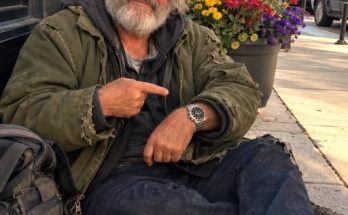
I described the afternoon I had entered the restaurant in worn clothes.
I explained how Madison had taken the elderly woman's card and moved it beneath the counter.
I explained that I had seen a small black electronic object there and watched her use it before processing the payment.
I described Kyle's reaction.
Then I repeated what I had told the authorities from the beginning.
I did not know what the device did.
The person on the phone asked whether I had touched it.
"No."
"Have you moved it?"
"No."
"Have you told the employees what you believe it might be?"
"I've asked about approved equipment, but I haven't told anyone I know what it is. I don't know."
That answer felt important.
I had been tempted to confront Madison more than once.
I had wanted to ask Kyle why he had looked frightened.
But if I had begun making accusations before the device could be examined, I might have complicated the process without learning anything useful.
I had resisted that temptation.
The person speaking with me explained the next steps that would be needed to assess the concern.
I listened and wrote down the instructions.
When the call ended, I sat quietly for a moment.
I felt no relief yet.
There was still no definitive finding.
But I understood that the matter was being handled as a question requiring evidence rather than a dispute that could be settled by my opinion.
That was what I had wanted.
I put the notes into the folder.
Then I went downstairs.
The dining room was nearly full.
Madison was greeting customers at the entrance.
Kyle stood near the center of the room, speaking with a server.
Amber was carrying a tray toward the window tables.
I watched them for a moment before returning to the kitchen.
Luis looked up when I entered.
"Everything all right?"
"I'm waiting for the next steps."
He nodded.
I didn't tell him more than that.
He had no need to carry every detail of the investigation, and I had no new facts that would help him do his job.
I went back to the office and continued working.
Later that afternoon, Kyle came in to discuss a scheduling issue.
He laid the roster on my desk and pointed to a shift that needed coverage.
We reviewed the available options.
The conversation was practical and calm.
When we finished, he gathered the papers.
"Anything else?" he asked.
I looked at him.
"Has the payment equipment been checked recently?"
He paused.
"What do you mean by checked?"
"Whether everything at the counter is approved and accounted for."
His mouth tightened slightly.
"I told you, I don't know of anything new."
"I remember."
"Then why are you asking again?"
I kept my voice level.
"Because I need to make sure the equipment used in this restaurant is properly documented."
He looked toward the door.
"Madison handles the counter most of the time."
I noted the statement but did not treat it as an explanation.
"All right," I said. "I'll make sure the equipment is reviewed through the proper process."
He picked up the roster.
"Fine."
After he left, I wrote down the exchange.
Kyle had again said he knew of no new equipment.
He had also pointed out that Madison handled the counter most of the time.
Neither statement answered what the device was or why it had been used.
I made no further assumptions.
That evening, I reviewed the customer complaints again.
One of them described a staff member making a visitor feel unwelcome.
Another mentioned an uncomfortable interaction at the front counter.
Neither complaint identified the black device.
Neither established that a payment had been mishandled.
I resisted the urge to connect every negative experience to the same cause.
The complaints mattered because they showed that the restaurant's service had deteriorated.
The device mattered because it raised a separate question about payment security.
There could be a connection between the two.
There might not be.
I needed to allow the evidence to determine that.
The next morning, I was asked to make myself available for further questions and to keep the relevant business records intact.
I confirmed that I would.
I also made arrangements to ensure that ordinary recordkeeping continued without deleting or altering information that might be relevant.
I didn't want the restaurant's normal work to stop.
I wanted the information available for proper examination.
The distinction mattered.
As the day went on, I found myself thinking about the elderly customer.
I still did not know who she was.
I did not know whether she had noticed anything unusual.
I did not know whether her card had been affected.
It bothered me that she might have left Rosie's trusting us without having any idea that something could have gone wrong.
But I had no right to turn that concern into a claim that she had been harmed.
The honest answer was that I didn't know.
I had to live with that uncertainty until the evidence provided something better.
During the afternoon, Amber stopped by the office.
"Can I ask you something?"
"Of course."
"Are we going to be all right?"
I set down my pen.
"What do you mean?"
She looked toward the hallway.
"I mean the restaurant. People keep noticing that something's going on, even if they don't know what."
I understood.
Employees could sense tension without knowing its source.
"I can't promise exactly how this will turn out," I told her. "But I can promise that I'm taking it seriously and that I'm trying to handle it fairly."
She nodded.
"That's all I wanted to know."
I thanked her for asking and told her to come to me if she had a work concern.
She returned to the dining room.
I remained at my desk.
Her question made me realize how much uncertainty could spread through a workplace when people sensed a problem but received no explanation.
I couldn't share information I didn't have.
I also couldn't pretend that nothing was happening.
I decided that, when appropriate, I would tell the staff that a payment-equipment concern was being reviewed and that they should continue following established procedures.
I would not name or accuse anyone.
I would not speculate about the outcome.
But I would make clear that customer security mattered and that nobody should tamper with equipment or records.
I arranged for that message to be delivered through the proper management process.
Then I returned to my paperwork.
The investigation was not a dramatic event that swept through the restaurant in a single afternoon.
It was a series of questions, records, explanations, and careful decisions.
That was frustrating.
I wanted someone to tell me what the device was and why it had been used.
But a quick answer without reliable evidence would not protect anyone.
I had to accept that the truth might take longer to establish than my anger wanted.
At closing time, I checked the locked drawer.
The notebook was there.
The records were there.
The notes from my calls were there.
I shut the drawer and turned the key.
Then I looked across the quiet dining room.
The tables were clean.
The chairs had been pushed into place.
The lights above the counter cast a soft reflection on the polished surface.
The device was no longer just an object I had seen.
It had become a test of how I handled uncertainty, responsibility, and trust.
I could not undo the afternoon when Kyle had forced me out.
I could not change what I had witnessed.
I could make sure the investigation was allowed to reach its own conclusions.
And I could decide what kind of restaurant Rosie's would be while that happened.
I turned off the lights and left.
Click here to continue reading: PART 15: I Had Walked Into Rosie’s Expecting Rudeness, but What I Learned About Trust, Responsibility, and My Mother’s Promise Changed How I Ran It
I Built My Mother’s Restaurant for Everyone, Until One Quiet Warning Made Me Wonder Who Was Really Welcome Inside
Part 14 of 15