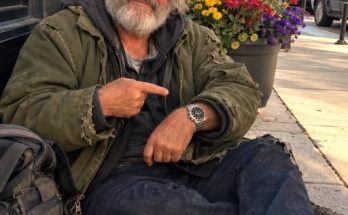
I drove away from Rosie's without calling anyone.
The four dollars I'd taken with me were still in my pocket.
I could feel the folded bills whenever I moved my hand, and for some reason, I couldn't stop thinking about them.
Four dollars had been enough to change the way Madison looked at me.
Four dollars had also been enough for Amber to decide that I deserved a meal.
The difference between those two reactions told me something about the people working for me.
The device beneath the counter told me there might be something else to understand.
I parked outside my office and sat there for a while before going inside.
I didn't want to walk into the building angry and start asking questions I wasn't ready to ask.
Anger can make a person feel certain before the facts are clear.
I knew that from years of running a business.
A customer could accuse a server of stealing, only for the missing money to turn up in a coat pocket.
An employee could appear careless when the real problem was that nobody had trained them properly.
I had learned to wait for evidence.
That afternoon, waiting was harder than usual.
I kept seeing Madison's hand disappear beneath the register.
I kept seeing Kyle look in her direction.
And I kept hearing the way he had spoken to Amber when she tried to defend me.
I went upstairs to my office and shut the door.
My desk was covered with invoices, staffing schedules, and a folder of maintenance bills I'd been meaning to review.
Everything looked ordinary.
That almost made the afternoon feel unreal.
I had spent the morning believing I was investigating a customer-service problem.
By lunchtime, my manager had physically removed me from my own restaurant, and I had seen an employee use an unfamiliar electronic device while handling a customer's payment card.
I took a notebook from the top drawer.
Then I wrote down everything I could remember.
The approximate time I entered Rosie's.
Madison's position behind the hostess station.
The empty tables she claimed were unavailable.
Amber's offer to bring me food.
Kyle's arrival from the kitchen.
The way he grabbed my arm.
And, most importantly, the sequence at the register.
I described the device as a small black electronic object beneath the counter.
I noted that Madison had moved the elderly customer's card against it before completing the transaction through the usual terminal.
I wrote that Kyle had looked toward her hand and appeared alarmed.
I didn't write that I knew they were stealing.
I didn't know that.
The distinction mattered.
I had seen something suspicious, not the whole explanation.
When I finished, I read the page again.
It looked less dramatic in writing.
That was useful.
I wanted a record of what had happened, not a record of how angry I felt.
I put the notebook in my desk drawer and took out the restaurant's latest financial reports.
Sales had fallen over the previous several weeks.
The decline wasn't severe enough to threaten the business immediately, but it was unusual.
Rosie's had been steady for years.
Our lunch service had a dependable group of regulars, and our expenses didn't explain the change.
I compared the recent totals with those from earlier periods.
Then I looked at the card-payment summaries available in the reports.
Nothing there gave me an immediate answer.
The numbers were presented as totals.
They didn't tell me what device had touched a particular customer's card, or what had happened at the counter before a payment was processed.
I would need more detailed records to understand that.
I leaned back in my chair.
The first thing I wanted to do was call Kyle.
I imagined asking him to explain why he had treated a customer that way.
I imagined him recognizing my voice and realizing that the man he'd thrown outside had been the owner.
There was a certain satisfaction in that picture.
I won't pretend otherwise.
Part of me wanted to see him squirm.
But the more I thought about it, the less useful that satisfaction seemed.
If Kyle had acted out of simple arrogance, I could deal with him directly.
If he knew something about the device, a confrontation might only teach him to hide it better.
I didn't know which possibility was true.
So I kept quiet.
Late that afternoon, I called Luis.
I made sure my voice sounded normal.
He answered after several rings.
"Frank?"
"I wanted to thank you for talking to me yesterday."
There was a pause.
"Did you go?"
"Yes."
Another pause followed.
"What did you see?"
I looked at the notebook in my drawer.
"I saw enough to know I need to look into things more carefully."
Luis didn't speak.
I asked him whether he had anything else he thought I should know.
He hesitated.
"Not over the phone."
I felt my shoulders tighten.
"Is there something specific you're worried about?"
"I just don't want to say the wrong thing."
I understood what he meant, though I didn't know the full reason behind his caution.
He worked in that kitchen every day.
Kyle managed the restaurant.
Whatever Luis had noticed, he still had to go back to work around the people he was talking about.
"All right," I said. "We can speak when you're comfortable."
He thanked me and ended the call.
I sat quietly for a few seconds.
Luis had been careful before.
Now he was being even more careful.
That didn't prove anything about Kyle or Madison, but it made me more certain that I couldn't treat the situation as a simple misunderstanding.
The next morning, I arrived at my office early.
I wanted to examine the restaurant's procedures without announcing that I was doing so because of what I'd witnessed.
I started with the records already available to me.
I reviewed staffing schedules and routine management reports.
I checked the basic procedures for handling customer payments.
The rules were clear enough.
Transactions were supposed to be processed through the restaurant's approved payment system.
Employees weren't supposed to use unapproved equipment to handle customers' cards.
If another device was part of the normal payment process, I needed to know why it was there and who had authorized it.
I hadn't authorized anything like the object I'd seen.
That did not automatically mean it was criminal.
There could be an explanation I hadn't considered.
But it was not something I could ignore.
I also reviewed the customer complaints.
Most were brief.
Several described employees being dismissive.
One mentioned an uncomfortable interaction at the hostess station.
Another said a staff member had made the customer feel as though asking a question was an inconvenience.
There was no clear pattern linking those complaints to the payment device.
Still, I began to wonder whether I had been treating separate warnings as unrelated problems because that was easier than looking at them together.
I had assumed the restaurant's decline was about attitude.
Perhaps it was.
But now I couldn't rule out the possibility that something else had been happening at the same time.
Around midmorning, I received a routine report from the restaurant.
Nothing in it stood out immediately.
I read it twice anyway.
Then I put it aside and called the office employee who helped maintain our records.
I asked her what detailed payment information we could access through the approved system.
She explained the kinds of reports available and said she could help retrieve the appropriate records.
I told her not to change anything.
I wasn't asking her to accuse anyone or investigate an employee.
I wanted the existing information preserved so I could understand what had been happening.
When the call ended, I felt slightly more in control.
Not because I had answers.
Because I had stopped pretending I could solve the problem by confronting the first person who made me angry.
I returned to my notebook.
At the bottom of the page describing the device, I added one sentence.
I needed to know what that object was before I decided what it meant.
Then I closed the notebook.
For the first time since walking out of Rosie's, I had a plan that didn't depend on catching someone off guard.
It depended on finding out what was true.
Click here to continue reading: PART 6: The Reports Didn’t Explain What I Had Seen, So I Began Looking More Closely at the People, Procedures, and Complaints I Had Overlooked
I Built My Mother’s Restaurant for Everyone, Until One Quiet Warning Made Me Wonder Who Was Really Welcome Inside
Part 5 of 15