The answer did not arrive in the form I had imagined.
There was no single moment when someone placed a complete explanation in front of me and made every question disappear.
The matter had to be examined.
The observations had to be compared with the available information.
And the people responsible for assessing the concern had to distinguish what could be established from what remained uncertain.
I cooperated with that process.
I provided the notes I had made on the day of my visit.
I supplied the relevant records that had been preserved.
I explained which details I had witnessed myself and which had come from conversations with Luis and Amber.
I answered follow-up questions without adding theories of my own.
I wanted the truth, not a version that made my anger feel justified.
That was harder than I expected.
Part of me wanted the black device to turn out to be proof of everything I had feared.
If it did, I could point to it and say that my instincts had been right.
But my instincts were not the point.
The customers were.
If the equipment had been used properly, I needed to know that.
If it had been used improperly, I needed to know that too.
Either way, I had a responsibility to respond to the facts.
I also had a responsibility to acknowledge what I already knew about the restaurant.
I had seen Madison refuse to seat me while empty tables stood behind her.
I had heard her tell me to try somewhere cheaper.
I had watched Amber offer me a meal without asking what I could afford.
I had watched Kyle treat that kindness as a problem.
Those things did not require a technical examination.
They had happened in front of me.
Whatever the final finding about the device, I could not pretend the way I had been treated was acceptable.
I began making changes to the restaurant's management practices.
I reviewed the standards I expected employees to follow when greeting customers and assigning tables.
I made it clear that a person's clothing was not a reason to deny ordinary courtesy.
I also clarified that employees should follow established procedures when a customer needed help paying for a meal.
Generosity had to be handled responsibly, but it did not have to be treated as an embarrassment.
Amber had not undermined the restaurant by offering me soup.
She had reminded me of what the restaurant was supposed to be.
I spoke with the management team about customer complaints.
I did not use the meeting to accuse anyone of wrongdoing involving the device.
That matter had to remain separate until the evidence justified a conclusion.
Instead, I asked the managers to explain how they handled difficult situations at the front counter.
I listened to their answers.
Some were reasonable.
Others revealed that people had become too focused on moving customers through the room and protecting the schedule.
I told them that efficiency mattered, but it could not replace judgment.
A restaurant was not simply a place where food moved from the kitchen to the table.
It was a place where people expected to be treated decently.
My mother had understood that before I ever learned how to run a business.
She had spent thirty-eight years waiting tables.
She knew what it meant to work on tired feet, carry too many plates, and smile at someone who had been rude to you.
She also knew that a person could arrive hungry and leave feeling worse if the people serving them made them feel small.
That was why she had always believed nobody should leave her restaurant hungry.
I had named Rosie's after her because I wanted that belief to survive.
Somewhere along the way, I had begun to think of the name as a tribute rather than a responsibility.
I had treated the restaurant's success as evidence that I was honoring her.
But a full dining room could hide failures just as easily as an empty one could reveal them.
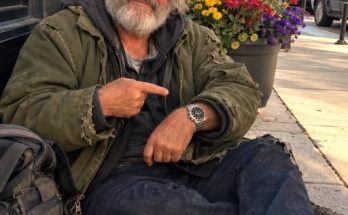
I had learned that by sitting alone at a window table in clothes I had chosen to make people dismiss me.
I didn't like what I had seen.
I also couldn't deny that I had needed to see it.
The review of the payment concern continued through the proper channels.
I remained available to provide information.
I did not announce a conclusion that had not been established.
I did not tell customers that their cards had been compromised when I had no evidence to support such a statement.
Nor did I dismiss the concern simply because I wanted the restaurant to move on.
I made sure the matter remained documented and that the relevant information stayed available for examination.
The possibility of a serious problem was enough to require attention.
A confirmed finding would require an appropriate response.
Those were different things, and I had to respect the difference.
As for the employees, I refused to make a public example of anyone based only on suspicion.
Madison had handled the customer's card.
That was an observation.
I did not know her purpose.
Kyle had reacted when he saw her hand move beneath the counter.
That was another observation.
I did not know exactly what he understood.
The investigation would have to establish what those facts meant.
I could hold employees accountable for conduct I had witnessed directly without pretending that I knew the answer to every other question.
I did so.
The way I had been treated during my disguised visit was unacceptable.
The expectations for customer service were made clear.
The payment-equipment concern remained subject to the proper review.
I did not confuse those decisions.
In the weeks that followed, I paid closer attention to the restaurant's daily operation.
I listened when employees raised concerns.
I read customer feedback instead of looking only at the total number of complaints.
I asked managers to explain how they had handled difficult situations.
And I stopped assuming that the absence of a problem in a report meant there was no problem at all.
I also made a point of walking through the dining room during busy hours.
I watched how customers were greeted.
I noticed whether servers looked up when someone entered.
I paid attention to the tables near the windows, where a person could feel forgotten if nobody bothered to check on them.
I didn't expect every meal to be perfect.
I expected people to be treated with respect.
One afternoon, I saw Amber carry a bowl of soup to an older customer sitting alone.
She placed it gently on the table and asked whether he needed anything else.
He smiled and thanked her.
She went back to work without waiting for praise.
I watched her for a moment.
Then I remembered the soup she had brought me.
I had entered Rosie's expecting to discover rude employees.
I had found one person whose kindness reminded me that the restaurant still had something worth protecting.
I had also found a situation serious enough that I could not resolve it by firing someone in anger or declaring that everything was fine.
The experience had changed how I understood ownership.
I used to think that building a business meant carrying the responsibility for every decision.
Now I understood that it also meant recognizing the limits of my own knowledge.
When I saw something concerning, I had to document it.
When I needed expertise, I had to seek it.
When I suspected wrongdoing, I had to report the facts rather than turn suspicion into an accusation.
And when I discovered that the way we treated people had fallen short, I had to make changes whether or not there was a crime behind it.
I couldn't undo the humiliation of being pushed through the glass doorway.
I could make sure nobody at Rosie's was taught that humiliation was an acceptable way to handle a customer.
I couldn't recover the trust of every person who had stopped coming.
I could give the people who still came through our doors a reason to trust us again.
And I couldn't promise that the investigation would produce the answer I wanted.
I could promise that I would not hide from it.
One evening, after the last customers had left, I stood alone in the dining room.
The tables were clean.
The chairs were straight.
The kitchen had gone quiet.
I walked to the window where I had sat in disguise and rested my hand on the back of the chair.
I remembered the four dollars I had placed on the table.
I remembered Amber pushing them back toward me.
I remembered the way she had said that someone once helped her, and she had promised to do the same for somebody else.
I thought about my mother.
She had never owned an expensive watch.
She had never cared whether a customer looked successful.
She had measured people by how they treated one another.
I had spent years building something in her name.
Now I understood that keeping it worthy of that name would require more than hard work and good food.
It would require attention.
It would require honesty.
And it would require me to act when something seemed wrong, even when I didn't yet know the whole truth.
I looked toward the hostess counter.
The place beneath it seemed ordinary now.
That was what had unsettled me from the beginning.
Something could look ordinary and still deserve serious examination.
I had no intention of forgetting what I had seen.
I also had no intention of claiming more than I knew.
The proper people would have to establish the facts about the device.
My job was to cooperate, protect the information, and make sure Rosie's met its responsibilities to the people who trusted it.
I switched off the dining-room lights.
At the entrance, I paused beside the photograph of my mother that hung near the office.
Her smile was the same one I remembered from the days when I was a boy watching her work.
I had wanted to honor her by putting her name above the door.
Now I understood that the real tribute was what happened after the door opened.
I pulled it shut behind me.
The bell rang once.
For the first time in days, I did not hear it as a reminder of what had gone wrong.
I heard it as a promise I still had a chance to keep.
The End
Read more original stories on Feel Every Story.
I Built My Mother’s Restaurant for Everyone, Until One Quiet Warning Made Me Wonder Who Was Really Welcome Inside
Part 15 of 15