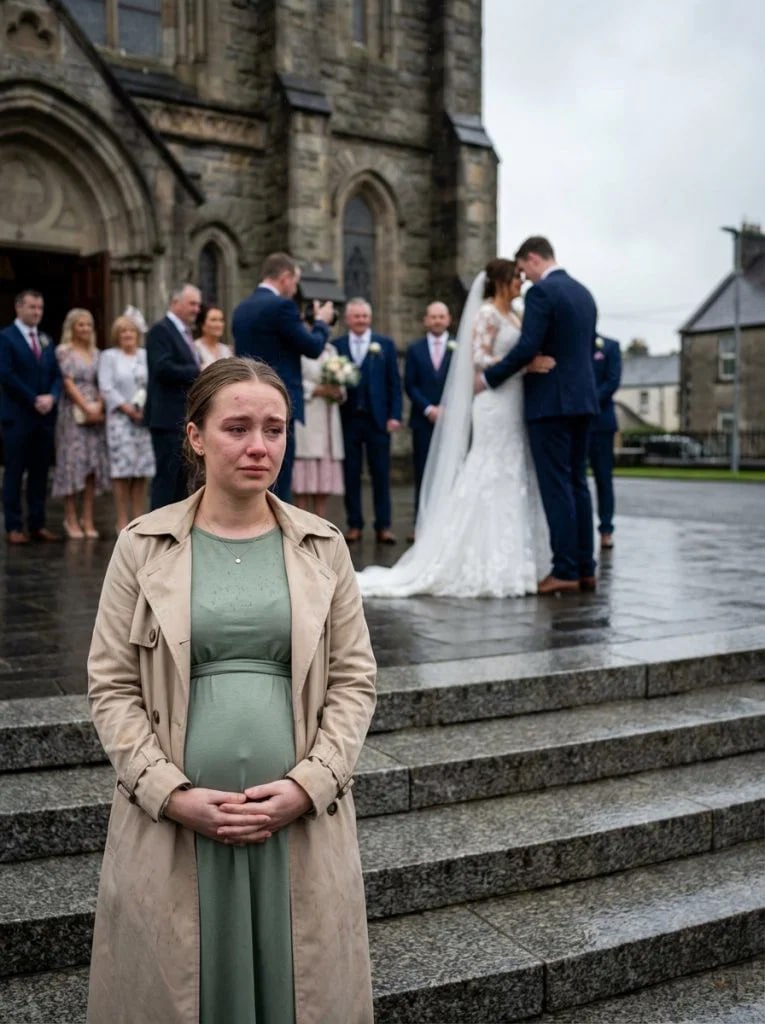
The first mistake Damián made that morning was bringing Ruth into the courtroom.
The second was believing I had nothing left to fight for.
And the third?
The third was sitting down across from me with a smile on his face while my lawyer placed a sealed financial file on the table.
Because by the time that envelope was opened, my husband would discover something far worse than losing his marriage.
He was about to lose the carefully constructed life he’d been hiding behind it.
And Ruth, the woman who had walked into court wearing an expensive burgundy dress and the confidence of someone who believed she’d already won, was about to learn exactly what kind of man she had chosen.
I remember the sound of her heels.
Sharp little clicks against the polished courthouse floor.
Every step seemed deliberately loud.
Ruth walked beside Damián with her hand resting lightly on his arm, as though they were arriving at a celebration instead of the legal end of a marriage.
I walked several steps behind them.
My mother had offered to accompany me inside, but I had asked her to wait downstairs.
Not because I didn’t need her.
Because I knew that if she saw Damián treating me this way, she might say something neither of us could take back.
I was eight months pregnant.
My feet were swollen.
My back hurt constantly.
And the baby had spent most of the night pressing against my ribs.
But I walked into that courtroom with my shoulders straight.
At the front, my attorney, Elena Salvat, stood beside a wooden table.
She wore a navy suit and carried a leather briefcase.
When she saw me, she gave the smallest nod.
Everything was ready.
Damián noticed the briefcase.
His eyes narrowed.
Then he leaned toward his attorney.
I watched him whisper something.
His lawyer glanced at Elena.
Neither man looked particularly concerned.
Not yet.
The judge entered shortly afterward.
Everyone stood.
I rested one hand beneath my stomach as I rose.
Across the aisle, Ruth watched me with an expression I had come to recognize.
Pity carefully arranged to look like kindness.
I almost smiled.
If only she knew.
The hearing began with the usual formalities.
Our names.
The marriage date.
The separation.
The pending divorce and financial matters.
Damián’s attorney spoke first.
He described our separation as unfortunate but straightforward.
He said both parties wanted to move forward.
He explained that his client had made what he called a generous proposal for my support.
I looked down at the papers in front of me.
Generous.
That was an interesting word.
Damián had offered me temporary use of a small apartment, a modest monthly allowance, and a limited contribution toward the baby’s expenses.
In exchange, he wanted me to waive further claims against several companies and properties he insisted had never belonged to our marital estate.
He wanted the house in Sarrià.
The investment accounts.
His ownership interests in the architecture firm.
And every financial advantage he’d spent years telling me was too complicated for me to understand.
His lawyer continued.
“Given Mrs. Montalvo’s current circumstances and her imminent delivery, my client believes a swift resolution would be in everyone’s best interest.”
I lifted my eyes.
My current circumstances.
As if pregnancy made me incapable of understanding money.
As if carrying our child meant I should be grateful for whatever he chose to leave me.
Damián looked toward me.
Then he smiled.
I didn’t respond.
Elena waited until his attorney finished.
Then she stood.
“Your Honor, before the court considers any financial agreement, we have an urgent issue concerning the accuracy of the disclosures submitted by Mr. Valdés.”
Damián’s smile faded.
His attorney looked up.
“What issue?”
Elena placed her hand on the sealed envelope.
“Previously undisclosed financial interests, material inconsistencies in corporate records, and transactions involving assets that may be relevant to these proceedings.”
Damián leaned forward.
“That’s ridiculous.”
The judge looked at him.
“Mr. Valdés, your attorney will have an opportunity to respond.”
Damián sat back.
But his face had changed.
For the first time that morning, he wasn’t looking at me.
He was looking at the envelope.
Elena opened the file.
Slowly.
Not for dramatic effect.
Because every page had been carefully indexed, dated, and verified.
She removed the first document.
A certified corporate record.
“Mr. Valdés has represented that his principal architectural practice is operating under substantial financial pressure,” Elena explained.
Damián’s attorney nodded.
“That is correct.”
Elena placed another document beside the first.
“However, the records we’ve obtained show that significant consulting income was directed through a separate company established eighteen months ago.”
The judge leaned forward.
“What company?”
Elena read the name.
“Diagonal Urban Development SL.”
Damián’s head snapped toward her.
I watched his expression.
And remembered the afternoon, months earlier, when I’d first seen that name.
It had appeared on an invoice tucked inside a folder Damián left in his car.
At the time, I thought it was an ordinary consulting client.
But later, when Elena began tracing his business interests, the name kept appearing.
On invoices.
On bank transfers.
On property documents.
On agreements Damián had never mentioned during our marriage.
Elena continued.
“Financial records indicate that this entity received substantial payments connected to projects undertaken by Mr. Valdés and associated businesses.”
His attorney rose.
“We dispute the characterization of those transactions.”
“Of course,” Elena replied.
She placed another document on the table.
“That is why we’ve provided the underlying records for examination.”
The judge began reading.
A minute passed.
Then another.
Damián shifted in his chair.
Ruth, seated behind him, leaned forward.
She whispered something.
He didn’t answer.
Elena turned to the next section.
“And Your Honor, there is a further issue regarding the ownership structure of this company.”
I rested my hand on my stomach.
The baby moved.
A slow, firm kick.
Almost as though my daughter knew something important was happening.
Elena looked toward the judge.
“The company was established using funds traceable to accounts held during the marriage, and records show a subsequent transfer of a significant ownership interest to a third party.”
The judge looked up.
“Which third party?”
Elena turned one page.
Then spoke clearly.
“Ruth Díaz.”
The silence was immediate.
Ruth stopped moving.
Damián looked as though someone had struck him.
His attorney turned sharply.
And the judge lowered the paper.
“Ms. Díaz is present in the courtroom?”
Ruth’s face drained.
For a moment, she didn’t respond.
Then she raised one trembling hand.
“Yes.”
I watched her.
The woman who had mocked my pregnancy outside the courthouse.
The woman who had told me my priorities were different.
The woman who believed she was stepping into a beautiful new life.
She was now staring at a company record bearing her name.
And she looked terrified.
Damián stood abruptly.
“This is a private business arrangement.”
The judge’s expression hardened.
“Sit down, Mr. Valdés.”
“But—”
“Now.”
He sat.
His attorney leaned close and whispered something urgently.
Elena remained standing.
“Your Honor, we are not suggesting that the court reach any final conclusions today. We are asking that the proposed financial settlement not be approved until these interests and transactions have been fully examined.”
The judge nodded.
“Continue.”
Elena opened the next section.
It contained bank transfers.
Large ones.
Amounts I had never seen in our household accounts.
€180,000.
€320,000.
€475,000.
Payments that appeared to move between businesses, consulting entities, and accounts tied to investment projects.
Damián had spent years telling me the architecture firm was struggling.
He’d complained about clients paying late.
About rising costs.
About how difficult it was to keep employees.
When I’d suggested replacing our aging car, he’d told me we needed to be careful.
When I wanted to renovate the small room that would become the nursery, he’d said we should wait.
When my mother offered to buy the crib, he hadn’t objected.
All while money flowed through companies I knew nothing about.
I looked toward him.
He wouldn’t meet my eyes.
Elena presented a financial summary.
“Based on the records currently available, the undisclosed transactions amount to several million euros. Their precise ownership, value, and legal treatment require further forensic review.”
The judge studied the figures.
Then looked at Damián’s attorney.
“Were these interests included in the financial disclosures?”
His attorney hesitated.
“Not in the form presented here, Your Honor.”
The judge’s voice sharpened.
“Were they disclosed at all?”
Another pause.
“We would need to review the complete documentation before answering.”
I heard Ruth shift behind us.
Her bracelet struck the wooden bench.
A tiny metallic sound.
I remembered the way she’d smiled at my stomach.
And I wondered whether she’d ever imagined that one day, her own name would appear in a courtroom for reasons she couldn’t explain away.
But the company wasn’t the biggest secret.
Not even close.
Elena removed a thin folder from the bottom of the envelope.
A folder marked with a property reference number.
She turned toward the judge.
“There’s also a residential property transaction relevant to the proposed settlement.”
Damián went completely still.
I saw it happen.
His shoulders tightened.
His face lost color.
For months, he had managed every confrontation with charm.
A calm voice.
A confident explanation.
A smile that made other people feel foolish for questioning him.
Now that smile was gone.
Elena continued.
“The marital residence was represented as heavily encumbered, with limited net equity.”
His attorney nodded.
“That was our understanding.”
Elena placed a certified document on the table.
“However, we obtained records indicating that a substantial liability listed against the property had been satisfied before the financial disclosures were prepared.”
The judge frowned.
“Then why does it remain listed as outstanding?”
Elena looked toward Damián.
“That is a question we would like answered.”
I watched him swallow.
Then Elena presented the next document.
A payment confirmation.
And another.
A release of security.
The papers showed that a major debt associated with the property had been paid off months earlier.
Yet the financial statement submitted during the divorce still treated that debt as though it existed.
The effect was simple.
It made the house appear worth far less than it actually was.
Far less than Damián knew it was worth.
I remembered sitting at our kitchen table while he explained why I couldn’t possibly keep the house.
“Cristina, there’s almost no equity,” he’d said.
“You’d only be taking on a burden.”
I’d believed him then.
Or perhaps I’d wanted to.
Now the judge was looking at those same figures.
And the room had gone quiet.
The judge stopped reviewing the next issue.
He held the financial statement beside the newly presented document.
Then he looked directly at Damián.
“Mr. Valdés, are you aware of this discrepancy?”
Damián opened his mouth.
No words came.
His attorney stood.
“Your Honor, my client should have the opportunity to review these materials with counsel before responding.”
The judge nodded.
“He will.”
Then the judge looked back at the file.
“But these discrepancies are serious.”
Ruth lowered her head.
Damián sat frozen.
And I realized something strange.
I wasn’t enjoying his humiliation.
I had imagined that I would.
During the lonely nights when I’d stared at the ceiling, feeling our baby move inside me, I’d pictured the moment when Damián finally understood what he’d done.
I’d imagined feeling triumphant.
Vindicated.
Powerful.
But sitting there, I felt something quieter.
Relief.
Because I wasn’t crazy.
I hadn’t imagined the contradictions.
I hadn’t misunderstood the missing money.
I hadn’t been foolish for asking questions.
The truth was finally visible.
And I no longer had to carry it alone.
The judge ordered that the financial issues remain unresolved pending further disclosure and examination.
The proposed agreement would not be approved in its existing form.
Additional records would be required.
The contested business and property interests would need proper valuation.
And the parties would have an opportunity to address the discrepancies through the appropriate proceedings.
Damián’s attorney requested time.
The judge granted it.
Then the hearing was adjourned.
I remained seated.
For several seconds, nobody moved.
Elena leaned toward me.
“You did very well.”
I looked at her.
“I didn’t do anything.”
She smiled gently.
“You trusted the evidence. Sometimes that’s the hardest part.”
I looked down at my hands.
They were shaking.
I hadn’t realized how tense I’d been.
Then I heard Ruth’s voice behind me.
“Damián, what is happening?”
He didn’t answer.
She stood.
“Why is my name on those documents?”
Damián turned toward her.
“Not here.”
She stared at him.
“You told me everything was legitimate.”
“Ruth.”
“You told me Cristina wouldn’t have any claim over those assets!”
My stomach tightened.
So she had known something.
Perhaps not everything.
But enough.
Damián glanced toward me.
Then toward Elena.
“Lower your voice.”
Ruth laughed bitterly.
“Don’t tell me to lower my voice!”
A court officer approached.
“Please keep the conversation outside.”
Ruth grabbed her handbag.
She looked at me.
For one moment, the arrogance vanished.
What remained was fear.
Then she hurried toward the door.
Damián followed her.
But before he reached the hallway, he stopped beside my table.
He looked down at me.
“You planned this.”
I met his eyes.
“No, Damián.”
His jaw tightened.
“You’ve been collecting things behind my back.”
I stood carefully.
My back ached.
My belly felt heavy.
But my voice was steady.
“I asked questions you wouldn’t answer.”
He stared at me.
“You’re trying to ruin me.”
I shook my head.
“I didn’t create those transactions.”
He said nothing.
“I didn’t hide those companies.”
His face hardened.
“And I didn’t submit those financial statements.”
For the first time in our marriage, he had no easy response.
I stepped around him.
And walked toward the door.
My mother was waiting in the corridor.
The moment she saw me, she stood.
“Cristina?”
I tried to smile.
But my face crumpled.
She rushed toward me.
“Sweetheart, what happened?”
I wrapped my arms around her.
And cried.
Not the quiet tears I’d shed into my pillow.
Not the frightened tears I’d hidden in the bathroom while Damián slept.
These were different.
They came from somewhere deep.
From six months of betrayal.
From the shame of discovering my husband had built another life while I was carrying his child.
From the terror of wondering whether I would be able to support my daughter.
From every morning I’d looked in the mirror and asked myself why I hadn’t been enough.
My mother held me.
She didn’t ask me to stop.
She didn’t tell me to be strong.
She simply held me until I could breathe again.
Finally, I whispered:
“He didn’t tell the truth.”
She pulled back.
“About what?”
“The money. The house. The companies.”
Her expression changed.
“Can they do something?”
I nodded.
“They’re going to investigate everything properly.”
My mother closed her eyes.
Then she kissed my forehead.
“Good.”
I looked at her.
She smiled through her own tears.
“Because you’ve spent enough time being afraid of him.”
Outside, the rain had stopped.
The streets of Barcelona glistened beneath a pale afternoon sky.
My mother helped me into the car.
Before she started the engine, my phone rang.
Damián.
I stared at his name.
Then let it ring.
A message arrived.
We need to talk.
Another.
You don’t understand what you’ve started.
Then a third.
Cristina, answer me. This affects our child.
I looked at the messages.
For months, he’d barely asked about the pregnancy.
He hadn’t attended the last three medical appointments.
He hadn’t helped choose the baby’s crib.
He hadn’t even asked whether I was sleeping properly.
Now, suddenly, he wanted to talk about our child.
I showed Elena the messages later that afternoon.
She advised me to preserve them and keep communication focused on necessary matters.
So I did.
I didn’t argue.
I didn’t threaten.
I didn’t send long explanations.
I simply stopped letting Damián decide when I had to respond.
The following weeks were exhausting.
There were requests for financial records.
Meetings with accountants.
Additional legal submissions.
Valuations.
Explanations that raised more questions.
And more waiting than I thought I could tolerate.
I was heavily pregnant.
Some mornings, I could barely bend to put on my shoes.
My mother came with me to medical appointments.
She helped assemble the crib.
She cooked meals when I was too tired.
And whenever I started apologizing for needing help, she gave me the same look.
“Cristina, you’re having a baby. You’re not committing a crime.”
I would laugh.
Then cry.
Sometimes both.
The legal case moved slowly.
But the truth was becoming clearer.
The financial records showed that Damián’s interests were more extensive than he’d represented.
The disputed property valuation required correction.
And the ownership of certain business assets could not be resolved simply by calling them separate property.
None of that automatically meant I would receive everything.
Elena reminded me of that often.
But it meant the proposed settlement was no longer being treated as the final word.
I finally had a fair opportunity to examine what had been hidden.
And that mattered.
Ruth contacted me three weeks after the hearing.
Her message arrived just after seven in the evening.
Cristina, I know I’m the last person you want to hear from. But I need to tell you something.
I stared at the screen.
Then put the phone down.
Ten minutes later, another message arrived.
Damián lied to me too.
I almost laughed.
Not because it was funny.
Because I had spent months listening to Ruth explain how well she understood Damián.
How perfectly matched they were.
How their professional ambitions made them different from us.
Now she was telling me the man who had deceived his pregnant wife had somehow deceived her.
I didn’t respond that night.
The next morning, I forwarded the messages to Elena.
She contacted Ruth’s attorney.
Several days later, Ruth provided additional documents through the legal process.
Emails.
Draft agreements.
Messages about properties and investments.
Some supported what we already knew.
Others raised new questions.
One email was particularly revealing.
Damián had written to Ruth months before he told me he wanted a divorce.
Once the separation is complete, we’ll have everything arranged. Cristina won’t be able to interfere.
I read it slowly.
Then I closed my eyes.
I had still been attending prenatal appointments.
Still buying tiny baby clothes.
Still making plans for a nursery.
And he had already been discussing how to keep me out of his future.
I didn’t cry.
Not this time.
Instead, I looked at Elena.
“Will this help?”
She nodded.
“It may help establish the timeline and the intent behind certain decisions.”
I pushed the paper back toward her.
“Then use it.”
My daughter was born on a rainy morning in November.
I named her Lucía.
She weighed just over three kilograms.
She had dark hair.
Tiny fingers.
And the most serious expression I’d ever seen on a newborn.
When the nurse placed her against my chest, the world seemed to stop.
Everything else disappeared.
The courthouse.
The financial documents.
Damián.
Ruth.
The arguments.
The betrayal.
All of it.
For one perfect moment, there was only my daughter.
Warm against my skin.
Breathing softly.
Alive.
I kissed her forehead.
“Hello, Lucía.”
Her tiny hand opened against my chest.
And I started crying.
My mother stood beside the bed.
She was crying too.
“She looks like you,” Sonia whispered.
I laughed through my tears.
“She looks angry.”
My mother smiled.
“Then she definitely looks like you.”
I held my daughter closer.
For months, I’d been terrified of the future.
But looking down at Lucía, I understood something.
I didn’t need to know every answer.
I didn’t need every financial issue resolved before I could love her.
I didn’t need Damián to become the man I’d once believed he was.
I needed to protect this little girl.
And I needed to build a life where she would never mistake cruelty for love.
Damián learned about Lucía’s birth through the agreed communication arrangements.
He asked to see her.
That was complicated.
I was still angry.
Still hurt.
Still struggling to understand how a man could treat the mother of his child with so little care.
But Elena reminded me that the financial dispute and the child’s relationship with her father were separate matters.
I listened.
Because I didn’t want my anger to become another kind of injustice.
Appropriate arrangements were made.
Damián met Lucía under circumstances that respected her needs and my recovery.
The first time he saw her, he cried.
I watched from a chair beside the hospital window.
He held her carefully.
His hands trembled.
For a moment, I saw the man I’d married.
The man who once brought me breakfast after long shifts.
The man who painted our first apartment himself because we couldn’t afford to hire anyone.
The man who used to tell me we would grow old together.
Then he looked at me.
“She’s beautiful.”
I nodded.
“Yes.”
His eyes filled.
“Cristina, I made mistakes.”
I looked at him.
“You made decisions.”
He lowered his head.
I continued.
“Many decisions. Over a long time.”
He didn’t argue.
For once.
Then he whispered:
“I know.”
I looked at Lucía.
I wanted to believe his tears meant something.
Perhaps they did.
But I’d learned that emotion and accountability weren’t the same thing.
So I said:
“If you want to be a good father, start by being honest.”
He looked at me.
“And keep showing up.”
By the following spring, the financial proceedings had reached a turning point.
After months of document review, valuation work, and negotiation, Damián’s attorneys proposed a revised settlement.
This time, the disclosures were far more extensive.
The business interests were evaluated.
The property figures were corrected.
And the arrangements included financial provisions for me and separate support obligations concerning Lucía, subject to the applicable legal requirements and approval.
Elena spent days reviewing every section.
We discussed the risks.
The uncertainties.
The cost of continuing litigation.
And the difference between a settlement that felt emotionally satisfying and one that would provide real long-term security.
In the end, we reached an agreement I could live with.
I received a substantial financial settlement reflecting the assets at issue.
The family residence was dealt with under a negotiated property arrangement.
And I obtained the resources I needed to establish a stable home for Lucía and myself.
Damián did not lose everything.
That wasn’t the outcome.
But he did lose the ability to dictate the terms while hiding information.
And for me, that was the difference between surrender and justice.
The day the settlement was finalized, I didn’t celebrate with champagne.
I went home.
My mother was sitting on the living-room floor playing with Lucía.
The baby was laughing at a soft yellow toy.
I stood in the doorway for a moment.
Sonia looked up.
“Well?”
I smiled.
“It’s finished.”
Her eyes filled.
“Really?”
I nodded.
She rose carefully, still holding Lucía.
Then she hugged me.
For a long time, neither of us spoke.
Finally, she whispered:
“I’m proud of you.”
I looked at her.
“For what?”
She pulled back.
“For refusing to disappear.”
I started crying.
Again.
I seemed to do that a lot after becoming a mother.
But these tears were different.
They didn’t come from fear.
They came from relief.
I looked at Lucía.
She stared back at me with enormous dark eyes.
I touched her cheek.
“We’re going to be okay, sweetheart.”
And for the first time, I believed it without having to convince myself.
Six months later, I returned to work part-time.
I had loved being a physical therapist long before I met Damián.
I loved helping people regain movement after injuries.
I loved watching someone take steps they believed they’d never take again.
But during my marriage, I’d slowly allowed my career to become something secondary.
Damián’s projects always came first.
His meetings.
His deadlines.
His clients.
His travel.
I adjusted my schedule around his life until my own ambitions became little things I mentioned in passing.
Now I was building something different.
I arranged childcare with help from my mother.
I returned to a clinic where I’d worked before my maternity leave.
And eventually, I began planning a small rehabilitation practice of my own.
Nothing extravagant.
Nothing designed to impress people.
Just a place where I could do work that mattered to me.
My mother asked whether I was frightened.
I laughed.
“Terrified.”
She smiled.
“Good.”
I frowned.
“Good?”
She nodded.
“Then you’re doing something that matters.”
I thought about that.
And smiled.
Ruth and Damián’s relationship did not survive the financial proceedings.
I learned that through mutual acquaintances.
I didn’t ask for details.
I didn’t need them.
Once, months later, I saw Ruth outside a café near Passeig de Gràcia.
She was wearing a cream coat.
Her hair was pulled back.
She looked tired.
When she saw me, she stopped.
“Cristina.”
I nodded politely.
“Ruth.”
Her eyes moved toward Lucía’s stroller.
“Is that your daughter?”
“Yes.”
She smiled faintly.
“She’s beautiful.”
“Thank you.”
For a moment, neither of us spoke.
Then Ruth said:
“I owe you an apology.”
I looked at her.
She swallowed.
“I was cruel to you.”
I waited.
“I thought I understood what was happening. I believed everything Damián told me.”
I looked down at Lucía.
Then back at Ruth.
“You knew he was married.”
She nodded.
“Yes.”
“You knew I was pregnant.”
Her eyes filled.
“Yes.”
“And you still stood outside the courthouse and humiliated me.”
She lowered her head.
“I know.”
I took a breath.
“I don’t need you to explain why.”
She looked up.
I continued.
“I needed you to stop pretending you were innocent.”
A tear slid down her cheek.
“I’m sorry.”
I nodded.
“Thank you.”
Then I adjusted the blanket over Lucía’s legs.
And walked away.
I didn’t insult Ruth.
I didn’t tell her what she’d lost.
I didn’t remind her of the burgundy dress or the expensive heels.
I simply left.
Because her regret was no longer something I needed to carry.
On Lucía’s first birthday, we held a small party at my mother’s house.
There were pink balloons.
A cake shaped like a little moon.
And far too many stuffed animals.
Lucía spent most of the afternoon trying to remove the ribbon from one of her presents.
My mother laughed so hard she nearly spilled her coffee.
Friends came.
Coworkers.
A few relatives.
People who had stood beside me when the future looked uncertain.
Damián celebrated separately with Lucía under our parenting arrangements.
I wanted her birthday to be about her.
Not about the failures of our marriage.
That evening, after everyone left, I sat beside Lucía’s crib.
She was asleep.
One tiny hand rested against her cheek.
I watched her breathe.
And remembered the morning I’d walked into court eight months pregnant.
The rain.
My mother’s pale knuckles on the steering wheel.
Damián’s charcoal suit.
Ruth’s burgundy dress.
Their confident smiles.
The way they looked at my stomach as though motherhood had made me weak.
I thought about the sealed envelope.
The financial documents.
The judge’s expression.
And the silence that followed.
At the time, I’d believed that day would define my victory.
But sitting beside my daughter’s crib, I understood how wrong I’d been.
The real victory wasn’t watching Damián’s face lose color.
It wasn’t seeing Ruth realize she had been deceived.
It wasn’t hearing my attorney expose financial inconsistencies in a courtroom.
Those moments mattered.
They gave me the opportunity to fight fairly.
But they weren’t the most important part of my story.
The most important part happened afterward.
When I held my daughter for the first time.
When I learned to make decisions without asking Damián’s permission.
When I returned to work.
When I began building a future that belonged to me.
When I stopped measuring my worth by whether someone chose to stay.
People sometimes ask whether I regret marrying Damián.
It’s a difficult question.
There were good years.
Real ones.
Years when I believed we were happy.
Memories that don’t become imaginary simply because the marriage ended badly.
But I also know that love cannot survive indefinitely without honesty.
And loyalty cannot be demanded from one person while the other lives by different rules.
For a long time, I thought being a good wife meant understanding.
Being patient.
Forgiving.
Making room for someone’s mistakes.
And perhaps those things do matter.
But I had forgotten something equally important.
A good marriage requires two people willing to protect it.
Not one person sacrificing herself while the other looks for a better offer.
I was eight months pregnant when Damián brought his mistress to our divorce hearing.
They walked into that courthouse believing the outcome had already been decided.
They saw a tired woman.
A woman with swollen feet.
A woman whose marriage was ending.
A woman carrying a child while the father of that child stood beside someone else.
They mistook my silence for defeat.
They assumed that because I wasn’t shouting, I wasn’t fighting.
They believed that because I wasn’t threatening them, I had no power.
But I had learned something during those lonely months.
You don’t have to raise your voice to defend your life. Sometimes the strongest thing you can do is gather the truth, ask for help, and refuse to sign away your future.
The sealed financial file didn’t magically solve every problem.
It didn’t erase the affair.
It didn’t make Damián a better husband.
It didn’t give me back the months I’d spent frightened and alone.
But it changed the direction of my future.
It forced hidden questions into the open.
And it gave me the chance to make informed decisions instead of accepting the story Damián wanted everyone to believe.
Today, my daughter is growing up in a home where love is not measured by fear.
She will know that her father and I could not remain married.
She will know that families sometimes change.
And when she’s old enough, I hope I can explain those things without filling her heart with bitterness.
But there is one lesson I want her to learn long before she understands divorce, financial settlements, or betrayal.
I want her to know that being kind does not mean allowing someone to mistreat you.
That loving someone does not require surrendering your dignity.
And that becoming a mother does not make a woman smaller.
It gives her another reason to protect the person she already is.
Last October, on the anniversary of that courthouse morning, I walked through Barcelona with Lucía beside me in her stroller.
The air was cool.
The streets were bright after a night of rain.
We stopped near a little bakery.
I bought a coffee.
Then I sat on a bench and watched my daughter point excitedly at pigeons.
My phone buzzed.
A message from my mother.
How are my two favorite girls?
I smiled and sent her a photograph.
Very happy.
Then I looked across the street.
In the distance, I could see the building where my marriage had formally begun to end.
For a moment, I remembered everything.
Damián’s smile.
Ruth’s perfume.
The cold courtroom.
The envelope.
The fear.
And the strange, steady feeling that I couldn’t explain at the time.
I had walked into that building thinking I was fighting for the life I’d lost.
But I had walked out with the beginning of something else.
A life I would choose for myself.
Lucía reached toward me.
“Mamá.”
I froze.
Then laughed.
It wasn’t the first time she’d made the sound, but that morning she said it so clearly that I felt my whole heart lift.
I leaned forward.
“Yes, sweetheart?”
She smiled.
“Mamá.”
I took her little hand.
And suddenly, none of the buildings around us mattered.
Not the courthouse.
Not the expensive apartments.
Not the offices where Damián used to work.
Not the restaurants where he’d once taken Ruth while telling me he had meetings.
None of it.
Because I had spent so long looking backward, trying to understand why my marriage had ended, that I’d almost forgotten how beautiful the future could be.
I kissed Lucía’s forehead.
Then I stood and began pushing her stroller toward the park.
The morning sunlight broke through the clouds.
And for the first time, the anniversary of my divorce didn’t feel like a wound.
It felt like a beginning.
Damián once believed he could walk into court with another woman on his arm and leave with everything he wanted.
He thought he had already won.
He had planned the finances.
Prepared the explanations.
Constructed the story.
And assumed that his pregnant wife would be too exhausted, too frightened, and too heartbroken to challenge him.
But there was one thing he hadn’t planned for.
I had stopped believing him.
And once I did, I started asking questions.
Questions that led to records.
Records that led to hidden interests.
And evidence that made it impossible to approve the financial agreement as he had presented it.
He thought the sealed envelope would be the end of my story.
Instead, it became the moment I stopped letting him write it.
I didn’t walk into that courtroom to destroy my husband. I walked in to protect the woman and the child he had decided were no longer important.
And I walked out knowing that neither of us would ever have to beg for a place in someone else’s life.
My daughter will grow up hearing many stories.
Stories about love.
About disappointment.
About courage.
About starting over when the future looks nothing like the one you imagined.
But when she’s old enough to ask me about that rainy October morning, I won’t tell her that I defeated her father.
I’ll tell her something more important.
I’ll tell her that I was frightened.
That I was exhausted.
That my heart was broken.
And that I walked into court anyway.
Because sometimes, sweetheart, the bravest thing a woman can do is refuse to disappear.
And sometimes, the ending you fear most becomes the beginning of the life you were meant to reclaim.
THE END