The house was quiet when I opened the door.
I stepped into the foyer and stopped.
For several seconds, I simply looked around.
The room appeared almost normal.
The painting was still on the wall.
The oak flooring caught the afternoon light.
The furniture stood where I had left it.
But the quiet felt different from the quiet I remembered.
The house had been occupied by people who believed they were entitled to it.
Their presence remained in the little things.
A damp footprint near the entry.
A folded beach towel left over the arm of a chair.
A plastic cup sitting on the windowsill.
I closed the door behind me.
Then I checked the lock.
It engaged with a soft mechanical click.
I had always liked that sound.
It reminded me that I could leave the house and return without wondering who might be inside.
That afternoon, it sounded like a boundary being restored.
I walked through the living room slowly.
There was no obvious damage to the painting or the furniture.
The curtains were still hanging straight.
The sofa cushions had been moved, but nothing appeared broken.
I picked up the plastic cup and carried it into the kitchen.
The marble island was crowded with glasses, bottles, and a few napkins.
Someone had left a wet ring on the surface.
I stared at it longer than I should have.
I had spent hours choosing that marble.
I remembered standing in the tile yard, holding samples under different lights because I wanted to be certain the stone would look right in the morning and at sunset.
The ring itself was harmless.
It would wipe away.
What bothered me was how casually someone had used the surface without asking whether they could enter the room.
I took a cloth from the drawer and cleaned it.
Then I washed the glasses.
I didn't have to.
I could have left everything until the next day.
But I wanted to move through the house and see what had changed.
I checked the refrigerator.
Several drinks had been moved to the front.
A container I had placed on the middle shelf was now sitting near the door.
There was an open bottle of wine beside a tray of food.
I examined the contents and made a mental note of what I would need to replace.
Then I closed the refrigerator.
I wasn't going to turn the afternoon into an inventory of every inconvenience.
I wanted to know whether anything important had been damaged or taken.
The kitchen was the easiest place to begin.
I opened the cupboards one by one.
The plates were stacked properly.
The glasses were mostly where they belonged.
A serving bowl had been moved to the counter.
I returned it to the shelf.
Then I walked toward the stairs.
My family had carried bags through the foyer and left them near the steps.
The floor there showed a few faint marks, but I couldn't tell whether they were scratches or dirt.
I knelt to look more closely.
The marks wiped away with a damp cloth.
I sat back on my heels.
I felt ridiculous for being relieved.
Then I remembered the way my mother had directed everyone through the room.
She had pointed at the floor and instructed people to be careful.
She had acted as if protecting the house were her responsibility.
Yet she had never considered whether she had the right to enter it.
I stood and continued upstairs.
The bedrooms were mostly untouched.
A pillow had been moved.
One closet door stood slightly open.
The bathroom counter had a few water spots.
I checked the taps and the windows.
Everything appeared to be working.
In the guest room at the back of the house, I found a small plastic hair clip on the dresser.
I didn't know which relative had left it.
I picked it up and placed it in a drawer near the entrance, where I could return it if someone asked.
Then I went to the balcony.
The ocean was bright beneath the late afternoon sun.
The breeze moved the linen curtains behind me.
I rested my hands on the railing and looked toward the road.
The driveway was empty.
A little dust remained on the shells where the vehicles had turned.
I thought about Bridget standing there with her phone, filming the house as though she had arranged the entire weekend.
She had wanted the view.
The light.
The appearance of a beautiful family gathered in a beautiful place.
She had wanted the image without considering the person who had made it possible.
I had been guilty of something similar in a different way.
For years, I had wanted the image of a family that accepted me.
I had wanted photographs where everyone looked happy.
I had wanted dinners where my mother spoke to me with the same warmth she showed other people.
I had wanted Bridget to treat my achievements as something to celebrate rather than something to compete with.
I had wanted my father to speak when he knew I was being treated unfairly.
I had wanted Kyle to care enough to disagree.
Those weren't extravagant wishes.
But I had spent years trying to obtain them from people who were comfortable with the way things were.
The thought made me tired.
I went back inside and closed the balcony doors.
Then I checked the security system.
The front entry showed the time of the original access.
The cameras had recorded the arrival of the vehicles and the movement around the property.
I reviewed the footage long enough to confirm what I already knew.
My mother had entered the code.
The lock had opened.
The family had walked inside.
I saved the relevant records.
Then I stopped watching.
I didn't need to replay the scene until I felt angry all over again.
The facts were clear.
I had received the message.
I had seen the address.
I had changed the code.
They had arrived and entered.
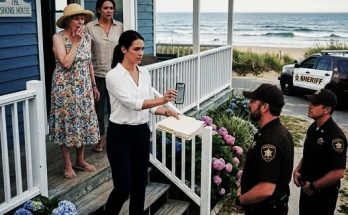
I had called for assistance.
The deputy had asked them to explain their permission.
They hadn't been able to provide any.
That was enough for the moment.
I sat at the kitchen island and opened my laptop.
I wanted to make sure the ownership documents were easy to access.
The property was held through my LLC, just as it had been since the purchase.
I had kept the closing documents, renovation invoices, insurance records, and property information organized.
The file was in the folder where I expected to find it.
I opened it and checked the address.
Then I saved a copy to a separate location.
It wasn't dramatic.
It was the sort of practical step I had taken many times while managing the house.
Still, I felt better knowing the information was ready if I needed it.
I closed the laptop.
The sunlight had begun moving away from the kitchen island.
A strip of gold remained along the edge of the marble.
I went to the pantry and took out a fresh bottle of water.
Then I sat down again.
My phone lay beside me.
The family group chat was quiet.
Nobody had sent an apology.
Nobody had asked whether I was all right.
Nobody had acknowledged that the reunion had taken place in a house I owned.
I wasn't surprised.
I was disappointed, which was different.
For years, I had confused the absence of an apology with the absence of understanding.
I thought that if I explained myself clearly enough, people would eventually see what they had done.
Sometimes they did understand.
They simply didn't want to accept the consequences of that understanding.
My mother knew I had been excluded.
Bridget knew she had organized the reunion.
Kyle knew they had entered without speaking to me.
My father knew there had been no permission.
The deputy had asked the same questions I would have asked.
The problem hadn't been a lack of information.
It had been the assumption that my wishes didn't matter until someone else made them inconvenient to ignore.
I took another drink of water.
Then I opened the family chat.
The original message was still there.
I read it again, including the line about keeping things peaceful for my mother.
The words looked different now.
Before the reunion, I had read them as an insult.
After the afternoon in the driveway, I read them as evidence of how easily my family had made a decision about me without asking what I wanted.
I took a screenshot of the message and saved it.
Then I put the phone down.
I wasn't preparing to start an argument.
I wanted a record of what had been said before anyone had a reason to rewrite it.
I walked through the house once more.
The rooms were clean enough.
The doors were secure.
The curtains moved gently in the evening breeze.
I turned off a light in the upstairs hall and checked the lock on the rear entrance.
Everything was where it should be.
At the front door, I paused and looked at the keypad.
The six digits remained in place.
My birthday.
For years, that date had been a reminder of my mother's complaints.
She had used it to explain what my birth had cost her.
I had spent too long believing that I owed her something because of it.
Now the same date stood beside the door of a house I had bought and rebuilt myself.
She had remembered the numbers.
She had entered them.
But remembering my birthday had never meant she understood me.
I turned away from the keypad.
Then I went into the kitchen, washed the last glass, and set it on the drying rack.
The ordinary sound of water running through the sink filled the room.
I listened until the faucet stopped.
For the first time since I had seen Bridget's message, I felt the day settling into something I could live with.
I was still hurt.
I was still angry.
But I wasn't confused.
I no longer needed to wonder whether I had misunderstood the way they treated me.
They had shown me what they believed they could do.
And I had finally stopped making excuses for them.
Source: radadrama.com
Click here to continue reading: PART 8: By Evening, My Family Had Gone Silent, but the Message That Excluded Me Was Still There, Waiting for Someone to Explain It
My Family Decided I Was the Problem Again, Until I Recognized the Address They Thought I Was Never Supposed to See
Part 7 of 12