Grandma's health began changing slowly.
There was no single day when she became old.
It happened in small increments.
She walked more carefully.
She took longer to stand.
She started using the railing.
She rested after gardening.
Then one winter, she stopped driving.
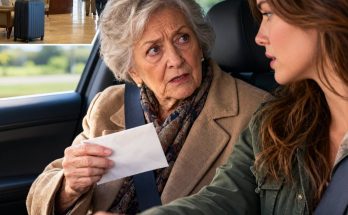
She handed me her keys.
“Take these.”
I looked at them.
“Are you sure?”
“Yes.”
“You don't have to.”
“I know.”
She smiled.
“That is why I'm doing it.”
Giving up the car was difficult.
Not because she drove often.
Because it represented independence.
She knew that.
So did I.
We made arrangements.
I drove her to appointments.
Her neighbor took her to the market.
A local service brought groceries twice a month.
Brenda visited.
Dad visited too.
The difference was that none of those arrangements happened without Grandma choosing them.
One morning, she called me.
“I need you to come over.”
I arrived quickly.
She was sitting at the dining table with several folders.
“What happened?”
“Nothing.”
“You said it like something happened.”
She smiled.
“I want to talk about my will.”
I sat down.
She slid a folder toward me.
“I've already spoken to the attorney.”
I opened it.
Everything was organized.
Her house.
Her accounts.
The charitable gift to Oak Creek.
Grandpa's tools.
The photographs.
Her jewelry.
And a section marked Personal Letters.
“What are these?”
“Letters.”
“To whom?”
“You.”
I looked at her.
“You've written me letters?”
“Several.”
“When?”
“Over the years.”
I didn't know what to say.
She tapped the folder.
“They're not instructions.”
“What are they?”
“Things I want you to remember.”
I opened one.
The first line read:
Don't confuse being needed with being loved.
I looked up.
She smiled.
“Keep reading later.”
I closed it.
“Why now?”
“Because I want you to have them while I'm here.”
That sentence frightened me.
“Grandma.”
“I know.”
She reached across the table.
“I'm not saying goodbye.”
I nodded.
“I just don't want to leave things unsaid.”
We spent the afternoon reviewing everything.
She had chosen a professional fiduciary.
She had named beneficiaries.
She had made the charitable gift.
She had left Grandpa's tools partly to Dad, partly to me.
She had given Brenda one of her garden benches.
She had left her recipe books to a neighbor.
Her red raincoat was going to me.
I laughed.
“You're giving me the red coat?”
“Yes.”
“I don't wear red.”
“You will.”
She was right.
I took it.
The navy suitcase remained mine.
She insisted.
“That one stays with you.”
“Why?”
“Because you've carried it long enough in your memory.”
She smiled.
“Now you can carry it physically.”
I promised.
A few weeks later, Dad came to visit.
Grandma told him about the estate plan.
He nodded.
“I understand.”
She looked at him.
“You're not angry?”
“No.”
He paused.
“You owe me nothing.”
Grandma's expression softened.
“You're my son.”
“I know.”
“That doesn't give you ownership of me.”
“I know.”
They sat quietly.
Then Dad asked, “Do you ever wish you had never trusted me?”
Grandma thought.
“No.”
He looked surprised.
“I wish you had never betrayed me.”
She held his gaze.
“But I don't regret loving you.”
Dad looked down.
That was the closest they ever came to repairing the old relationship.
Not because everything was restored.
Because they finally stopped pretending the past could be rewritten.
Later that year, Grandma's health worsened.
She moved more slowly.
She slept more.
She stopped gardening except for the roses.
She still wore Grandpa's watch.
One evening, she called me into her room.
“I want you to promise me something.”
“What?”
“Don't turn what happened to me into a warning story about getting old.”
I sat beside her.
“What do you mean?”
“I don't want you thinking old people are helpless.”
She looked toward the window.
“I wasn't helpless.”
“No.”
“I needed help.”
She smiled.
“But everyone needs help sometimes.”
I understood.
“Then what should I remember?”
She took my hand.
“Remember that needing help and losing your voice are different things.”
I nodded.
“That is what matters.”
She closed her eyes.
After a moment, she said, “And remember to ask.”
“Ask what?”
“What someone wants.”
She opened her eyes.
“Don't assume.”
That became the final lesson.
Not trust everyone.
Not distrust everyone.
Ask.
Ask what they want.
Ask what they need.
Ask whether they agree.
Ask before deciding.
Ask before helping.
Ask before taking over.
The question itself could protect a person's dignity.
Grandma spent the next year teaching me that without ever calling it teaching.
She asked me what restaurant I wanted.
What route I preferred.
Whether I wanted to stay for dinner.
Whether I wanted to take the old photographs.
Whether I wanted the red coat.
She made sure I chose.
It was her way of correcting something.
Not the past.
The habit of deciding for other people.
Then came the day she asked me to bring the navy suitcase.
I placed it beside her chair.
She touched the handle.
“Open it.”
Inside were the things she had given me over the years.
The old photographs.
The courthouse receipt.
The note from Oak Creek.
The postcard from her first train trip.
A copy of Grandpa's photograph.
The little wooden box that had held his watch.
I looked at her.
“You kept all this?”
“Yes.”
“Why?”
“Because you needed to see that the story kept going.”
She closed the suitcase.
“Now you have it.”
I swallowed.
“What do you want me to do with it?”
“Nothing.”
She smiled.
“Keep it until you don't need it.”
I didn't understand.
Not then.
Months later, I did.
Grandma died peacefully in her sleep.
There was no hospital drama.
No emergency.
No panic.
She had been home.
Her bedroom window was slightly open.
The garden outside was beginning to bloom.
Grandpa's watch was on her wrist.
She had chosen that.
The funeral was small.
Friends.
Neighbors.
Family.
Dad stood beside me.
He cried.
Mom came quietly.
Brenda brought flowers.
The flowers from the garden were placed near the photograph.
Grandma had chosen that photograph herself.
She was wearing the red raincoat.
She was smiling.
Not the smile from the old family photographs.
A newer one.
The smile of a woman who had learned what belonged to her and what didn't.
After the service, Dad came to me.
“She loved you.”
“I know.”
He nodded.
“She was proud of you.”
I looked at him.
“I hope she was.”
“She was.”
Then he handed me a small envelope.
“She left this for you.”
I recognized her handwriting.
My hands shook.
I opened it later.
Not at the funeral.
Inside was one page.
Marcus,
If you are reading this, then I am no longer there to argue with you.
You will probably think you should have done more.
Don't.
You came.
You listened.
You learned.
That was enough.
Remember the day you drove 190 miles.
Not because you rescued me.
Because you came when I called.
There is a difference.
Don't spend your life trying to protect everyone you love from every possible hurt.
You cannot.
Instead, be the person who listens when they tell you they are hurting.
Ask what they need.
Believe them when they tell you who they are.
And if they want help, help them.
If they want space, give it.
Love is not a key.
It is not permission to enter every room.
It is knowing when the door is yours to open.
I read the letter three times.
Then I folded it.
I put it inside the navy suitcase.
For the first time, I understood why she had given me that suitcase.
It wasn't a reminder of what had happened.
It was a container for what survived.
Click here to continue reading: PART 12: The Suitcase Stayed With Me, and Years Later I Finally Understood Why Grandma Never Wanted Her Story to End With What They Did
The Phone Call That Turned a Harmless Family Lunch Into a 190-Mile Drive I Could Not Afford to Delay
Part 11 of 12