I began forgetting things.
At first, it was harmless.
I misplaced my keys.
I forgot why I had walked into a room.
I bought milk twice in the same week.
Harper noticed before I did.
“You've been tired.”
“I've been busy.”
“You're eighty.”
“I am not.”
She stared at me.
I stared back.
Then we both laughed.
But she didn't let it go.
She scheduled an appointment.
I complained.
She ignored me.
The tests showed nothing alarming.
The doctor recommended rest.
Harper treated that recommendation as law.
“You're taking a break.”
“I don't need one.”
“You do.”
“I have laundry.”
“I'll do it.”
“You'll fold everything incorrectly.”
“I've been waiting my whole life to hear you say that.”
She smiled.
For a while, things were fine.
Then one afternoon I fainted.
I woke in the hospital.
Harper was sitting beside me.
David stood near the window.
Sarah was there too.
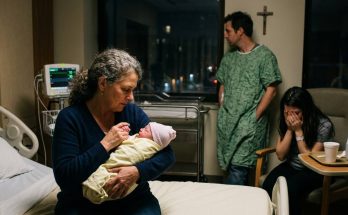
The arrangement was almost identical to the room where everything had begun.
I looked around.
“This feels familiar.”
Harper's eyes filled.
“Don't joke.”
“I wasn't joking.”
She took my hand.
The doctor explained that I had become dehydrated and exhausted.
Nothing catastrophic.
But the episode frightened everyone.
Especially Harper.
That night, she stayed beside me.
“You scared me.”
“I know.”
“I thought—”
She stopped.
“I know.”
She leaned forward.
“I don't know what I'm supposed to do without you.”
I squeezed her hand.
“You've been doing things without me for years.”
“Not this.”
I understood.
She wasn't talking about cooking.
She wasn't talking about business.
She was talking about the person she had always assumed would remain available whenever the world became too large.
I touched her cheek.
“You don't need me to keep living.”
“I know.”
“But you want me.”
“Yes.”
“So I'll stay as long as I can.”
She cried.
I hated seeing it.
Not because tears were weakness.
Because I knew exactly what she was afraid of.
Abandonment.
She had built her life around surviving it.
Now she was facing another kind.
Not someone choosing to leave.
Time choosing for her.
David sat beside us.
“I should have been here more,” he said.
Harper looked at him.
“You're here now.”
He nodded.
“I am.”
Sarah came closer.
“I can stay tonight.”
Harper looked at her.
“Okay.”
It was a small word.
But it meant something.
For the first time, Harper allowed someone else to carry part of her fear.
I recovered.
Not completely.
Age is not a negotiation.
Some things became harder.
I stopped driving at night.
I moved more slowly.
Harper began grocery shopping for me.
David repaired things around the house.
Sarah cooked.
Elise visited every weekend.
She would sit beside me and tell me stories about school.
One afternoon, she brought a drawing.
It showed four people standing beneath a huge yellow sun.
“Who are these?”
“Mom.”
“And Dad?”
“Yes.”
“That's Grandma.”
“And?”
“Grandpa David.”
I pointed to the last figure.
“Where's Sarah?”
Elise frowned.
“She wasn't there that day.”
I smiled.
“Okay.”
She looked at me.
“Do you think Grandma is going to die?”
The question was so direct that I almost laughed.
“Everyone dies eventually.”
She frowned.
“That wasn't the answer.”
“No.”
I took her hand.
“I'm old.”
“I know.”
“And I won't be here forever.”
“I don't like that.”
“Neither do I.”
She looked down.
“But you taught Mom how to stay.”
I smiled.
“I tried.”
“She says you did.”
“Then perhaps I did something right.”
Elise hugged me.
I held her as tightly as I could.
As the years passed, Harper's company became successful enough to operate internationally.
She refused to let the business lose its original purpose.
Every year, they donated devices to families who could not afford them.
Every year, Harper visited schools.
Every year, she spoke to children.
She never told them they were brave.
She asked what they wanted to do.
A little boy once told her he wanted to become a pilot.
“Then learn about airplanes,” she said.
“My hand—”
“Is that stopping you?”
He looked down.
“I don't know.”
“Then don't decide yet.”
That became one of her favorite answers.
Don't decide yet.
Because too many adults had decided things for her before she could decide for herself.
Years later, the company opened a research center.
Harper named it after no one.
When asked why, she said, “People shouldn't need my name to know the building belongs to them.”
I was proud.
David was too.
Sarah cried.
Elise rolled her eyes.
“You all cry too much.”
Harper laughed.
“You'll understand someday.”
“I doubt it.”
She was fifteen by then.
Old enough to understand more than we realized.
One evening, she sat with me on the porch.
“Grandma?”
“Yes?”
“What was Mom like when she was my age?”
“Stubborn.”
“Really?”
“Extremely.”
“Was she nice?”
“Sometimes.”
Elise laughed.
“What about Grandpa?”
“Complicated.”
“And Grandma Sarah?”
“Sad.”
Elise looked at me.
“And you?”
I thought.
“Tired.”
She smiled.
“That's honest.”
“I try.”
She looked toward the house.
“Mom doesn't talk much about when she was little.”
“No.”
“Why?”
“Because some memories don't need to be retold every day.”
“But she remembers.”
“Of course.”
“Does she still get sad?”
“Yes.”
Elise nodded.
“Me too.”
“About what?”
“Being different.”
I looked at her.
She immediately added, “Sometimes.”
I didn't try to reassure her with something false.
Instead, I said, “Then tell your mother.”
“She'll worry.”
“She will.”
“That isn't helpful.”
“It isn't supposed to be.”
Elise smiled.
“You really are Mom's grandmother.”
“Yes.”
She leaned against me.
“I'm glad.”
“So am I.”
That night, Harper came outside.
She sat on my other side.
For a few minutes, the three generations watched the sunset.
Elise finally said, “Mom?”
“Yes?”
“Were you scared when I was born?”
Harper looked at me.
Then at her daughter.
“Yes.”
“Did you think I wouldn't be okay?”
“Yes.”
“Did you ever think about giving me away?”
Harper's face changed.
“No.”
The answer came instantly.
“I was scared,” she continued. “But I never wanted someone else to raise you.”
Elise nodded.
“Why?”
Harper looked at her.
“Because I knew I wanted to learn you.”
Elise smiled.
“What does that mean?”
“It means I didn't know what your life would look like.”
She took Elise's hand.
“But I wanted to find out.”
Elise leaned against her.
I watched them.
That was the difference.
David had once believed love required certainty.
Harper had learned that love could begin with uncertainty and still choose to stay.
The next morning, Harper called me.
She had received an email from the hospital.
They wanted to name a pediatric rehabilitation fellowship after her.
She laughed.
“Absolutely not.”
I asked why.
“Because this isn't about me.”
“You've spent years saying that.”
“Because it's true.”
“What will you do?”
“Tell them to name it after the patients.”
I smiled.
“You're impossible.”
“So I've been told.”
She paused.
“Grandma?”
“Yes?”
“I want you there.”
“At the ceremony?”
“Yes.”
“I'll be there.”
She was quiet.
“I don't know how long we have.”
I looked out the window.
“Neither do I.”
“That's scary.”
“Yes.”
“But we'll go anyway.”
“Yes.”
That was how we continued.
Not pretending time could be stopped.
Not pretending fear could be erased.
Simply refusing to let either one make decisions for us.
Click here to continue reading: PART 12: On the Day the Hospital Honored Harper’s Work, She Finally Told Her Daughter the Truth About the Choice Made Before Either of Them Could Speak
The Room Went Quiet When My Son Looked at His Newborn Daughter and Decided Her Difference Was a Reason to Let Her Go
Part 11 of 20