The examination room was small and brightly lit.
Sophia sat on the edge of the bed with her rabbit in her lap.
A nurse had given her a blanket, but she barely seemed to notice it.
Every time someone opened the door, she looked up.
I sat beside her.
I had worked on investigations that lasted months, sometimes years.
I had learned to wait for documents, corroborating accounts, and evidence that could survive scrutiny.
None of that prepared me for watching a five-year-old child study every adult who entered a room to decide whether she was safe.
The doctor introduced himself as Dr. Aris.
He spoke gently and explained each step before approaching her.
He didn't rush her.
He didn't ask why she hadn't told anyone sooner.
When Sophia became uncomfortable, he paused.
I was grateful for that.
She had spent enough time around adults who believed their authority mattered more than her fear.
Dr. Aris examined the bruises and recorded their locations and appearance.
He asked me what I had personally seen.
I told him about the chair, the pain Sophia described, and the marks on her arm and leg.
I repeated what she had told me about her father.
I tried to use her own words rather than add my interpretation.
The doctor listened without interrupting.
Then he examined the injuries more closely.
His expression changed.
It wasn't dramatic.
He didn't gasp or make an announcement.
He simply became very still, then checked several marks again before making notes.
I knew that look.
Something had stopped fitting the explanation he had expected.
When he finished, he asked me to step outside with him for a moment.
I glanced at Sophia.
She immediately reached for my hand.
“Are you coming back?”
“I'm right outside.”
She didn't let go until I promised her again.
In the hallway, Dr. Aris lowered his voice.
“The injuries aren't consistent with one recent accident.”
I waited.
“Some appear to be newer than others. Several are at distinctly different stages of healing.”
I looked toward the closed door.
“So this has happened more than once?”
“The pattern raises that concern. We need a careful assessment, but we cannot dismiss what she has disclosed.”
I had spent years waiting for evidence to make a story undeniable.
Now I wanted nothing more than to discover that I had misunderstood everything.
But I hadn't.
The doctor explained that the appropriate child-protection authorities needed to be contacted.
He also made it clear that Sophia shouldn't simply be sent back into the same environment while the concerns remained unresolved.
I agreed.
There was no argument to have.
When I returned to the room, Sophia was holding her rabbit by its one floppy ear.
She looked up immediately.
“Did I do something bad?”
“No.”
“Is the doctor mad?”
“No, sweetheart.”
“Is Daddy mad?”
I sat down beside her.
“I don't know what your daddy is feeling right now.”
Her face tightened.
“He gets mad when I tell.”
I wanted to promise her that Marcus would never frighten her again.
I couldn't honestly make that promise yet.
So I told her the truth I could offer.
“The adults here are going to help keep you safe while they find out what happened.”
She leaned against my arm.
I stayed still until she relaxed a little.
A nurse came in with a cup of water.
Sophia drank two small sips and put it down.
Then she looked at the underside of the hospital bed.
I followed her gaze.
“What are you thinking about?”
She lowered her voice.
“The little black box.”
My stomach tightened.
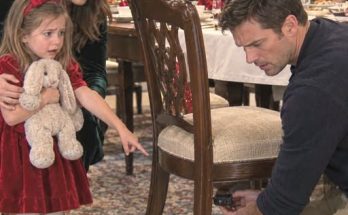
I had nearly forgotten the object beneath the chair while trying to deal with the immediate crisis.
“Tell me about it.”
Sophia looked at the door before answering.
“Daddy said it had to stay hidden.”
“What did he say was inside?”
“His secrets.”
She rubbed one of the rabbit's ears between her fingers.
“He said bad people wanted to steal them.”
I thought about Marcus's work.
His cybersecurity consulting firm handled sensitive information for major clients.
He had built his reputation on protecting digital systems, identifying vulnerabilities, and keeping valuable information out of the wrong hands.
I knew he took security seriously.
But the thought of a device taped beneath a child's chair seemed strange even for him.
“Did he tell you not to touch it?”
“He said the monsters would come if I looked.”
I felt a wave of anger so strong that I had to put both feet flat on the floor.
He had used her fear to keep her away from something hidden in her own dining room.
I still didn't know what it was.
I only knew that she believed the warning.
“Did you ever touch it?” I asked.
She shook her head.
“Did anyone else know it was there?”
“I don't know.”
She stared at her rabbit.
“Daddy gets angry when I look underneath.”
That was enough for me.
I wasn't going to ask her to explain something she didn't understand.
I also wasn't going to start handling an unknown device in a house where Marcus controlled the security system.
The doctor returned to discuss the next steps.
By then, the hospital had begun coordinating with the appropriate authorities.
A child-protection caseworker arrived.
Then Detective Ramirez, who introduced herself as an investigator with the Lake County Special Victims Unit, came to speak with the adults involved.
Sophia remained under medical supervision.
I thought we might have a few quiet minutes.
We didn't.
My phone started vibrating.
Marcus's name appeared on the screen.
I let it ring.
Then Elisa called.
I didn't answer that one either.
A third call came from Marcus.
I turned the phone face down on the chair beside me.
A message appeared.
WHERE IS MY DAUGHTER?
Another followed almost immediately.
BRING HER HOME NOW.
I stared at the words.
Marcus had always been a man who expected an immediate response.
If an employee missed a call, he noticed.
If a client delayed a decision, he pushed.
If I disagreed with him, he treated the disagreement as a personal challenge.
But this was different.
His daughter had been taken for a medical examination after reporting that he hurt her.
His first messages weren't questions about her condition.
They were demands.
Sophia saw the screen light up.
She recognized his name.
Her hand closed around my sleeve.
“Uncle Michael.”
I turned the phone over.
“What's wrong?”
“Don't tell Daddy about the chair.”
Her voice was barely audible.
I looked at her.
“You showed it to me because you wanted help.”
She nodded, but her eyes filled with tears again.
“He'll be angry if he knows.”
I didn't know whether Marcus understood that she had pointed out the device.
I didn't know whether he knew I had examined it.
But Sophia's fear was unmistakable.
Until that moment, I had assumed the object under the chair was connected to the pain she felt when she sat down.
Now I wondered whether the pain was only part of what made the chair frightening.
I had to resist the urge to question her further.
The professionals needed to handle the disclosure carefully.
I told her she had done the right thing by speaking to me.
She pressed the rabbit against her chest and looked at the door.
A little later, Detective Ramirez came into the room.
She asked me to describe what had happened at dinner.
I gave her the sequence as clearly as I could.
Sophia had refused to sit.
She had complained that the chair hurt.
Her parents had dismissed her.
She had shown me an object attached beneath the seat.
I had seen bruises on her arm and leg.
Then she had told me what her father did at night and what happened when she tried to tell her mother.
Ramirez listened carefully.
She didn't make promises she couldn't keep.
She explained that the investigation would need to establish the facts and that Sophia's safety was the immediate concern.
I told her about the black box.
She asked whether I had removed it.
“No.”
That answer was important.
I had been tempted to go back to Marcus's house and find out what he was hiding.
But the doctor and detective had made one thing clear.
I couldn't let my anger turn into an action that might compromise the investigation or put Sophia at greater risk.
Ramirez told me not to touch or remove anything from the house.
She would pursue the appropriate steps for investigating it.
I agreed.
Then she asked whether Marcus had threatened me.
I told her about the messages.
She requested that I preserve them.
I showed her the screen.
She photographed the messages and documented the times.
The room became quiet after she left.
Sophia had fallen asleep for a few minutes, her cheek resting against the stuffed rabbit.
I watched her breathe.
She looked like any other tired child after a long evening.
That was the part I couldn't get out of my mind.
She was five.
She should have been worried about presents, Christmas cookies, or whether she could stay up late.
Instead, she had learned to measure every word against the anger of the adults in her home.
When she woke, she asked whether she would have to go back to the house.
I told her the caseworker and detective were working on that.
She didn't ask another question.
She only reached for my hand.
Later, Dr. Aris came back to explain the medical findings.
The injuries required further assessment, but their differing appearances made a single recent accident an inadequate explanation.
He had documented what he observed.
The authorities would determine what happened next.
I looked through the glass panel in the door toward the corridor.
Marcus had money.
He had lawyers.
He had a reputation that opened doors before he even knocked.
For most of my adult life, those things had made me reluctant to challenge him.
I had called it keeping the peace.
Standing beside Sophia's bed, I finally admitted what it really was.
It was fear of making my own life more difficult.
I had allowed that fear to make me quiet around my brother.
I wasn't going to let it happen again.
Click here to continue reading: PART 3: My Brother Arrived at the Hospital With His Wife and His Threats, Certain That His Money Could Still Decide What Happened Next
I Had Driven Four Hours for Christmas Dinner, but My Niece Wouldn’t Sit Down and Nobody Else Wanted to Know Why
Part 2 of 9