The next morning, I woke to another message from Marcus.
It was short.
Call me.
I stared at it while the coffee machine sputtered on the counter.
For years, I had answered him whenever he demanded my attention.
That morning, I put the phone down and finished making coffee.
I wasn't trying to punish him.
I needed to stop letting his urgency become my responsibility.
A little after nine, Detective Ramirez called.
She asked whether I had received any further threats and whether I still had the messages from the previous night.
I told her I had saved everything.
She also asked me to confirm that I hadn't entered Marcus's house.
I told her I hadn't.
There was a pause before she continued.
“The information about the device is being included in the investigation. Please don't attempt to retrieve it yourself.”
“I understand.”
“Mr. Vance may contact you again. Don't argue with him. Preserve the communication and let us know.”
I thanked her.
After the call ended, I stood at the kitchen counter and looked at my untouched coffee.
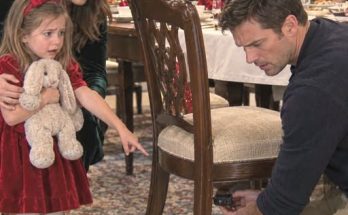
The device beneath Sophia's chair had become an unanswered question I couldn't put aside.
I knew Marcus worked with sensitive digital information.
I knew he valued privacy and security.
But I had never seen him so concerned about anything as he had been about the house and whatever might be inside it.
That didn't prove what the device contained.
It did tell me that he was afraid of losing control over something.
I tried calling the caseworker to ask how Sophia was doing.
She couldn't share every detail of the ongoing assessment, but she confirmed that Sophia remained under supervision and that the immediate safety concerns were being addressed.
I asked whether I could see her.
She said she would help coordinate a visit when it was appropriate.
I thanked her and ended the call.
Then I went to work.
I lasted less than an hour.
Every time I opened a file, I found myself thinking about a five-year-old girl sitting on a wooden chair because her parents had told her to stop making trouble.
I had filmed people discussing financial crimes worth millions.
I had watched them explain away missing records, suspicious payments, and meetings they claimed never happened.
None of those interviews had prepared me for the way Sophia had asked whether I would believe her.
I closed my laptop.
I couldn't do useful work that day.
Around noon, Marcus called again.
I answered because I wanted to hear what he would say when he could no longer pretend this was an ordinary family argument.
“Are you going to keep ignoring me?”
“I've been speaking with the people handling Sophia's case.”
“You mean the people you dragged into our lives.”
“I didn't create the situation, Marcus.”
He exhaled sharply.
“You have no idea what she's been saying.”
“I know what she told me.”
“She doesn't understand things the way adults do.”
“She understands when she's in pain.”
He went quiet.
I heard a faint rustling sound on his end, followed by what might have been a door closing.
Then he spoke more carefully.
“Listen to me. Whatever happened at dinner, we can handle it privately.”
I looked at the wall across from my desk.
“Privately?”
“This is a family matter.”
“She's five years old, Marcus.”
“And she's my daughter.”
“That doesn't answer my question.”
He began talking about the damage this could do to his family.
He mentioned the attention the allegations might attract.
He mentioned his company.
He mentioned the clients who trusted him with confidential information.
He did not mention Sophia's injuries.
He did not ask whether she was sleeping.
I let him talk until he ran out of words.
Then I said, “If you want to help her, cooperate with the investigation.”
He laughed once, without humor.
“You really think you know better than everyone else.”
“No.”
I took a breath.
“I think she needed help, and I got it.”
He ended the call.
I sat still for several minutes.
I wanted to believe that there was some explanation I hadn't considered.
That was the habit I had to fight.
Not because innocent explanations were impossible, but because I had spent too long allowing the possibility of an explanation to become a reason for doing nothing.
I saved the call details and sent Ramirez a brief message describing the conversation.
Then I waited.
That afternoon, the caseworker called me back.
She told me arrangements were being made for Sophia to spend time with me under the appropriate supervision.
I asked what I needed to do.
She explained the conditions and the practical details.
I agreed to follow them.
When I finally saw Sophia again, she was sitting on a sofa with her rabbit tucked beneath one arm.
She had changed into comfortable clothes.
The bruises on her arm were still visible.
I had expected her to run toward me.
Instead, she watched me cross the room and waited until I sat down beside her.
Then she moved closer.
“Did Daddy call you?”
“Yes.”
“Was he mad?”
“He was upset.”
Sophia looked down.
“Because I told?”
I turned toward her.
“No. You're not responsible for his feelings.”
She seemed to think about that.
Then she asked whether she could have a snack.
I nearly cried from the ordinary nature of the question.
We found some crackers and a cup of water.
She ate slowly, arranging the crackers in a line before picking them up one by one.
I didn't ask her about the chair.
I didn't ask about her father.
I let her decide what she wanted to talk about.
For a while, she told me about her rabbit.
Its name was Clover.
One of its ears had begun to come loose, and she wanted to know whether I could fix it.
I said I would try.
She handed it to me with a seriousness that made me smile.
“Don't pull too hard.”
“I won't.”
She watched while I examined the loose stitching.
That small request stayed with me.
She was trusting me with something she loved.
I had to be careful with that trust.
Later, when the visit was nearly over, Sophia asked whether she could stay with me longer.
I explained that the adults helping her had to make those decisions, but I would keep showing up whenever they allowed it.
She nodded.
Then she leaned against my shoulder.
I didn't move until she did.
On the drive home, I thought about the black box again.
I hadn't touched it.
I wasn't going to.
But I understood that whatever happened next might reach beyond our family.
Marcus had spent years building a company around the idea that information could be protected if you understood where to keep it and who might be looking.
Now investigators were looking at something he had hidden inside his own home.
I didn't know what they would find.
I only knew I would no longer protect his secrets simply because I shared his last name.
Click here to continue reading: PART 6: The Search of Marcus’s House Began With the Chair, but the Evidence Would Reach Far Beyond the Christmas Dinner We Had Shared
I Had Driven Four Hours for Christmas Dinner, but My Niece Wouldn’t Sit Down and Nobody Else Wanted to Know Why
Part 5 of 9