The last time I saw my brother in person before the verdict, he was sitting behind a table in a courtroom, wearing a dark suit that fit him perfectly.
Marcus had always understood the value of appearances.
He knew how to make people comfortable in a room, how to remember a name, how to smile as if he had nothing to hide.
That morning, he looked at me the way he had looked at me in the hospital.
Like I had betrayed him.
I sat behind the prosecutor with my hands folded together, trying not to rub the small scar on my thumb.
I had given testimony the previous afternoon.
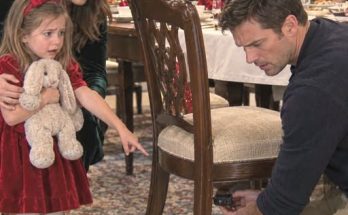
I had described Christmas dinner, Sophia's refusal to sit in her chair, the bruises, and the fear in her voice when she told me what happened in her bedroom.
I had repeated her words as carefully as I could.
I had not tried to make them sound worse.
They were already terrible.
Marcus's lawyers spent hours asking whether I had misunderstood what I saw.
They asked whether my work as a documentary director had taught me to look for wrongdoing everywhere.
They asked whether I had resented my brother's success.
One of them suggested I had taken Sophia from her parents because I wanted to punish Marcus for being wealthy.
I answered each question.
I told them I had no reason to invent injuries on a five-year-old child.
I told them I had called a doctor because she said she was hurting.
And I told them I had followed the instructions of the people responsible for protecting her.
The hidden device beneath Sophia's chair had become a central piece of evidence.
Investigators had recovered it through the proper search process.
I had never touched it.
That mattered because Marcus's attorneys had tried to turn the case into a story about me trespassing, interfering with evidence, and conspiring against my own family.
The records recovered from the device were harder to dismiss.
Digital specialists had documented how the device stored information, preserved its contents, and connected the files to other records gathered during the investigation.
The financial material had led investigators to accounts, transactions, and communications that were not explained by Marcus's ordinary consulting business.
Some files contained information about people who had paid him for more than cybersecurity advice.
Others showed how sensitive information had been used to pressure clients and influential people.
The government did not ask the jury to accept every suspicious file as proof of a crime.
It presented the records that could be authenticated and corroborated.
That distinction made the evidence stronger.
The case was no longer only about what had happened inside Marcus's house.
But that was where it had begun.
With a little girl who did not want to sit in a chair.
When the verdict came, the courtroom became so quiet I could hear the ventilation system above us.
The jury found Marcus guilty on the charges that had been brought against him.
I did not feel victorious.
I felt tired in a way I had never experienced before.
For months, I had imagined the moment when somebody would finally tell him that he could not control the truth.
Now that it had happened, all I could think about was Sophia.
I wondered whether she was drawing at the table where she had been staying.
I wondered if she had eaten breakfast.
I wondered if she had asked about me.
I wondered if she had slept without waking from a bad dream.
Those were the questions that mattered to me now.
Marcus's sentencing took place later.
I attended because the prosecutor told me I could, but I sat near the back and kept my eyes on the judge.
Marcus stood when instructed.
His face was pale, and the confidence he had carried into every earlier hearing had worn thin.
The judge spoke about the seriousness of the crimes, the harm caused by the abuse, and the additional wrongdoing uncovered during the investigation.
He also addressed the attempts to intimidate people involved in the case.
Marcus had treated his money, his reputation, and his professional connections as if they placed him beyond ordinary consequences.
The judge made clear that they did not.
The sentence was twenty-five years in federal prison, without parole under the terms announced by the court.
When the words were spoken, Marcus turned toward the people sitting behind him.
For a second, his eyes found mine.
I could not tell whether he expected me to look away.
I didn't.
Then the officers moved him from the courtroom.
I watched until the door closed.
I had spent much of my life believing that being brothers meant we would always find a way back to each other.
I had confused history with loyalty.
I had thought that knowing someone for decades meant I understood the person they were.
I had been wrong.
The court's decision did not undo what Marcus had done to Sophia.
It did not give her back the nights when she had been afraid.
It did not erase the moment she had looked at me across that Christmas table and wondered whether I would believe her.
But it established something that could not be taken away by another threat or another expensive lawyer.
She had told the truth.
And people had listened.
Elisa's case ended differently.
Her attorneys negotiated a plea agreement covering her role in the neglect and her failure to report the abuse.
The investigation had established that she had heard Sophia's complaints, dismissed them, and threatened her when she tried to explain what was happening.
Elisa had not been the person who inflicted every injury.
That did not excuse the choices she had made.
She had been Sophia's mother.
She had been the adult Sophia had turned to when she was frightened.
Instead of protecting her, Elisa had helped make the house a place where the child believed she could not speak.
Under the agreement, Elisa received probation and surrendered all parental rights.
The legal language was formal.
The consequences were not.
A little girl would not be sent back to a home where she had learned to fear the people responsible for her safety.
I never called Elisa afterward.
There were moments when I wanted to ask her how she had managed to sit through dinner and pretend nothing was wrong.
I wanted to know how many times Sophia had tried to tell her.
I wanted to know whether she had ever stood outside her daughter's bedroom and understood what was happening.
But I also knew that I might never receive an honest answer.
I stopped treating that answer as something I needed in order to move forward.
Sophia needed a future more than I needed an explanation.
The months after the court proceedings were quieter than the months before them.
There were appointments, reports, supervised visits, and conversations with people whose job was to make sure Sophia's placement remained safe.
Nothing happened as quickly as I once would have expected.
Forms had to be signed.
Questions had to be answered.
Plans had to be reviewed.
There were days when I felt as if my whole life had become a stack of papers in folders with colored tabs.
I learned to keep copies of everything.
I learned that a promise made to a child was not a substitute for a proper arrangement.
I learned to ask for help before I reached the point of exhaustion.
Most of all, I learned not to confuse a quiet day with a finished recovery.
Some mornings, Sophia woke up cheerful and wanted pancakes.
Other mornings, she sat on the edge of the bed with Clover pressed against her chest and refused to tell me what had frightened her.
I stopped asking her to explain every feeling.
I told her she could talk when she was ready.
Sometimes she did.
Sometimes she wanted toast cut into triangles and a cartoon on the television.
I learned to accept both.
The little rabbit stayed with us through all of it.
Clover had one ear that bent forward where I had repaired the seam.
Sophia liked to run her finger along the stitching.
Whenever I saw her doing that, I remembered the hospital room and the way she had watched my hands while I fixed it.
She had been waiting to see whether I would keep a small promise.
I had.
It turned out that small promises were the ones she remembered most.
Six months after the case began, Sophia and I were living in a quiet cottage in rural Wisconsin.
The house was not grand.
It had a narrow hallway, a kitchen with old wooden cabinets, and windows that rattled a little when the wind came from the north.
The floorboards creaked outside the bedrooms.
The heating system made a soft clicking sound at night.
I knew all of those sounds by then, and so did Sophia.
At first, she had asked me what every unfamiliar noise meant.
I answered without laughing at her.
If I didn't know, I checked.
When the radiator knocked one evening, I showed her where the sound came from.
When a branch scraped the bedroom window, we looked outside together and saw it moving in the wind.
I never told her there was nothing to be afraid of.
I told her we could find out what the sound was.
That was different.
She had a small bedroom with a yellow blanket and a shelf for her books.
Her drawings covered one wall.
There was a crooked house with four windows, a rabbit with ears almost as long as its body, and a picture of two people holding hands beneath a wide blue sky.
In one drawing, I had enormous feet.
Sophia said it was because I walked too loudly.
I told her I would try to be quieter.
She laughed and said it was too late.
Her bruises had healed.
The marks that had first made me afraid to look at her arm were gone, leaving only skin that looked like the skin of any other five-year-old.
But healing was not a straight line.
Sometimes a chair pulled too close to the table made her tense.
Sometimes an adult raising a voice in a shop made her reach for my hand.
Sometimes she asked whether a secret was good or bad before telling me something ordinary.
I answered each question as honestly as I could.
I told her that surprises could be secrets for a little while, but that nobody had the right to make her keep a secret about being hurt.
I told her she could always talk to a safe adult.
I told her she would not be punished for telling the truth.
I repeated those things without demanding that she believe them immediately.
Trust had to be built slowly.
I understood that now.
One warm morning in early summer, I found her standing in the kitchen wearing a yellow sundress.
Her hair was still untidy from sleep.
Clover was tucked beneath one arm, and she had a piece of toast in her other hand.
She looked toward the back door.
“Can we go to the park?”
I glanced at the clock.
“I think we can.”
“Today?”
“Today.”
She took another bite of toast.
“Can we go on the swings?”
“If you want.”
“And can Clover come?”
I looked at the rabbit.
“Clover has been very patient.”
Sophia considered that.
“He doesn't like the slide.”
“Then he can watch from the bench.”
She nodded as if we had settled a serious matter.
I put my coffee cup in the sink and reached for the keys.
For a moment, I stood by the door and watched her adjust Clover's bent ear.
I thought about the chair in Marcus's dining room.
I thought about the little black box that had been hidden beneath it, and the terrible things the investigators had found inside.
For a long time, I had believed the device was the center of the story because it exposed what Marcus had been hiding.
It had mattered.
It had helped investigators establish the truth about crimes that reached far beyond the house.
But it was not the most important thing I had found that Christmas.
The most important thing had been Sophia's small hand reaching across the table.
She had taken a risk when she spoke to me.
She had looked at the adults around her and tried to decide whether any of them could be trusted.
I had almost driven home that night without understanding what she was asking me to see.
That thought still hurt.
I could not change the beginning.
I could only make sure I did not turn away again.
Sophia slipped her hand into mine as we stepped outside.
The air smelled of grass and damp earth.
A bird called from somewhere beyond the cottage, and she stopped to look for it.
“Little Bird,” I said softly.
She turned toward me.
I had called her that since she was small enough to fall asleep against my shoulder.
For months, the nickname had seemed painful to say.
Now she smiled when she heard it.
“I'm ready,” she said.
We walked to the car.
At the park, she chose the swings first.
I pushed her gently, keeping my hands on the chains when she asked me to stop.
She wanted to go higher, then lower, then high again.
She told me a story about Clover learning to fly.
The story changed each time she told it.
I listened as if every version were new.
Later, we sat on a bench with our shoes dusty and the rabbit resting between us.
Sophia leaned against my arm.
“Michael?”
“I'm here.”
“Are we going home after this?”
“Yes.”
“To our house?”
“To our house.”
She looked down at Clover and smoothed his ear.
“Okay.”
She did not ask whether Marcus would be there.
She did not ask whether she would be in trouble.
She did not ask whether I would believe her if she told me something.
She simply sat beside me, watching children run across the grass.
I knew that one quiet morning could not tell me everything about the years ahead.
There would be more difficult days.
There would be questions I could not answer and memories that returned when neither of us expected them.
I would make mistakes.
I would have to keep listening.
But I no longer measured progress by whether Sophia seemed happy every hour of every day.
I measured it in the things she was beginning to do without asking permission first.
Choosing a dress.
Changing her mind.
Laughing loudly.
Telling me when she was angry.
Saying no when she didn't want something.
Asking for what she needed.
Those were ordinary things.
That was why they mattered.
When we got back to the cottage, she ran ahead of me and opened the front door.
She left her shoes by the mat, forgot Clover on the hallway bench, and hurried into the kitchen to tell me she was hungry.
I followed her inside.
The door clicked shut behind us.
For the first time in a long while, the sound did not feel like an ending.
It sounded like home.
The End
Read more original stories on Feel Every Story.
I Had Driven Four Hours for Christmas Dinner, but My Niece Wouldn’t Sit Down and Nobody Else Wanted to Know Why
Part 9 of 9

One Comment on “PART 9 – Six Months After the Evidence Was Recovered, I Finally Understood What It Meant to Give My Niece a Future She Could Trust”