I left the hospital only after the caseworker confirmed that Sophia would remain under supervision while the immediate arrangements were handled.
I didn't want to go.
Every time I imagined walking away from her room, I saw her watching the door and asking whether her father was angry.
But I also knew the investigation needed to proceed.
Detective Ramirez had told me not to enter Marcus's house or touch the object beneath the chair.
I intended to follow that instruction.
I drove home through the quiet streets of Lake Forest, passing houses decorated for Christmas.
Lights glowed in windows.
Wreaths hung on doors.
Somewhere, families were finishing dinner, opening gifts, and putting children to bed.
I kept thinking about Sophia sitting alone in that dining room, surrounded by adults who had decided her pain was an inconvenience.
By the time I reached Marcus's street, I had stopped trying to find an explanation that would make the evening less terrible.
His house stood behind a neat lawn and a row of carefully trimmed shrubs.
The holiday lights were still on.
From the road, it looked exactly as it had when I arrived earlier that night.
I could see the large windows and the tree inside.
I could almost picture the dining table, the silver serving dishes, and the half-empty glasses.
Everything had been arranged to suggest comfort and success.
I sat in my car for several minutes.
I knew I shouldn't go inside.
I also knew the authorities had not yet searched the property.
The object under Sophia's chair might be relevant to what she had described.
But I had no right to decide how to investigate it.
I took out my phone and considered calling Ramirez.
Before I could do so, I saw movement near the house.
A vehicle had pulled into the drive.
Then another.
I couldn't make out who was inside, and I didn't approach.
I remained where I was, watching the front windows.
My mind kept returning to Sophia's words.
Daddy said the black box was where he kept the things nobody could find.
That statement could mean several things.
I had spent my career learning not to turn a possibility into a conclusion before the evidence supported it.
So I tried to separate what I knew from what I feared.
I knew Sophia had been injured.
I knew the doctor had found marks that appeared to be from different points in time.
I knew she had disclosed abuse.
I knew she was frightened of the object beneath the chair.
I did not know what the object contained.
I did not know whether it was connected to Marcus's business.
And I did not know whether it would prove anything about what had happened to Sophia.
Those answers would have to come from a proper investigation.
I started the car.
I drove away without entering the property.
The decision felt unsatisfying.
I wanted something concrete to hold on to.
Instead, I had a frightened child, a medical report in progress, threatening messages, and a device I had not examined.
For once, I had to accept that being angry did not give me permission to act recklessly.
I returned to the hospital and spoke with Detective Ramirez by phone.
I told her that I had considered going back to the house but had not entered.
I repeated what Sophia had said about the black box.
She thanked me for the information and told me to leave the property alone.
I agreed.
When I went back into Sophia's room, she was awake.
The rabbit was tucked beneath her chin.
She looked at the clock on the wall.
“Is it morning yet?”
“Not yet.”
“Can you stay?”
I pulled the chair closer to her bed.
“Yes.”
She seemed relieved.
I stayed beside her while the hospital staff continued their work.
I answered questions when the caseworker needed information.
I preserved the messages from Marcus.
I gave the detective my account of the dinner, including the exact order of events as best I could remember.
I didn't embellish anything.
I didn't pretend to know what the device was.
And I didn't tell anyone that I had solved a case.
I hadn't.
I had only stopped accepting the explanation Marcus and Elisa had offered.
That mattered, but it wasn't the same as proving everything.
The next hours passed slowly.
Sophia slept in short stretches.
When she woke, she asked whether she was in trouble.
Each time, I told her she wasn't.
Eventually, the immediate arrangements were settled, and I was allowed to go home for a short period while the caseworker continued coordinating the next steps.
I left with the promise that I would remain available.
I drove back toward Chicago.
The roads were wet, and the streetlights shone on the pavement.
I kept both hands on the steering wheel.
At a red light, my phone vibrated in the cup holder.
Marcus had sent another message.
You need to stop before you make this worse.
I read it once.
Then I put the phone away.
For most of my life, I had believed that family problems should be handled privately.
I had seen people use that belief to excuse all kinds of behavior.
They said a marriage was nobody else's business.
They said children needed discipline.
They said a family's reputation mattered.
They said outsiders couldn't understand what happened behind closed doors.
I had heard those explanations in interviews, in courtrooms, and in rooms where people sat beneath expensive paintings and denied things that were already documented.
I had never expected to hear them used against my own niece.
That was the part that hurt most.
Not that Marcus might be guilty of something terrible.
I was beginning to fear that he was.
It was that he had counted on my loyalty to keep me from looking too closely.
And I had almost let him.
By the time I reached my apartment, I was exhausted.
I set my keys on the counter and stood in the kitchen without turning on the lights.
I thought about calling someone else in the family.
Then I stopped.
I didn't know what they might do with the information.
I didn't want to start a chain of calls that could reach Marcus before the investigators were ready.
So I waited for the authorities to tell me what they needed.
I slept badly.
The next morning, I checked my phone as soon as I woke.
There were missed calls from Marcus and Elisa.
There were messages demanding explanations.
There was no apology.
No question about whether Sophia was frightened.
No message asking what the doctor had found.
I set the phone down.
I had spent years telling myself that Marcus's harshness was a personality flaw.
That his need to control every conversation was simply how he operated.
That he loved his family, even if he was difficult to be around.
Now I had to confront the possibility that those explanations had been convenient for me.
It was easier to call him difficult than to ask what his behavior meant.
It was easier to keep our relationship distant than to challenge him.
And it was easier to leave things alone when the consequences of asking questions might land on me.
I wasn't proud of that.
Later that day, Detective Ramirez contacted me.
She explained that the authorities were working through the next investigative steps.
She asked me to preserve any relevant communications and remain available for follow-up questions.
I agreed.
I also told her I was concerned about the device attached beneath the chair.
She said she had noted the information and would address it through the investigation.
I didn't push.
I knew enough to understand that the right evidence had to be collected properly.
The following evening, I received another call from Marcus.
This time, I answered.
He didn't ask how I was.
He didn't ask where Sophia was staying.
He went straight to the point.
“What did you tell the police?”
“The truth.”
There was a pause.
“What does that mean?”
“It means I told them what I saw and what Sophia told me.”
“You have no idea what she meant.”
“I know what she said.”
“She is five years old, Michael.”
“I know.”
“She doesn't understand what she's saying.”
I closed my eyes.
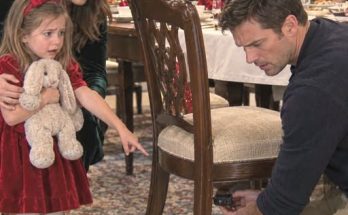
I could still see Sophia standing beside the dining chair, holding her rabbit while trying not to cry.
“Then why are you so worried about what she told me?”
Marcus went quiet.
For a moment, I thought he might answer honestly.
Instead, his voice hardened.
“You need to stay out of my house and out of my business.”
“I haven't been back inside.”
“Keep it that way.”
He ended the call.
I stood in my kitchen, holding the phone against my ear even after the line went dead.
His warning confirmed nothing by itself.
But it reminded me that Marcus was thinking about more than the argument between two brothers.
He was thinking about his house.
His business.
His secrets.
And a chair that had frightened his daughter enough to ask me for help.
I sent Ramirez a record of the call and its timing.
Then I put the phone down.
I didn't know when the authorities would search the house.
I didn't know what they would find.
I only knew that I had done the right thing by bringing Sophia to the hospital.
Whatever came next, I would answer their questions honestly.
I would not help Marcus silence her.
And I would not confuse protecting my family with protecting the person who had harmed a child.
For the first time in years, I wasn't trying to keep the peace with my brother.
I was trying to help my niece find it.
Click here to continue reading: PART 5: The First Time I Saw My Brother Lose Control, He Was More Worried About a Hidden Device Than the Little Girl He Had Hurt
I Had Driven Four Hours for Christmas Dinner, but My Niece Wouldn’t Sit Down and Nobody Else Wanted to Know Why
Part 4 of 9