The first clear sign that the investigation had widened came in a call from Detective Ramirez.
She told me that the digital examination had revealed material unrelated to the medical findings.
She couldn't share everything while the investigation was ongoing.
But the device appeared to contain encrypted records that required further examination.
I sat down at my desk.
“What kind of records?”
“Financial information and material that may be relevant to other offenses.”
I closed my eyes for a moment.
I had suspected the device might be connected to Marcus's work.
I hadn't known what it would contain.
Ramirez made it clear that investigators were still determining the significance of the material.
Some files required verification.
Others had to be compared with independent records.
The device was not, by itself, a complete explanation of everything Marcus had done.
But it had given the investigators a reason to look more closely.
I thanked her for telling me what she could.
After the call, I remained at my desk.
My brother's company had always seemed untouchable to me.
He spoke about his clients with confidence.
He talked about security audits and corporate contracts as if the systems he managed were extensions of his own mind.
I had sometimes envied the certainty with which he moved through the world.
Now I wondered whether that certainty had depended on keeping certain people from asking questions.
The next update came several days later.
Ramirez told me that investigators had identified evidence suggesting financial misconduct and a network of blackmail-related material.
The records were being examined alongside other evidence.
I asked whether Marcus's clients were involved.
She said she couldn't give me a reliable answer yet.
I didn't press her.
I knew the difference between a lead and a conclusion.
My work had taught me that the most damaging mistakes often happened when people decided they already understood the story.
I wasn't going to turn my brother into a villain in my mind and assume every suspicion had been proved.
The abuse allegations were serious enough on their own.
The evidence from the drive was a separate matter that investigators would have to establish properly.
Still, I couldn't ignore the connection between the two parts of the case.
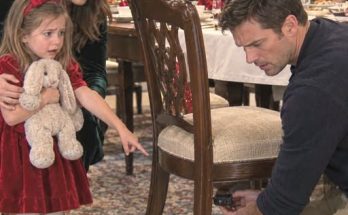
Marcus had hidden a device beneath the chair where his daughter sat.
He had frightened her away from it.
He had told her that dangerous things would happen if anyone looked underneath.
And when I brought her to the hospital, he had seemed more concerned about what might be discovered at his house than about her condition.
Those were facts I had witnessed.
I didn't need to invent anything else.
Meanwhile, the caseworker continued helping arrange Sophia's care.
I saw her regularly.
She began asking whether she could bring Clover with her.
I always said yes.
The rabbit traveled in a small bag, its repaired ear sticking out through the opening.
Sometimes Sophia placed it on the sofa beside me.
Sometimes she carried it into the kitchen while we prepared a snack.
She still startled at sudden noises.
She still looked toward the door when a phone rang.
But she had started talking more freely about ordinary things.
She told me about a picture she wanted to draw.
She asked whether the park near my apartment had ducks.
She wanted to know if she could learn to make pancakes.
I answered every question I could.
I didn't tell her that everything would be easy.
I didn't tell her she would never be afraid again.
I told her we would take things one day at a time.
One afternoon, she sat at my kitchen table with a sheet of paper and a box of crayons.
She drew a house.
The windows were square.
The roof was too large for the walls.
A little figure stood beside the front door.
She handed me the picture.
“That's you.”
I looked at the figure.
It had a large head, thin arms, and a blue shirt.
“I look pretty tall.”
She nodded seriously.
“You're tall.”
I put the drawing on the refrigerator.
She watched me attach it with a magnet.
“Will it stay there?”
“As long as you want it to.”
She smiled and went back to her crayons.
That small exchange stayed with me because she was asking for something to remain where she had placed it.
She needed to know that things didn't disappear simply because someone else wanted them gone.
I couldn't control every part of her future.
I could make sure my promises were honest.
I could make sure I showed up.
I could let the people responsible for the investigation do their work without interfering.
Marcus, meanwhile, continued trying to contact me.
Some messages were angry.
Others sounded almost reasonable.
He said I had misunderstood the situation.
He said Sophia was confused.
He said the family could still recover if I stopped cooperating with the authorities.
I preserved every message.
I didn't answer most of them.
When I did respond, it was brief.
I told him that I would continue cooperating with the investigation.
He called me disloyal.
I had expected that word.
For years, loyalty had been his way of asking people not to question him.
He had used it in business disagreements.
He had used it when family members challenged his decisions.
Now he was using it when his daughter needed protection.
I no longer accepted his definition.
A few weeks after Christmas, Ramirez asked me to clarify something about the device.
She wanted to know whether I had noticed any visible markings on the case.
I told her what I remembered, but I was careful not to pretend I had studied it closely.
I had been frightened for Sophia.
My attention had been divided.
I had seen a small black enclosure, electronic components, and a concealed lens.
That was all I could reliably say.
Ramirez thanked me and told me the investigators were comparing the device's contents with other records.
She didn't tell me what the comparison would prove.
I understood why.
Evidence had to be examined carefully.
I returned home and sat at my desk for a while.
I thought about the first moment Sophia had pointed beneath the chair.
She hadn't asked me to investigate a business crime.
She hadn't known about financial records or encrypted files.
She had wanted an adult to believe that she was in pain.
Everything else had followed from that.
It would have been easy for the investigation to become a story about Marcus's company, his money, and the secrets he had hidden.
Those things mattered.
But I didn't want the people examining the evidence to lose sight of the child who had brought the whole situation into view.
When I visited Sophia the next day, she was waiting with Clover in her lap.
She asked whether I could take her to the park when the caseworker said it was allowed.
I told her we would ask.
Then she leaned toward me and whispered something I hadn't expected.
“I think I'm getting better at telling the truth.”
I looked at her.
“You were telling the truth before.”
She shook her head.
“I was scared before.”
I took a moment to answer.
“You can be scared and still tell the truth.”
She thought about that.
Then she put Clover beside her and reached for my hand.
I held it.
For the first time since Christmas, I felt something other than fear when I thought about the future.
Not certainty.
Not yet.
Just the possibility that Sophia might grow up without believing that every truth she spoke would cost her something.
Click here to continue reading: PART 8: By the Time the Case Reached Court, the Perfect Christmas House Had Become Evidence of How Much My Family Had Chosen Not to See
I Had Driven Four Hours for Christmas Dinner, but My Niece Wouldn’t Sit Down and Nobody Else Wanted to Know Why
Part 7 of 9