The next time I woke, the room was lighter.
My father was still there.
He had moved the chair closer to the bed, and his head rested against the wall.
His eyes were closed.
I watched him for a moment before speaking.
"Dad."
He woke quickly.
"What's wrong?"
"Nothing."
He straightened.
"Are you sure?"
"I'm sure."
He rubbed his face and looked at the clock.
"You slept for a while."
I shifted under the blanket.
My body still felt heavy, and I didn't want to move more than necessary.
"Did anyone call you?"
He looked at the phone on the table.
"No."
I nodded.
I hadn't expected anyone to call.
I had asked because I wanted to know whether anything had changed while I was asleep.
The same room surrounded us.
My backpack was beside the bed.
My coat was folded on the chair.
My phone lay where he had placed it.
Everything I had been sent away without was now within reach.
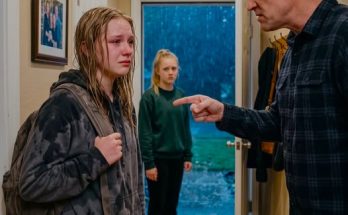
I still remembered standing at the door without any of it.
"Have you talked to Lydia again?" I asked.
My father looked down at his hands.
"Not since we spoke earlier."
"What did she say?"
He hesitated.
"She repeated what she told me before."
"That I had drugs?"
"Yes."
I waited for him to say more.
He didn't.
"Did she show you anything?"
"No."
"Did she tell you where she thought I had them?"
He shook his head.
"Not clearly."
I looked at him.
"Then what were you believing?"
He didn't answer immediately.
"I thought I had reason to believe her."
"What reason?"
He rubbed his thumb against the side of his hand.
"I was angry. I thought she was telling me something serious, and I reacted."
"That isn't a reason."
"I know."
I had expected him to defend himself.
I had prepared for him to say that he had trusted Lydia because she had never given him a reason not to.
Instead, he sat quietly.
I didn't know whether that made the conversation easier or harder.
"Did you think I was lying?" I asked.
He looked at me.
"At the time, yes."
The answer hurt, even though I had already known it.
I turned my face toward the window.
"Did you think about asking me?"
"No."
"Did you think about looking in my backpack?"
"No."
"Did you think about checking my room?"
He closed his eyes briefly.
"No."
I gripped the edge of the blanket.
"You thought about telling me to leave."
"Yes."
"And you did that before you knew anything."
He looked as if he wanted to interrupt, but he didn't.
"Yes," he said again.
I stared at the window until my eyes began to sting.
I had wanted him to admit it.
Now that he had, I didn't feel relieved.
I felt fifteen.
I felt like a child who had been standing in a room with an adult who could have stopped everything by asking one question.
Instead, I had been told to get out.
"Why didn't you let me take my coat?" I asked.
My father looked down.
"I was angry."
"You keep saying that."
"I know."
"Being angry doesn't make you forget that it's raining."
He pressed his lips together.
I continued before I could lose the courage to speak.
"You knew I didn't have my phone."
"Yes."
"You knew I didn't have money."
"Yes."
"You didn't ask where I was going."
"No."
"You didn't ask whether I had anyone to call."
His face changed.
"No," he said softly.
I pulled the blanket closer to my chest.
"How did you think I was supposed to get somewhere?"
He stared at the floor.
"I didn't think it through."
I wanted to shake him.
I wanted to tell him that I had been the one forced to think through every step of the walk while the rain soaked through my clothes.
I had counted the distance.
I had watched the road.
I had tried to decide whether I should keep walking or stop somewhere and ask for help.
I had wondered whether he might come after me.
He had been inside our house.
He had not needed to wonder where to go.
"I was trying to get away from you," I said.
He lifted his head.
"Because you told me to."
"I know."
"I didn't have a plan."
His eyes filled, but he looked away before I could decide what to do with that.
"I should have understood that."
"You should have asked."
"Yes."
The room became quiet again.
I was tired, but I didn't want to stop before I had said the thing that kept returning to me.
"When the officer called, what did you tell him?"
My father looked at me.
"I told him we'd had an argument."
"And?"
"I said you had left."
"Did you tell him you made me leave?"
He swallowed.
"Not at first."
I waited.
"Then he asked me questions," he said. "And I had to answer them."
"What questions?"
"When I last saw you. Whether you had a coat. Whether you had your phone or any money."
I pictured him standing at home with the phone against his ear.
I pictured the officer waiting for answers.
"Did you tell him the truth?"
"Yes."
"All of it?"
He didn't answer quickly enough.
"I told him what happened."
"That's not what I asked."
He looked down.
"I told him I had ordered you out."
I turned toward the wall.
I was glad someone had asked him.
I hated that it had taken a stranger's questions to make him say what he had done.
"Did the officer get angry with you?"
My father sat very still.
"He asked me why I would send my daughter outside in that weather without anything she needed."
I looked back at him.
"What did you say?"
"Nothing useful."
For a moment, I almost laughed.
Not because it was funny.
Because it was the first answer he had given me that sounded honest without trying to make itself smaller.
I let out a slow breath.
"Did you think I was going to be fine?"
He shook his head.
"I didn't think far enough to know."
That answer frightened me more than if he had said yes.
It meant he hadn't even considered what might happen after I walked through the door.
"I thought you'd go somewhere," he added. "I thought you'd calm down and come back."
"You didn't tell me I could come back."
He stopped.
"You told me to leave."
"I know."
"You didn't tell me where I could go."
"I know."
"You didn't say you'd come get me."
His face tightened.
"No."
I stared at him until he looked back at me.
"Then how was I supposed to know?"
He had no answer.
I rested my head against the pillow.
My body felt weak again, and I didn't want to spend all my strength on questions he should have asked before I ever reached the road.
He waited.
After a while, he said, "I can't change what I did."
"No."
"But I can listen now."
I watched him carefully.
"Listening now doesn't mean you listened then."
"I know."
"And it doesn't mean I'll believe you next time."
He nodded.
"I understand."
I wasn't sure he did.
Understanding the words was not the same as remembering them when he was angry.
I reached for the water and took a small sip.
My father didn't try to fill the silence.
When I put the cup down, he asked whether I wanted to rest.
"Yes."
"Do you want me to stay?"
I looked at the chair.
"Yes. But don't ask me to forgive you."
His expression changed.
"I won't."
I turned toward the window.
For once, I didn't need to keep talking to make him understand that the conversation was over.
He stayed where he was.
I closed my eyes, still angry, still frightened, and still unsure what would happen when I was well enough to leave the hospital.
Click here to continue reading: PART 15: I Looked at the Coat He Had Brought Me and Realized That Having My Things Back Was Not the Same as Feeling Safe Again
My Father Had Already Decided I Was Guilty Before I Could Explain What Was Inside My Backpack
Part 14 of 20